
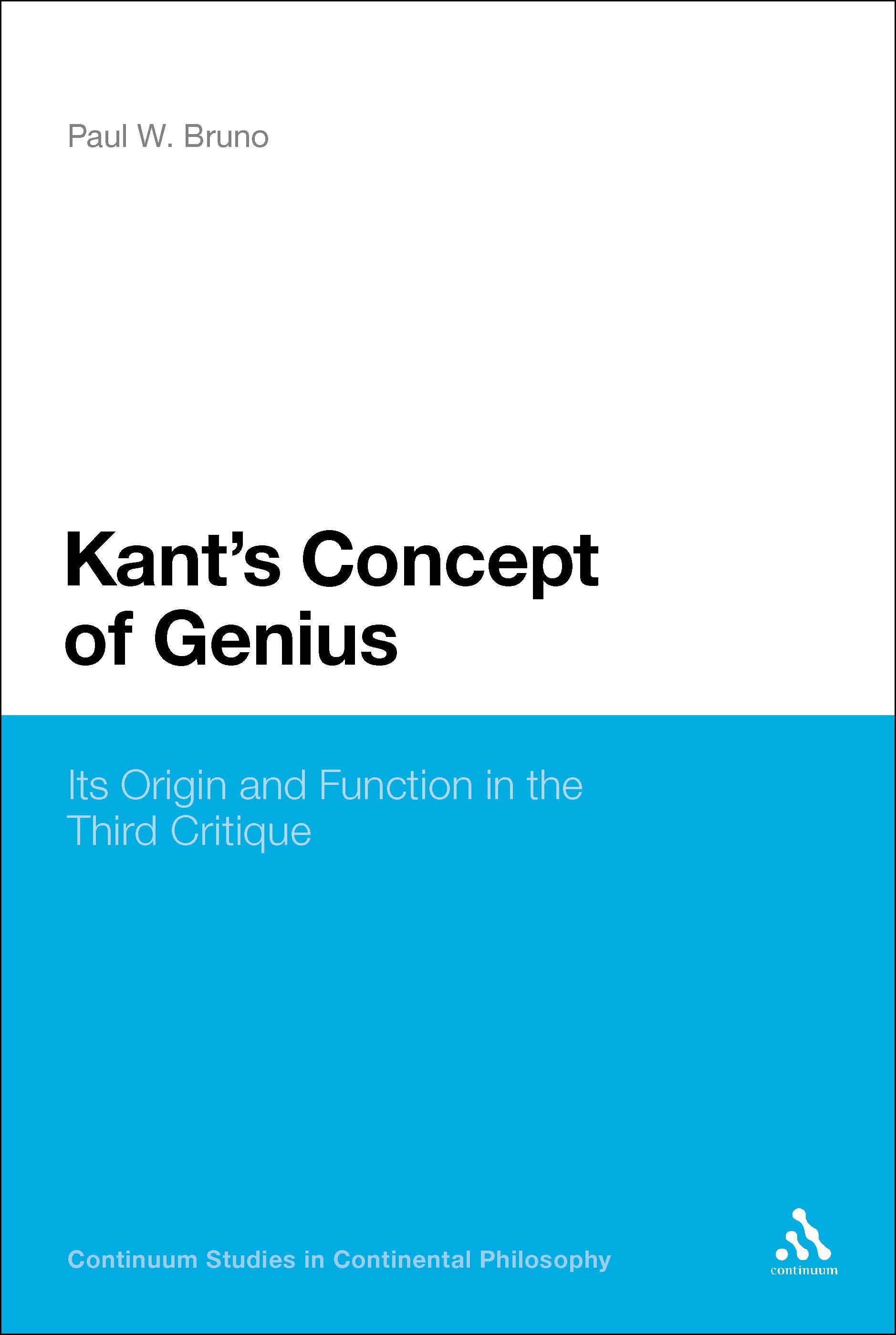
While many studies have chronicled the Romantic legacy of artistic genius, this book uncovers the roots of the concept of genius in Kant's third Critique, alongside the development of his understanding of nature. Paul Bruno addresses a genuine gap in the existing scholarship by exploring the origins of Kant's thought on aesthetic judgment and particularly the artist.
The development of the word 'genius' and its intimate association with the artist played itself out in a rich cultural context, a context that is inescapably significant in Western thought. Bruno shows how in many ways we are still interrogating the ways in which a nature governed by physical laws can be reconciled with a spirit of human creativity and freedom. This book leads us to a better understanding of the centrality of understanding the modern artistic enterprise, characterized as it is by creativity, for modern conceptions of the self.
The development of the word 'genius' and its intimate association with the artist played itself out in a rich cultural context, a context that is inescapably significant in Western thought. Bruno shows how in many ways we are still interrogating the ways in which a nature governed by physical laws can be reconciled with a spirit of human creativity and freedom. This book leads us to a better understanding of the centrality of understanding the modern artistic enterprise, characterized as it is by creativity, for modern conceptions of the self.
Zahle einfach mit Karte, Klarna, Apple Pay oder Google Pay. Nicht zufrieden? Du hast immer ein 14-tägiges Widerrufsrecht. Lies mehr in unseren AGB. Hast du Fragen, schreib uns eine E-Mail an hello@memmo.org.
Memmo macht das Lernen einfacher – wo auch immer du bist. Bei uns findest du deine Kursbücher und smarte Lerntools an einem Ort: Zusammenfassungen, Quizzes, Podcasts und Lernkarten. Und Ted, dein Lernbuddy, beantwortet alles, was du wissen möchtest. Über 50.000 Studierende lernen bereits hier – gemacht, damit du schneller lernst und weniger Stress hast.