
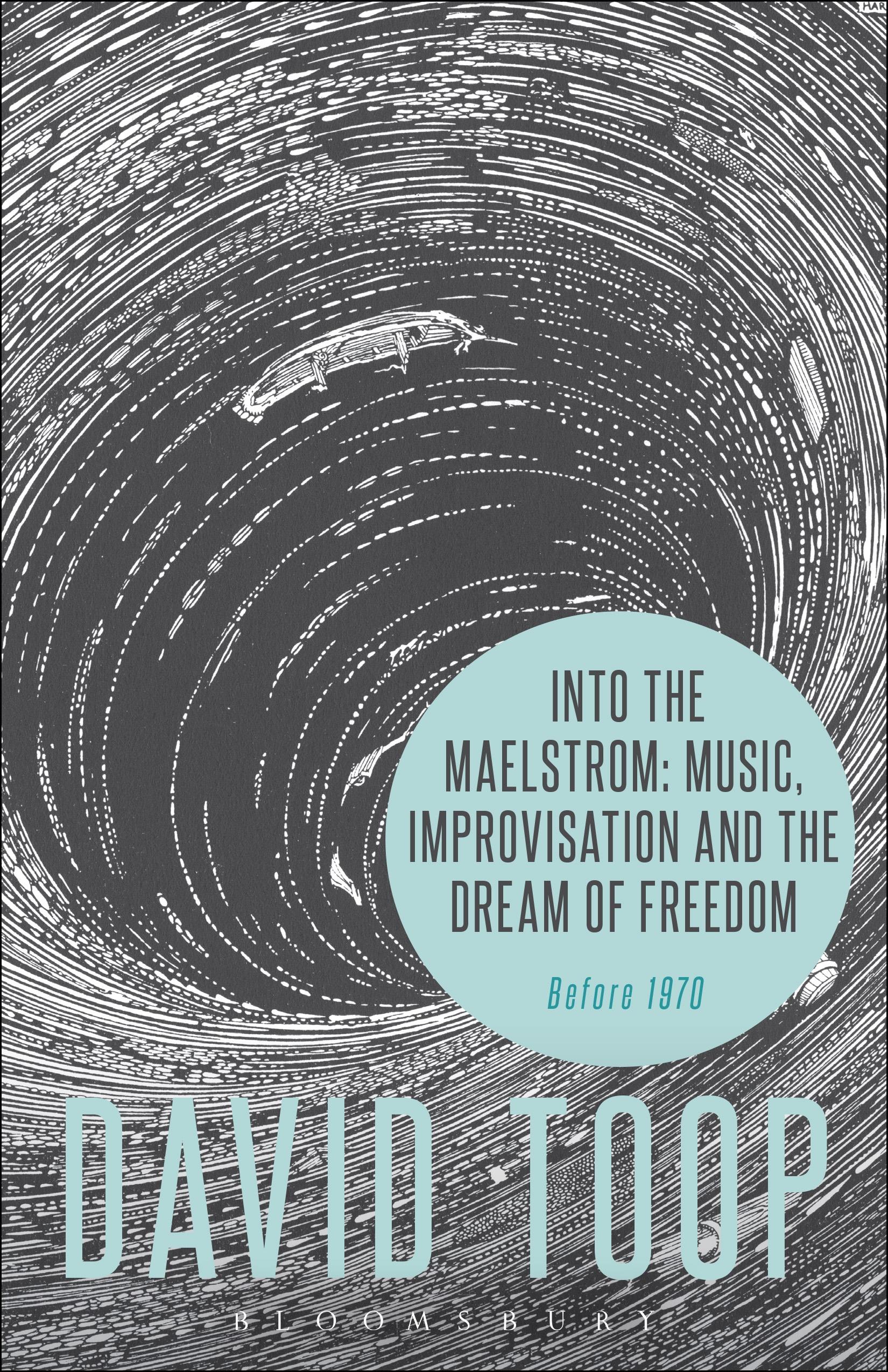
Shortlisted for the Penderyn Music Book Prize 2017.
In this first installment of acclaimed music writer David Toop's interdisciplinary and sweeping overview of free improvisation, Into the Maelstrom: Music, Improvisation and the Dream of Freedom: Before 1970 introduces the philosophy and practice of improvisation (both musical and otherwise) within the historical context of the post-World War II era. Neither strictly chronological, or exclusively a history, Into the Maelstrom investigates a wide range of improvisational tendencies: from surrealist automatism to stream-of-consciousness in literature and vocalization; from the free music of Percy Grainger to the free improvising groups emerging out of the early 1960s (Group Ongaku, Nuova Consonanza, MEV, AMM, the Spontaneous Music Ensemble); and from free jazz to the strands of free improvisation that sought to distance itself from jazz. In exploring the diverse ways in which spontaneity became a core value in the early twentieth century as well as free improvisation's connection to both 1960s rock (The Beatles, Cream, Pink Floyd) and the era of post-Cagean indeterminacy in composition, Toop provides a definitive and all-encompassing exploration of free improvisation up to 1970, ending with the late 1960s international developments of free music from Roscoe Mitchell in Chicago, Peter Brötzmann in Berlin and Han Bennink and Misha Mengelberg in Amsterdam.
In this first installment of acclaimed music writer David Toop's interdisciplinary and sweeping overview of free improvisation, Into the Maelstrom: Music, Improvisation and the Dream of Freedom: Before 1970 introduces the philosophy and practice of improvisation (both musical and otherwise) within the historical context of the post-World War II era. Neither strictly chronological, or exclusively a history, Into the Maelstrom investigates a wide range of improvisational tendencies: from surrealist automatism to stream-of-consciousness in literature and vocalization; from the free music of Percy Grainger to the free improvising groups emerging out of the early 1960s (Group Ongaku, Nuova Consonanza, MEV, AMM, the Spontaneous Music Ensemble); and from free jazz to the strands of free improvisation that sought to distance itself from jazz. In exploring the diverse ways in which spontaneity became a core value in the early twentieth century as well as free improvisation's connection to both 1960s rock (The Beatles, Cream, Pink Floyd) and the era of post-Cagean indeterminacy in composition, Toop provides a definitive and all-encompassing exploration of free improvisation up to 1970, ending with the late 1960s international developments of free music from Roscoe Mitchell in Chicago, Peter Brötzmann in Berlin and Han Bennink and Misha Mengelberg in Amsterdam.
Zahle einfach mit Karte, Klarna, Apple Pay oder Google Pay. Nicht zufrieden? Du hast immer ein 14-tägiges Widerrufsrecht. Lies mehr in unseren AGB. Hast du Fragen, schreib uns eine E-Mail an hello@memmo.org.
Memmo macht das Lernen einfacher – wo auch immer du bist. Bei uns findest du deine Kursbücher und smarte Lerntools an einem Ort: Zusammenfassungen, Quizzes, Podcasts und Lernkarten. Und Ted, dein Lernbuddy, beantwortet alles, was du wissen möchtest. Über 50.000 Studierende lernen bereits hier – gemacht, damit du schneller lernst und weniger Stress hast.