
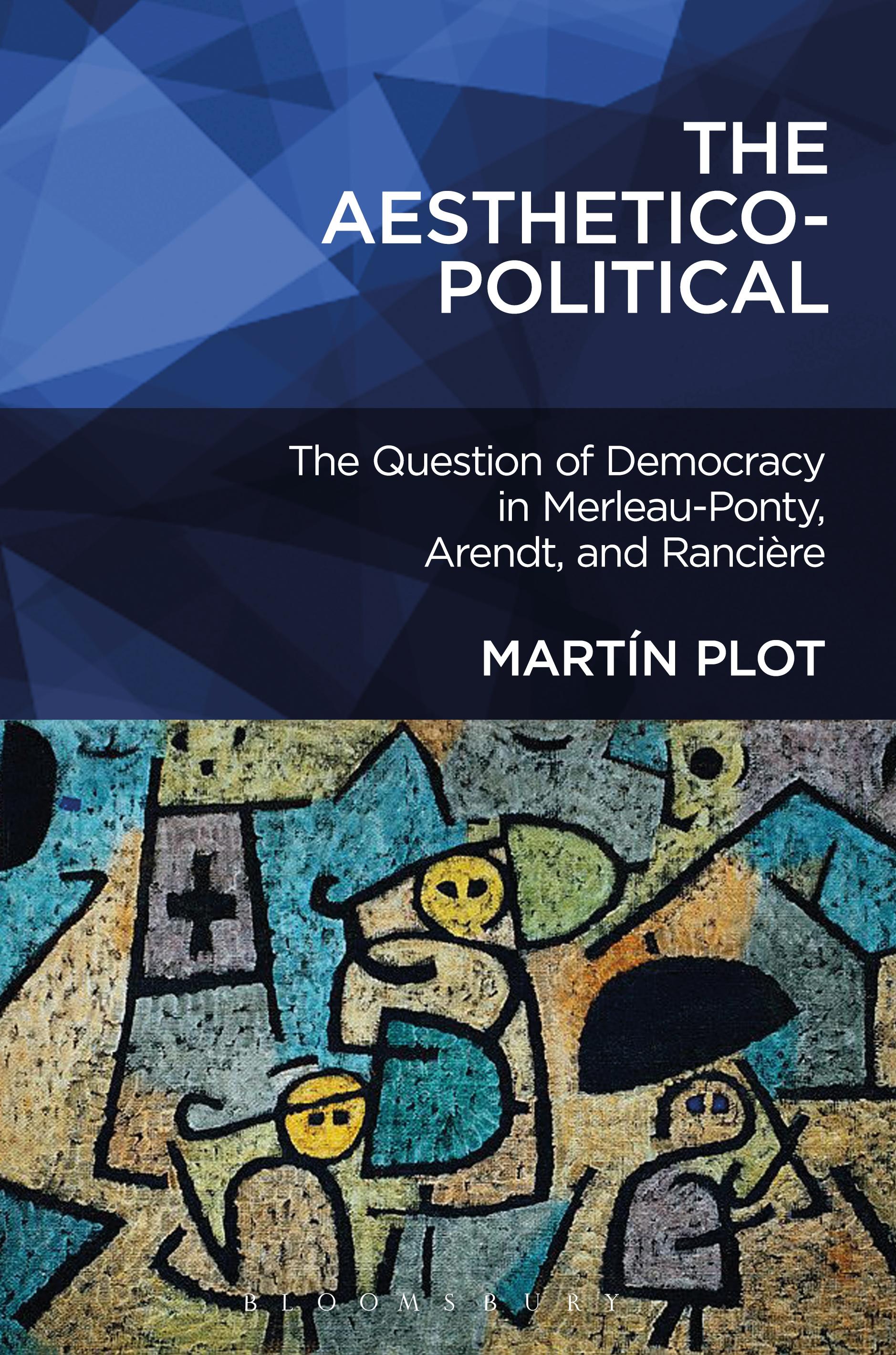
This study uses new arguments to reinvestigate the relation between aesthetics and politics in the contemporary debates on democratic theory and radical democracy.
First, Carl Schmitt and Claude Lefort help delineate the contours of an aesthetico-political understanding of democracy, which is developed further by studying Merleau-Ponty, Rancière, and Arendt.
The ideas of Merleau-Ponty serve to establish a general "ontological" framework that aims to contest the dominant currents in contemporary democratic theory. It is argued that Merleau-Ponty, Arendt, and Rancière share a general understanding of the political as the contingently contested spaces and times of appearances. However, the articulation of their thought leads to reconsider and explore under-theorized as well as controversial dimensions of their work.
This search for new connections between the political and the aesthetic thought of Arendt and Merleau-Ponty on one hand and the current widespread interest in Rancière's aesthetic politics on the other make this book a unique study that will appeal to anyone who is interested in political theory and contemporary continental philosophy.
First, Carl Schmitt and Claude Lefort help delineate the contours of an aesthetico-political understanding of democracy, which is developed further by studying Merleau-Ponty, Rancière, and Arendt.
The ideas of Merleau-Ponty serve to establish a general "ontological" framework that aims to contest the dominant currents in contemporary democratic theory. It is argued that Merleau-Ponty, Arendt, and Rancière share a general understanding of the political as the contingently contested spaces and times of appearances. However, the articulation of their thought leads to reconsider and explore under-theorized as well as controversial dimensions of their work.
This search for new connections between the political and the aesthetic thought of Arendt and Merleau-Ponty on one hand and the current widespread interest in Rancière's aesthetic politics on the other make this book a unique study that will appeal to anyone who is interested in political theory and contemporary continental philosophy.
Zahle einfach mit Karte, Klarna, Apple Pay oder Google Pay. Nicht zufrieden? Du hast immer ein 14-tägiges Widerrufsrecht. Lies mehr in unseren AGB. Hast du Fragen, schreib uns eine E-Mail an hello@memmo.org.
Memmo macht das Lernen einfacher – wo auch immer du bist. Bei uns findest du deine Kursbücher und smarte Lerntools an einem Ort: Zusammenfassungen, Quizzes, Podcasts und Lernkarten. Und Ted, dein Lernbuddy, beantwortet alles, was du wissen möchtest. Über 50.000 Studierende lernen bereits hier – gemacht, damit du schneller lernst und weniger Stress hast.