
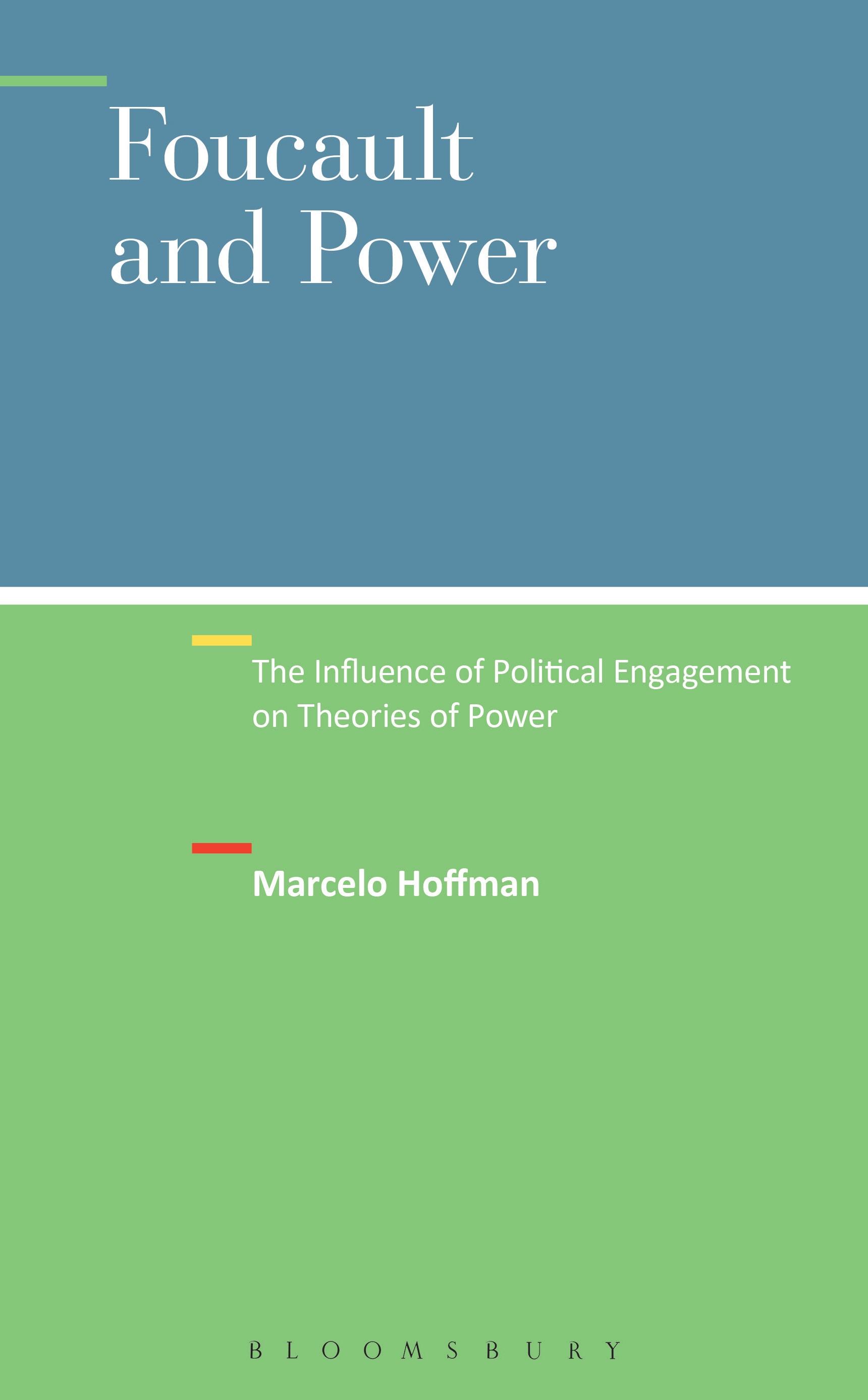
Michel Foucault is one of the most preeminent theorists of power, yet the relationship between his militant activities and his analysis of power remains unclear. The book explores this relationship to explain the development of Foucault's thinking about power.
Using newly translated and unpublished materials, it examines what led Foucault to take on the question of power in the early 1970s and subsequently refine his thinking, working through different models (war and government) and modalities (disciplinary, biopolitical and governmental). Looking at Foucault's political trajectory, from his immersion in the prisoner support movement to his engagements with the Iranian revolution and Solidarity in Poland, the book shows the militant underpinning of his interest in the question of power and its various shifts and mutations.
This thorough account, which includes the first translation of a report edited by Foucault on prison conditions, will provide students in contemporary political theory with a better understanding of Foucault's thinking about power and of the interplay between political activities and theoretical productions.
Using newly translated and unpublished materials, it examines what led Foucault to take on the question of power in the early 1970s and subsequently refine his thinking, working through different models (war and government) and modalities (disciplinary, biopolitical and governmental). Looking at Foucault's political trajectory, from his immersion in the prisoner support movement to his engagements with the Iranian revolution and Solidarity in Poland, the book shows the militant underpinning of his interest in the question of power and its various shifts and mutations.
This thorough account, which includes the first translation of a report edited by Foucault on prison conditions, will provide students in contemporary political theory with a better understanding of Foucault's thinking about power and of the interplay between political activities and theoretical productions.
Zahle einfach mit Karte, Klarna, Apple Pay oder Google Pay. Nicht zufrieden? Du hast immer ein 14-tägiges Widerrufsrecht. Lies mehr in unseren AGB. Hast du Fragen, schreib uns eine E-Mail an hello@memmo.org.
Memmo macht das Lernen einfacher – wo auch immer du bist. Bei uns findest du deine Kursbücher und smarte Lerntools an einem Ort: Zusammenfassungen, Quizzes, Podcasts und Lernkarten. Und Ted, dein Lernbuddy, beantwortet alles, was du wissen möchtest. Über 50.000 Studierende lernen bereits hier – gemacht, damit du schneller lernst und weniger Stress hast.