
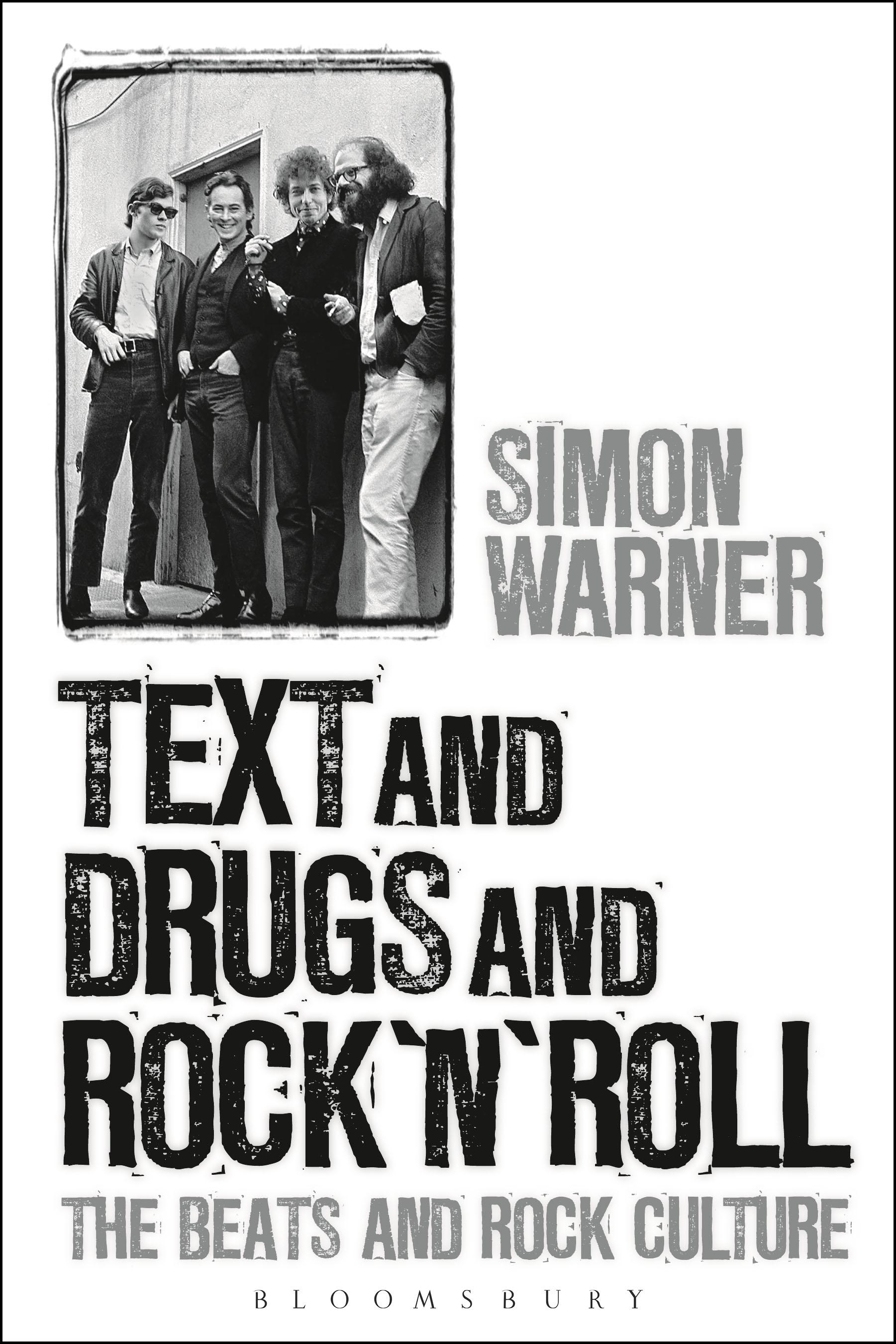
Text and Drugs and Rock'n'Roll explores the interaction between two of the most powerful socio-cultural movements in the post-war years - the literary forces of the Beat Generation and the musical energies of rock and its attendant culture.
Simon Warner examines the interweaving strands, seeded by the poet/novelists Jack Kerouac, Allen Ginsberg, William Burroughs and others in the 1940s and 1950s, and cultivated by most of the major rock figures who emerged after 1960 - Bob Dylan, the Beatles, Bowie, the Clash and Kurt Cobain, to name just a few.
This fascinating cultural history delves into a wide range of issues: Was rock culture the natural heir to the activities of the Beats? Were the hippies the Beats of the 1960s? What attitude did the Beat writers have towards musical forms and particularly rock music? How did literary works shape the consciousness of leading rock music-makers and their followers? Why did Beat literature retain its cultural potency with later rock musicians who rejected hippie values? How did rock musicians use the material of Beat literature in their own work? How did Beat figures become embroiled in the process of rock creativity?
These questions are addressed through a number of approaches - the influence of drugs, the relevance of politics, the effect of religious and spiritual pursuits, the rise of the counter-culture, the issue of sub-cultures and their construction, and so on. The result is a highly readable history of the innumerable links between two of the most revolutionary artistic movements of the last 60 years.
Simon Warner examines the interweaving strands, seeded by the poet/novelists Jack Kerouac, Allen Ginsberg, William Burroughs and others in the 1940s and 1950s, and cultivated by most of the major rock figures who emerged after 1960 - Bob Dylan, the Beatles, Bowie, the Clash and Kurt Cobain, to name just a few.
This fascinating cultural history delves into a wide range of issues: Was rock culture the natural heir to the activities of the Beats? Were the hippies the Beats of the 1960s? What attitude did the Beat writers have towards musical forms and particularly rock music? How did literary works shape the consciousness of leading rock music-makers and their followers? Why did Beat literature retain its cultural potency with later rock musicians who rejected hippie values? How did rock musicians use the material of Beat literature in their own work? How did Beat figures become embroiled in the process of rock creativity?
These questions are addressed through a number of approaches - the influence of drugs, the relevance of politics, the effect of religious and spiritual pursuits, the rise of the counter-culture, the issue of sub-cultures and their construction, and so on. The result is a highly readable history of the innumerable links between two of the most revolutionary artistic movements of the last 60 years.
Zahle einfach mit Karte, Klarna, Apple Pay oder Google Pay. Nicht zufrieden? Du hast immer ein 14-tägiges Widerrufsrecht. Lies mehr in unseren AGB. Hast du Fragen, schreib uns eine E-Mail an hello@memmo.org.
Memmo macht das Lernen einfacher – wo auch immer du bist. Bei uns findest du deine Kursbücher und smarte Lerntools an einem Ort: Zusammenfassungen, Quizzes, Podcasts und Lernkarten. Und Ted, dein Lernbuddy, beantwortet alles, was du wissen möchtest. Über 50.000 Studierende lernen bereits hier – gemacht, damit du schneller lernst und weniger Stress hast.