
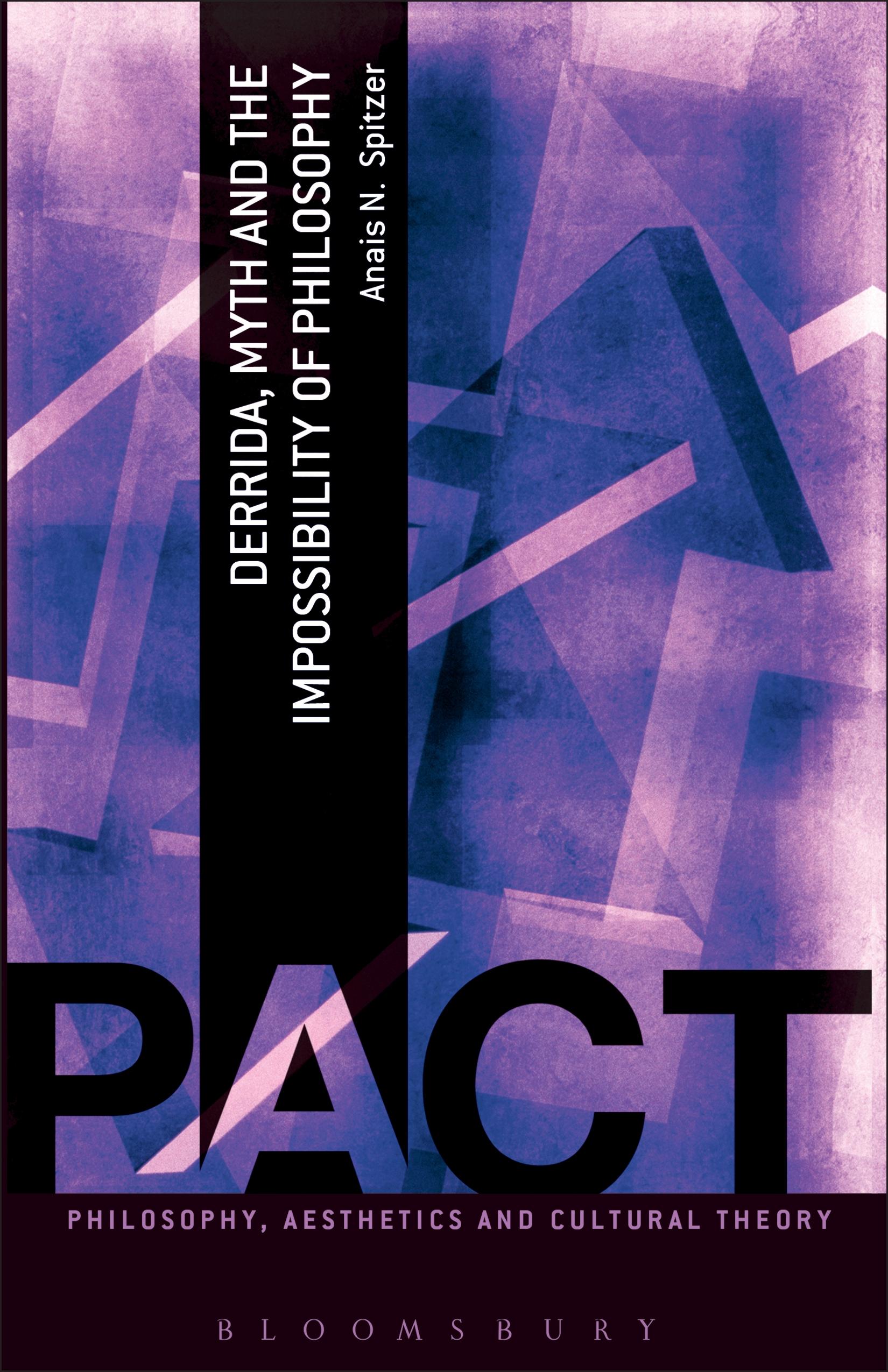
In Derrida, Myth and the Impossibility of Philosophy, Anais N. Spitzer shows that philosophy cannot separate itself from myth since myth is an inevitable condition of the possibility of philosophy.
Bombarded by narratives that terrorize and repress, we may often consider myth to be constrictive dogma or, at best, something to be readily disregarded as unphilosophical and irrelevant. However, such dismissals miss a crucial aspect of myth. Harnessing the insights of Jacques Derrida's deconstruction and Mark C. Taylor's philosophical reading of complexity theory, Derrida, Myth and the Impossibility of Philosophy provocatively reframes the pivotal relation of myth to thinking and to philosophy, demonstrating that myth's inherent ambiguity engenders vital and inescapable deconstructive propensities. Exploring myth's disruptive presence, Spitzer shows that philosophy cannot separate itself from myth. Instead, myth is an inevitable condition of the possibility of philosophy. This study provides a nuanced account of myth in the postmodern era, not only laying out the deconstructive underpinnings of myth in philosophy and religion, but establishing the very necessity of myth in the study of ideas.
Bombarded by narratives that terrorize and repress, we may often consider myth to be constrictive dogma or, at best, something to be readily disregarded as unphilosophical and irrelevant. However, such dismissals miss a crucial aspect of myth. Harnessing the insights of Jacques Derrida's deconstruction and Mark C. Taylor's philosophical reading of complexity theory, Derrida, Myth and the Impossibility of Philosophy provocatively reframes the pivotal relation of myth to thinking and to philosophy, demonstrating that myth's inherent ambiguity engenders vital and inescapable deconstructive propensities. Exploring myth's disruptive presence, Spitzer shows that philosophy cannot separate itself from myth. Instead, myth is an inevitable condition of the possibility of philosophy. This study provides a nuanced account of myth in the postmodern era, not only laying out the deconstructive underpinnings of myth in philosophy and religion, but establishing the very necessity of myth in the study of ideas.
Zahle einfach mit Karte, Klarna, Apple Pay oder Google Pay. Nicht zufrieden? Du hast immer ein 14-tägiges Widerrufsrecht. Lies mehr in unseren AGB. Hast du Fragen, schreib uns eine E-Mail an hello@memmo.org.
Memmo macht das Lernen einfacher – wo auch immer du bist. Bei uns findest du deine Kursbücher und smarte Lerntools an einem Ort: Zusammenfassungen, Quizzes, Podcasts und Lernkarten. Und Ted, dein Lernbuddy, beantwortet alles, was du wissen möchtest. Über 50.000 Studierende lernen bereits hier – gemacht, damit du schneller lernst und weniger Stress hast.