
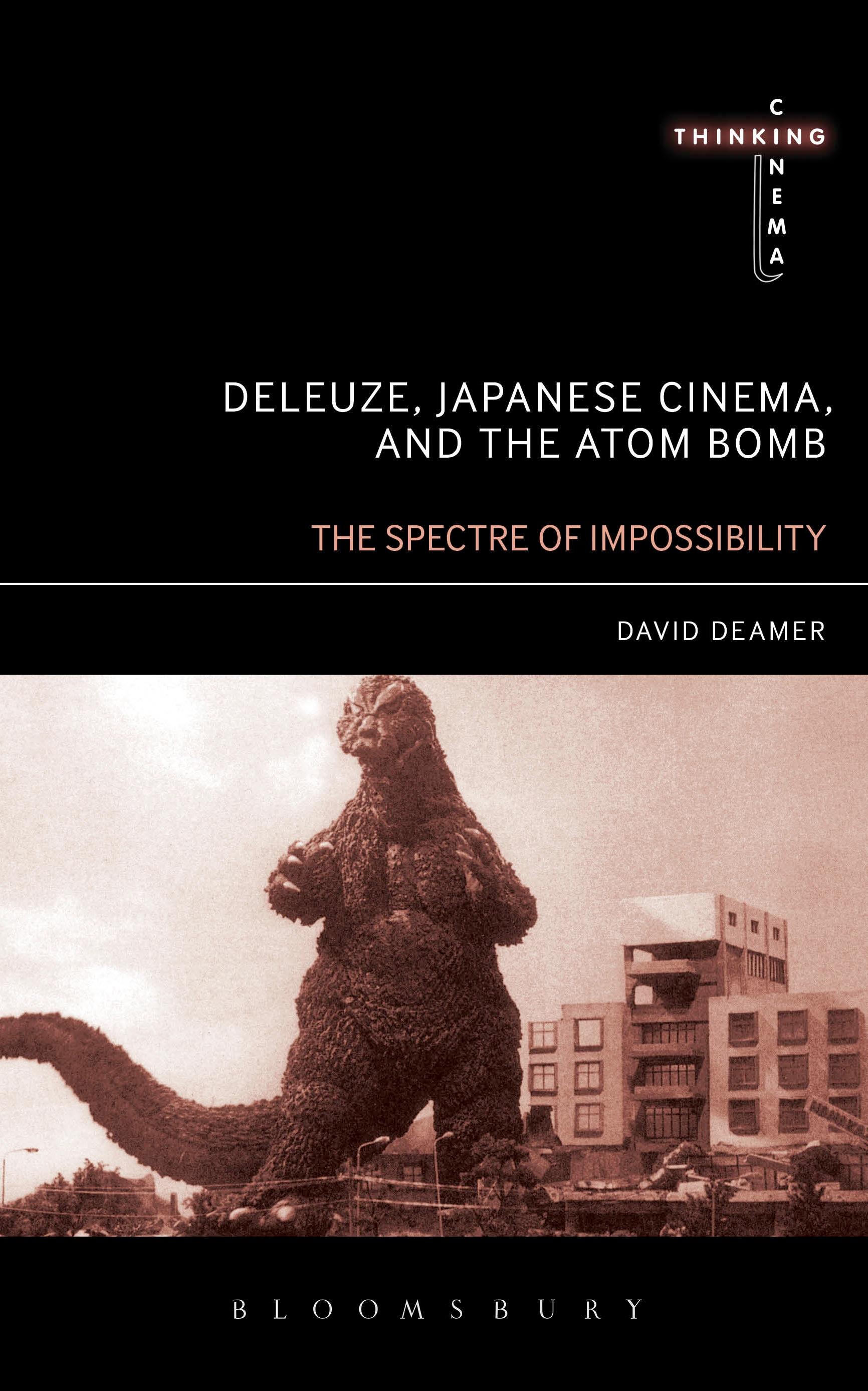
David Deamer establishes the first ever sustained encounter between Gilles Deleuze's Cinema books and post-war Japanese cinema, exploring how Japanese films responded to the atomic bombings of Hiroshima and Nagasaki. From the early days of occupation political censorship to the social and cultural freedoms of the 1960s and beyond, the book examines how images of the nuclear event appear in post-war Japanese cinema.
Each chapter begins by focusing upon one or more of three key Deleuzian themes – image, history and thought – before going on to look at a selection of films from 1945 to the present day. These include movies by well-known directors Kurosawa Akira, Shindo Kaneto, Oshima Nagisa and Imamura Shohei; popular and cult classics – Godzilla (1954), Akira (1988) and Tetsuo (1989); contemporary genre flicks – Ring (1998), Dead or Alive (1999) and Casshern (2004); the avant-garde and rarely seen documentaries. The author provides a series of tables to clarify the conceptual components deployed within the text, establishing a unique addition to Deleuze and cinema studies.
Each chapter begins by focusing upon one or more of three key Deleuzian themes – image, history and thought – before going on to look at a selection of films from 1945 to the present day. These include movies by well-known directors Kurosawa Akira, Shindo Kaneto, Oshima Nagisa and Imamura Shohei; popular and cult classics – Godzilla (1954), Akira (1988) and Tetsuo (1989); contemporary genre flicks – Ring (1998), Dead or Alive (1999) and Casshern (2004); the avant-garde and rarely seen documentaries. The author provides a series of tables to clarify the conceptual components deployed within the text, establishing a unique addition to Deleuze and cinema studies.
Zahle einfach mit Karte, Klarna, Apple Pay oder Google Pay. Nicht zufrieden? Du hast immer ein 14-tägiges Widerrufsrecht. Lies mehr in unseren AGB. Hast du Fragen, schreib uns eine E-Mail an hello@memmo.org.
Memmo macht das Lernen einfacher – wo auch immer du bist. Bei uns findest du deine Kursbücher und smarte Lerntools an einem Ort: Zusammenfassungen, Quizzes, Podcasts und Lernkarten. Und Ted, dein Lernbuddy, beantwortet alles, was du wissen möchtest. Über 50.000 Studierende lernen bereits hier – gemacht, damit du schneller lernst und weniger Stress hast.