
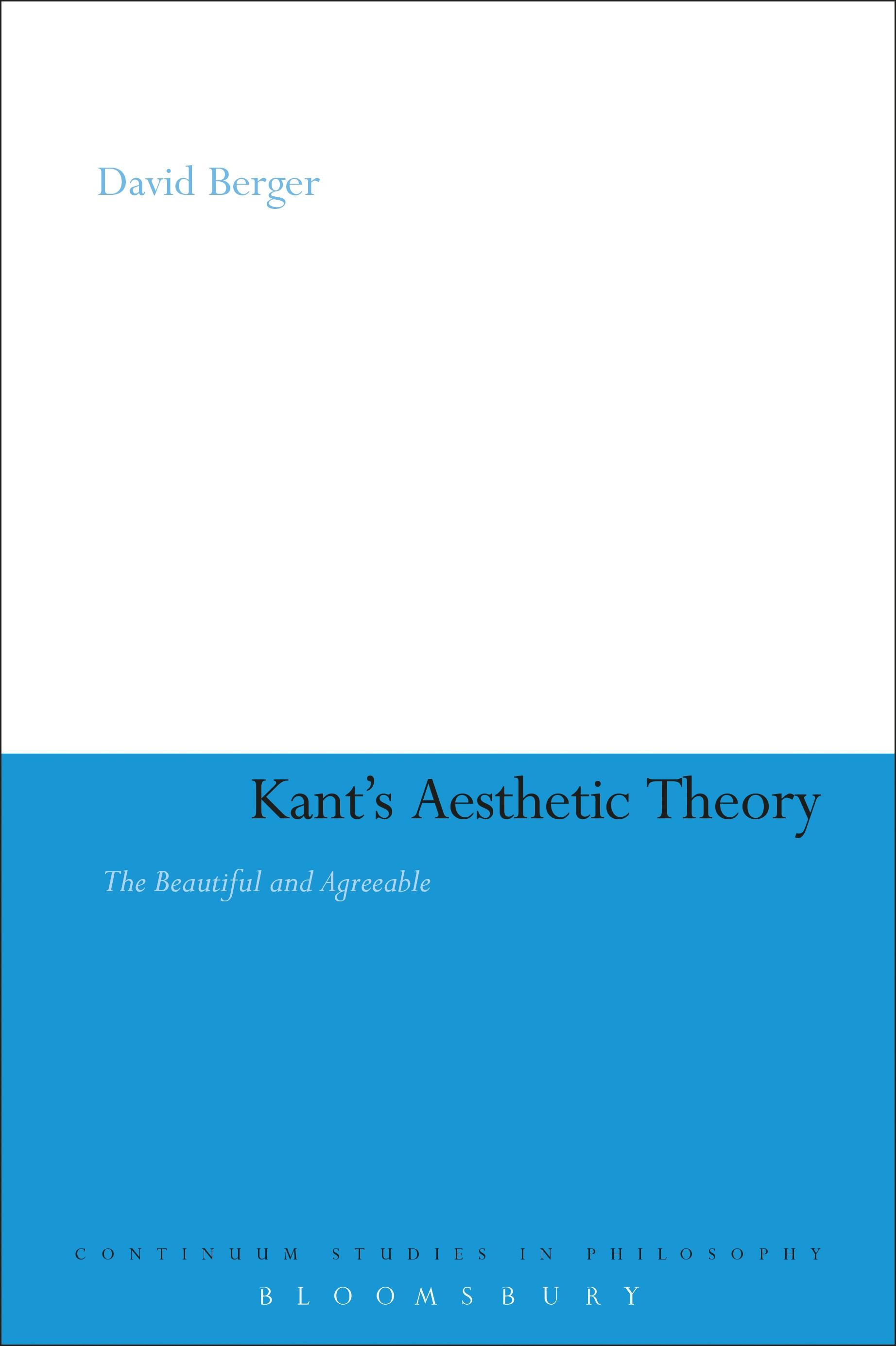
Taste is ordinarily thought of in terms of two very different idioms - a normative idiom of taste as a standard of appraisal and a non-normative idiom of taste as a purely personal matter. Kant attempts to capture this twofold conception of taste within the terms of his mature critical philosophy by distinguishing between the beautiful and the agreeable. Scholars have largely taken Kant's distinction for granted, but David Berger argues that it is both far richer and far more problematic than it may appear. Berger examines in detail Kant's various attempts to distinguish beauty from agreeableness. This approach reveals the complex interplay between Kant's substantive aesthetic theory and his broader views on metaphysics and epistemology. Indeed, Berger argues that the real interest of Kant's distinction between beauty and agreeableness is ultimately epistemological.
His interpretation brings Kant's aesthetic theory into dialogue with questions at the heart of contemporary analytic philosophy and shows how philosophical aesthetics can offer fresh insights into contemporary philosophical debates.
His interpretation brings Kant's aesthetic theory into dialogue with questions at the heart of contemporary analytic philosophy and shows how philosophical aesthetics can offer fresh insights into contemporary philosophical debates.
Zahle einfach mit Karte, Klarna, Apple Pay oder Google Pay. Nicht zufrieden? Du hast immer ein 14-tägiges Widerrufsrecht. Lies mehr in unseren AGB. Hast du Fragen, schreib uns eine E-Mail an hello@memmo.org.
Memmo macht das Lernen einfacher – wo auch immer du bist. Bei uns findest du deine Kursbücher und smarte Lerntools an einem Ort: Zusammenfassungen, Quizzes, Podcasts und Lernkarten. Und Ted, dein Lernbuddy, beantwortet alles, was du wissen möchtest. Über 50.000 Studierende lernen bereits hier – gemacht, damit du schneller lernst und weniger Stress hast.