
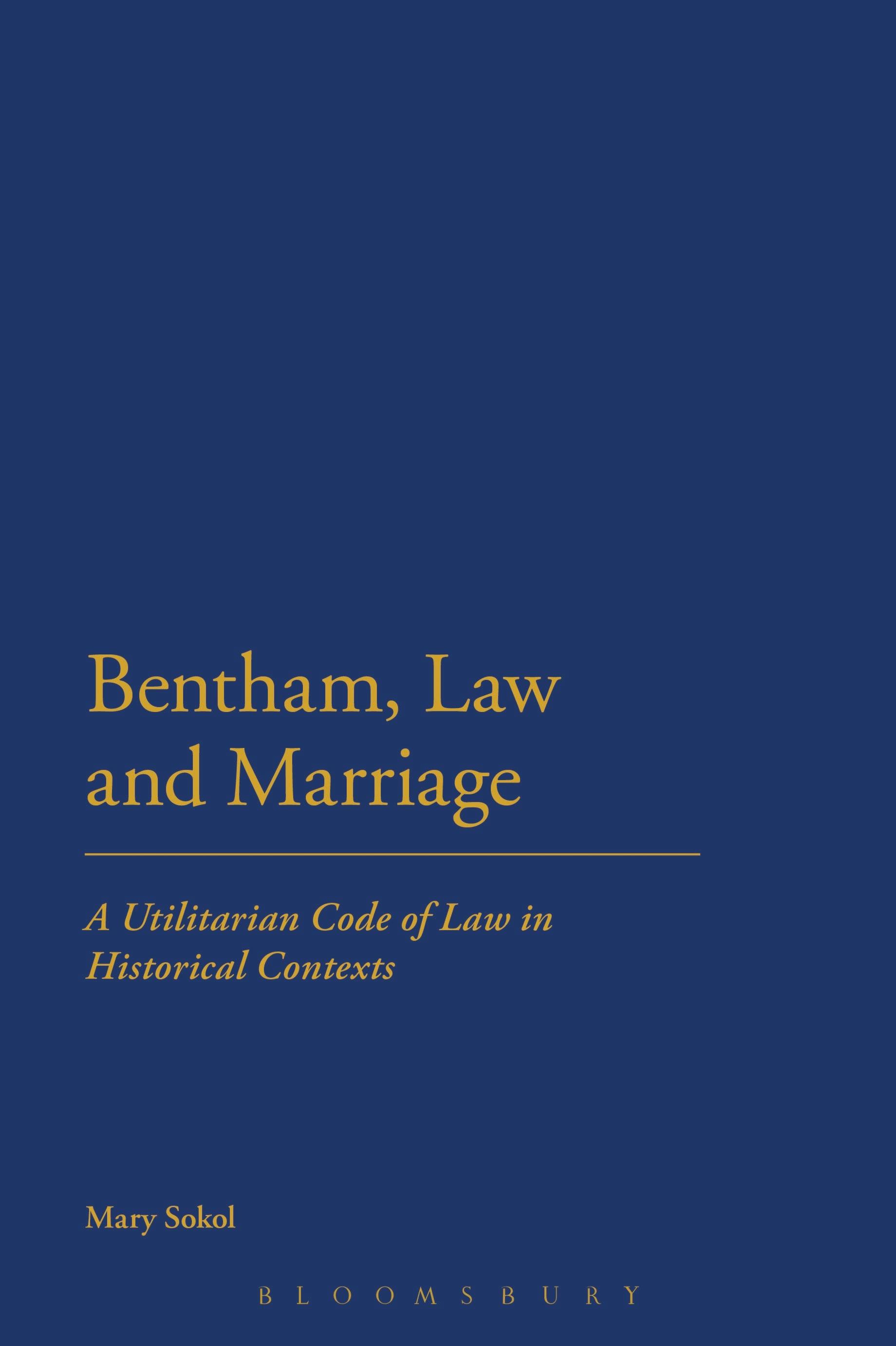
Jeremy Bentham's law of marriage is firmly based on the principle of utility, which claims that all human actions are governed by a wish to gain pleasure and avoid pain, and on the proposition that men and women are equal. He wrote in a late eighteenth century context of Enlightenment debate about the status of women, marriage and the family, as did his contemporaries Wollstonecraft and More. Bentham responded particularly to the thought of Milton, Locke, Hume, Paley and to the French thinkers Montesquieu, Diderot and Rousseau. These were the turbulent years leading to the French Revolution and it is in this milieu that Mary Sokol seeks to rediscover the 'historical' Bentham. Instead of regarding his thought as 'timeless', she considers Bentham's attitude to the reform of marriage law and plans for the social reform of marriage, placing both his life and work in the philosophical and historical context of his time.
Zahle einfach mit Karte, Klarna, Apple Pay oder Google Pay. Nicht zufrieden? Du hast immer ein 14-tägiges Widerrufsrecht. Lies mehr in unseren AGB. Hast du Fragen, schreib uns eine E-Mail an hello@memmo.org.
Memmo macht das Lernen einfacher – wo auch immer du bist. Bei uns findest du deine Kursbücher und smarte Lerntools an einem Ort: Zusammenfassungen, Quizzes, Podcasts und Lernkarten. Und Ted, dein Lernbuddy, beantwortet alles, was du wissen möchtest. Über 50.000 Studierende lernen bereits hier – gemacht, damit du schneller lernst und weniger Stress hast.