
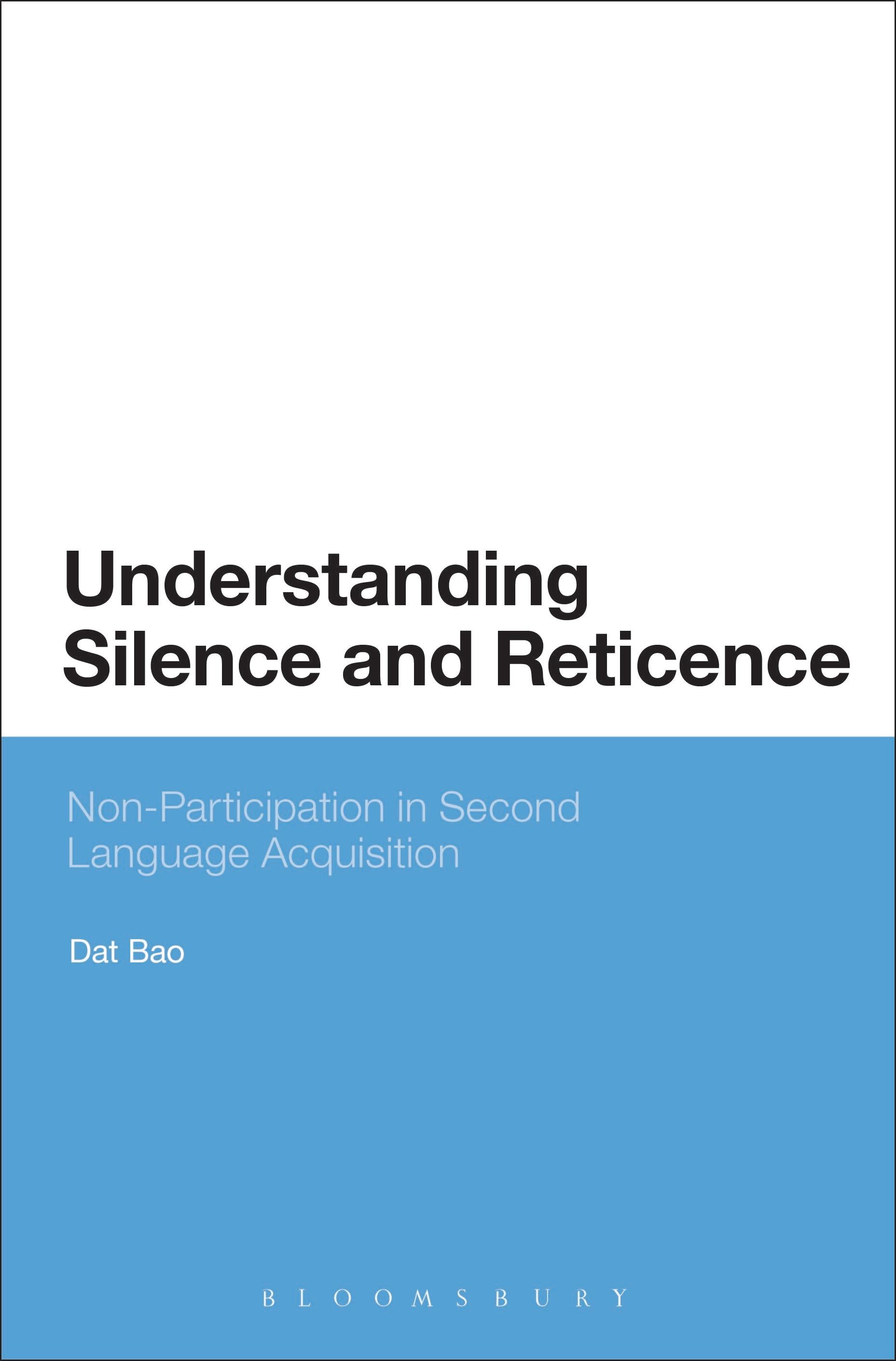
What is the state of that which is not spoken? This book presents empirical research related to the phenomenon of reticence in the second language classroom, connecting current knowledge and theoretical debates in language learning and acquisition.
Why do language learners remain silent or exhibit reticence? In what ways can silence in the language learning classroom be justified? To what extent should learners employ or modify silence? Do quiet learners work more effectively with quiet or verbal learners? Looking at evidence from Australia, China, Japan, Korea, and Vietnam, the book presents research data on many internal and external forces that influence the silent mode of learning in contemporary education. This work gives the reader a chance to reflect more profoundly on cultural ways of learning languages.
Why do language learners remain silent or exhibit reticence? In what ways can silence in the language learning classroom be justified? To what extent should learners employ or modify silence? Do quiet learners work more effectively with quiet or verbal learners? Looking at evidence from Australia, China, Japan, Korea, and Vietnam, the book presents research data on many internal and external forces that influence the silent mode of learning in contemporary education. This work gives the reader a chance to reflect more profoundly on cultural ways of learning languages.
Zahle einfach mit Karte, Klarna, Apple Pay oder Google Pay. Nicht zufrieden? Du hast immer ein 14-tägiges Widerrufsrecht. Lies mehr in unseren AGB. Hast du Fragen, schreib uns eine E-Mail an hello@memmo.org.
Memmo macht das Lernen einfacher – wo auch immer du bist. Bei uns findest du deine Kursbücher und smarte Lerntools an einem Ort: Zusammenfassungen, Quizzes, Podcasts und Lernkarten. Und Ted, dein Lernbuddy, beantwortet alles, was du wissen möchtest. Über 50.000 Studierende lernen bereits hier – gemacht, damit du schneller lernst und weniger Stress hast.