
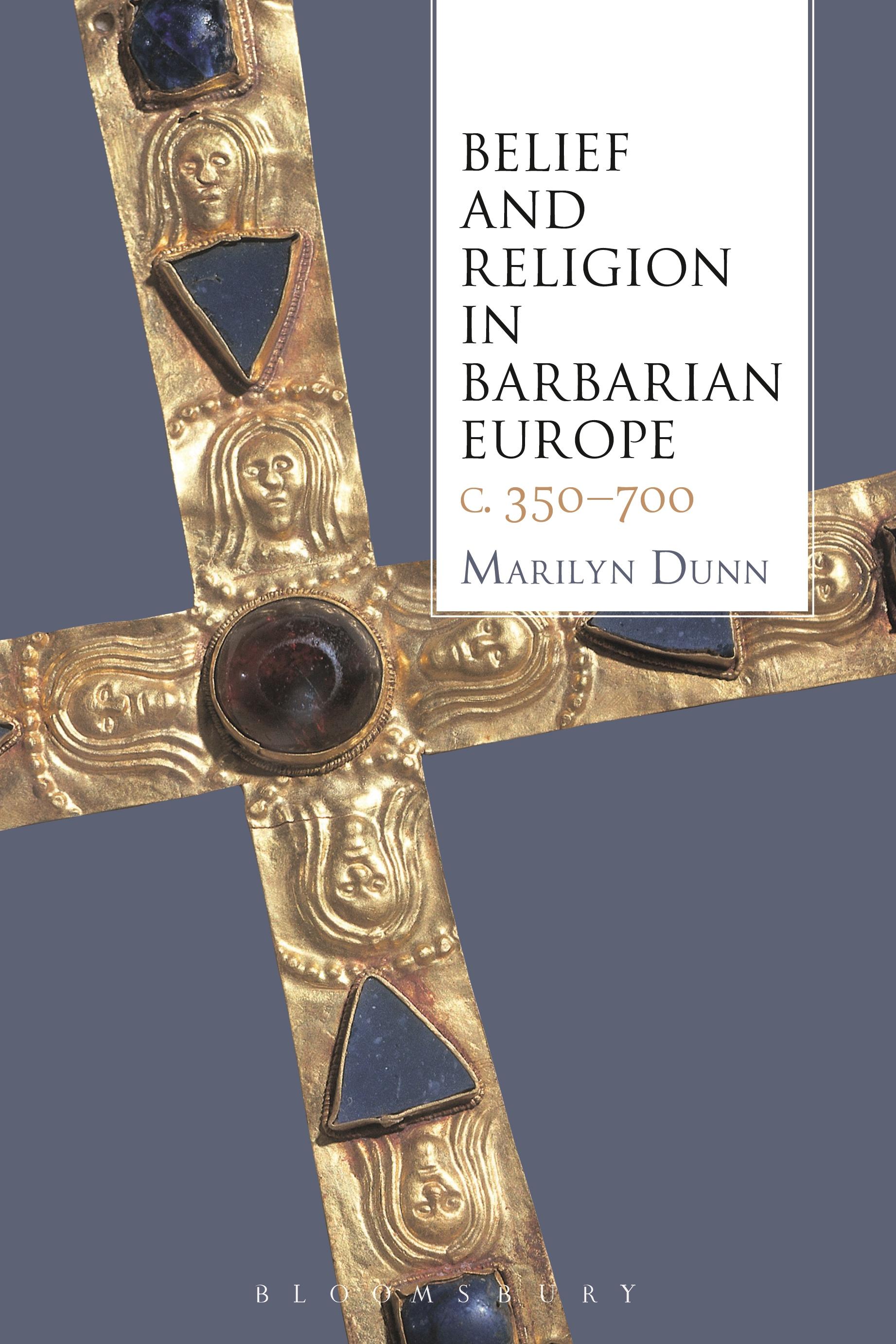
This ground-breaking study offers a new paradigm for understanding the beliefs and religions of the Goths, Burgundians, Sueves, Franks and Lombards as they converted from paganism to Christianity between c.350 and c.700 CE. Combining history and theology with approaches drawn from the cognitive science of religion, Belief and Religion in Barbarian Europe uses both written and archaeological evidence to challenge many older ideas. Beginning with a re-examination of our knowledge about the deities and rituals of their original religions, it goes on to question the assumption that the Germanic peoples were merely passive recipients of Christian doctrine, arguing that so-called 'Arianism' was first developed as an 'entry-level' Christianity for the Goths.
Focusing on individual ethnic groupings in turn, it presents a fresh view of the relationship between religion and politics as their rulers attempted to opt for Catholicism. In place of familiar debates about post-conversion 'pagan survivals', contemporary texts and legislation are analysed to create an innovative cognitive perspective on the ways in which the Church endeavoured to bring the Christian God into people's thoughts and actions. The work also includes a survey of a wide range of written and archaeological evidence, contrasting traditional conceptions of death, afterlife and funerary ritual with Christian doctrine and practice in these areas and exploring some of the techniques developed by the Church for assuaging popular anxieties about Christian burial and the Christian afterlife.
Focusing on individual ethnic groupings in turn, it presents a fresh view of the relationship between religion and politics as their rulers attempted to opt for Catholicism. In place of familiar debates about post-conversion 'pagan survivals', contemporary texts and legislation are analysed to create an innovative cognitive perspective on the ways in which the Church endeavoured to bring the Christian God into people's thoughts and actions. The work also includes a survey of a wide range of written and archaeological evidence, contrasting traditional conceptions of death, afterlife and funerary ritual with Christian doctrine and practice in these areas and exploring some of the techniques developed by the Church for assuaging popular anxieties about Christian burial and the Christian afterlife.
Seiten: 256
Kategorie: Religion & Teologi
e-ISBN: 9781441123824
Versandgewicht: 1.2 kg
Versand in: 1-2 Tage
Zahle einfach mit Karte, Klarna, Apple Pay oder Google Pay. Nicht zufrieden? Du hast immer ein 14-tägiges Widerrufsrecht. Lies mehr in unseren AGB. Hast du Fragen, schreib uns eine E-Mail an hello@memmo.org.
Memmo macht das Lernen einfacher – wo auch immer du bist. Bei uns findest du deine Kursbücher und smarte Lerntools an einem Ort: Zusammenfassungen, Quizzes, Podcasts und Lernkarten. Und Ted, dein Lernbuddy, beantwortet alles, was du wissen möchtest. Über 50.000 Studierende lernen bereits hier – gemacht, damit du schneller lernst und weniger Stress hast.