
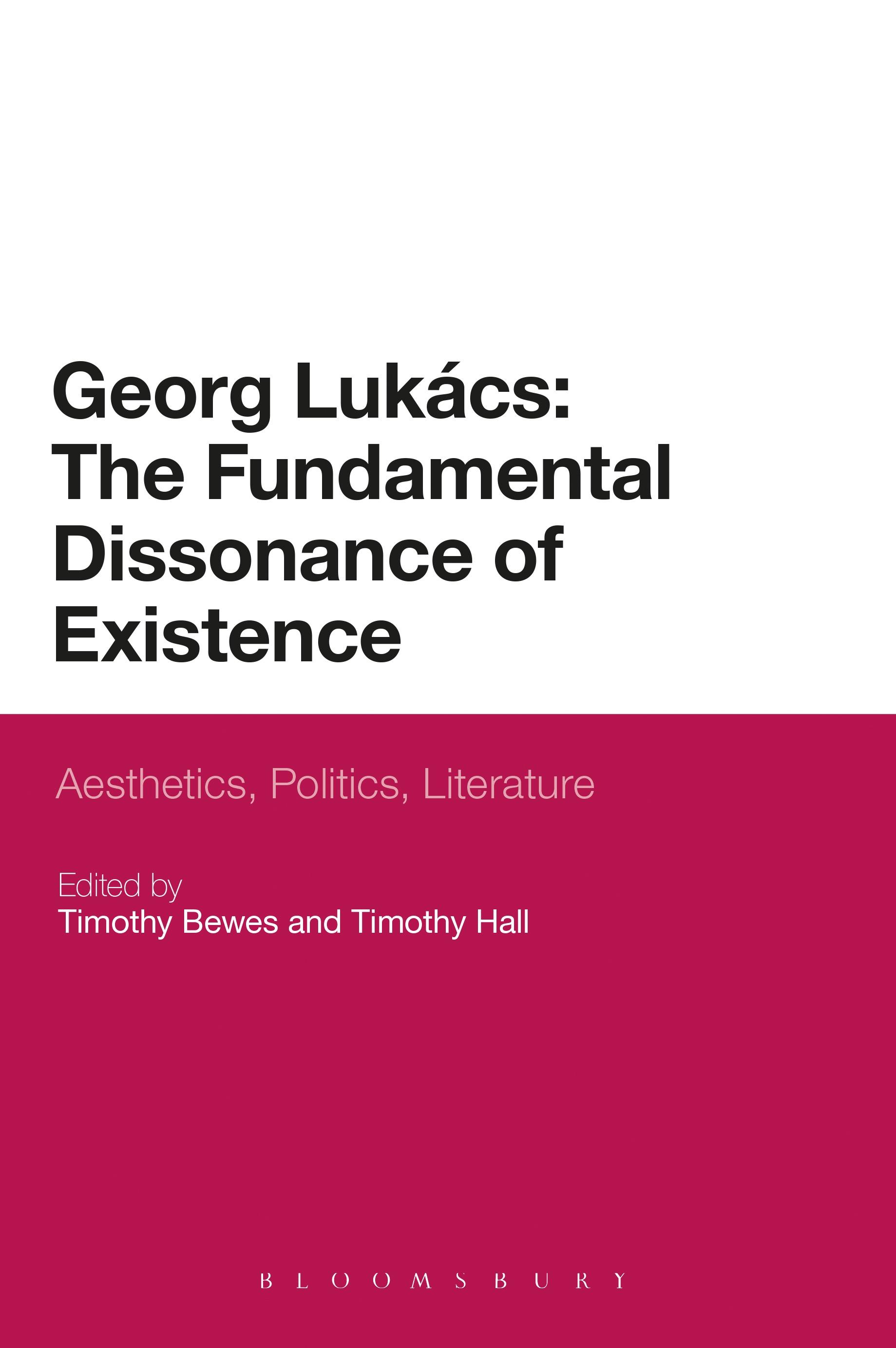
The end of the Soviet period, the vast expansion in the power and influence of capital, and recent developments in social and aesthetic theory, have made the work of Hungarian Marxist philosopher and social critic Georg Lukács more vital than ever.
The very innovations in literary method that, during the 80s and 90s, marginalized him in the West have now made possible new readings of Lukács, less in thrall to the positions taken by Lukács himself on political and aesthetic matters. What these developments amount to, this book argues, is an opportunity to liberate Lukács's thought from its formal and historical limitations, a possibility that was always inherent in Lukács's own thinking about the paradoxes of form. This collection brings together recent work on Lukács from the fields of Philosophy, Social and Political Thought, Literary and Cultural Studies. Against the odds, Lukács's thought has survived: as a critique of late capitalism, as a guide to the contradictions of modernity, and as a model for a temperament that refuses all accommodation with the way things are.
The very innovations in literary method that, during the 80s and 90s, marginalized him in the West have now made possible new readings of Lukács, less in thrall to the positions taken by Lukács himself on political and aesthetic matters. What these developments amount to, this book argues, is an opportunity to liberate Lukács's thought from its formal and historical limitations, a possibility that was always inherent in Lukács's own thinking about the paradoxes of form. This collection brings together recent work on Lukács from the fields of Philosophy, Social and Political Thought, Literary and Cultural Studies. Against the odds, Lukács's thought has survived: as a critique of late capitalism, as a guide to the contradictions of modernity, and as a model for a temperament that refuses all accommodation with the way things are.
Zahle einfach mit Karte, Klarna, Apple Pay oder Google Pay. Nicht zufrieden? Du hast immer ein 14-tägiges Widerrufsrecht. Lies mehr in unseren AGB. Hast du Fragen, schreib uns eine E-Mail an hello@memmo.org.
Memmo macht das Lernen einfacher – wo auch immer du bist. Bei uns findest du deine Kursbücher und smarte Lerntools an einem Ort: Zusammenfassungen, Quizzes, Podcasts und Lernkarten. Und Ted, dein Lernbuddy, beantwortet alles, was du wissen möchtest. Über 50.000 Studierende lernen bereits hier – gemacht, damit du schneller lernst und weniger Stress hast.