
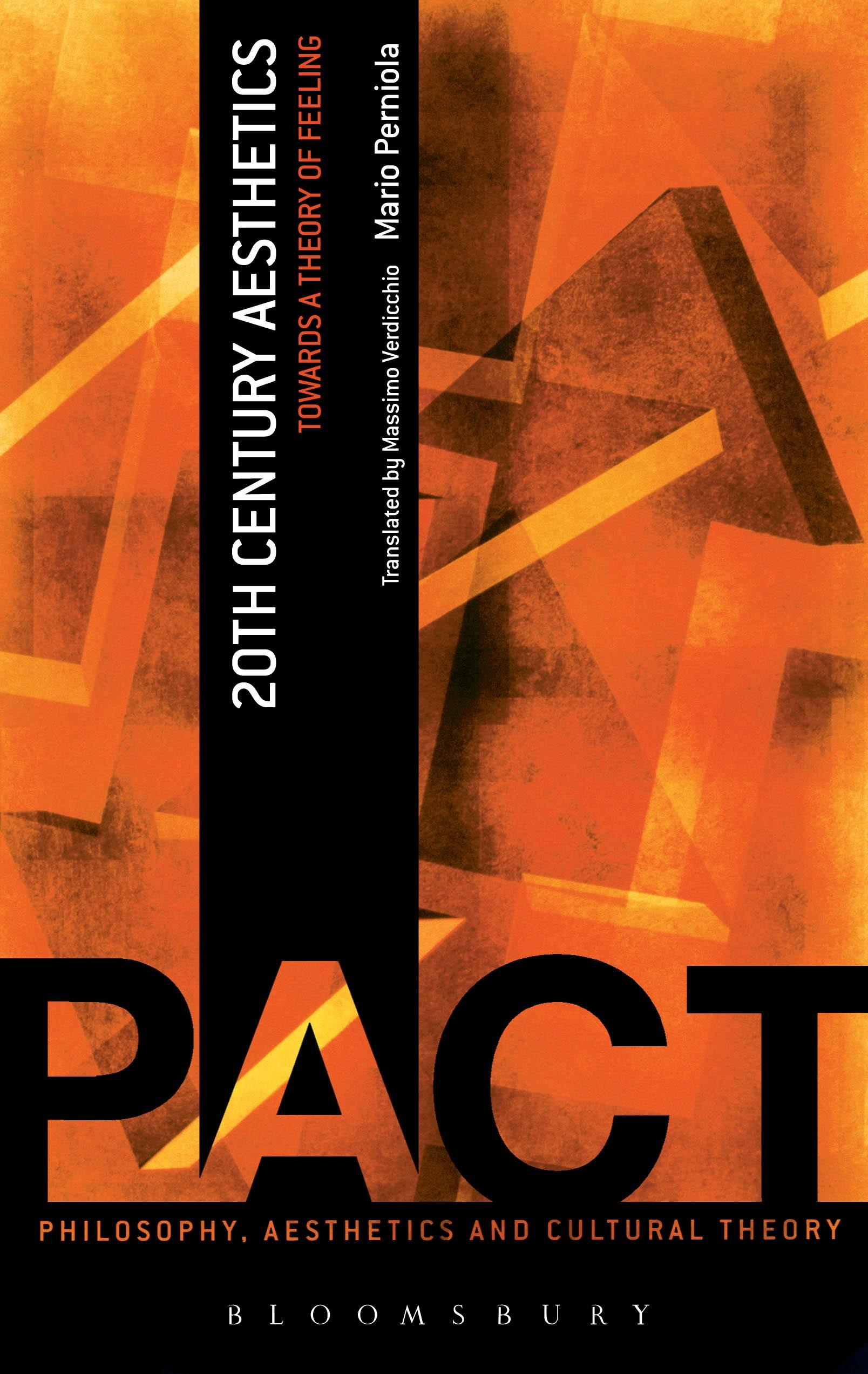
In our contemporary age aesthetics seems to crumble and no longer be reducible to a coherent image. And yet given the vast amount of works in aesthetics produced in the last hundred years, this age could be defined “the century of aesthetics”.
20th Century Aesthetics is a new account of international aesthetic thought by Mario Perniola, one of Italy's leading contemporary thinkers. Starting from four conceptual fields – life, form, knowledge, action - Perniola identifies the lines of aesthetic reflection that derive from them and elucidates them with reference to major authors: from Dilthey to Foucault (aesthetics of life), from Wölfflin to McLuhan and Lyotard (aesthetics of form), from Croce to Goodman (aesthetics and knowledge), from Dewey to Bloom (aesthetics and action). There is also a fifth one that touches on the sphere of affectivity and emotionality, and which comes to aesthetics from thinkers like Freud, Heidegger, Wittgenstein, Lacan, Derrida and Deleuze. The volume concludes with an extensive sixth chapter on Japanese, Chinese, Indian, Islamic, Brazilian, South Korean and South East Asian aesthetic thought and on the present decline of Western aesthetic sensibility.
20th Century Aesthetics is a new account of international aesthetic thought by Mario Perniola, one of Italy's leading contemporary thinkers. Starting from four conceptual fields – life, form, knowledge, action - Perniola identifies the lines of aesthetic reflection that derive from them and elucidates them with reference to major authors: from Dilthey to Foucault (aesthetics of life), from Wölfflin to McLuhan and Lyotard (aesthetics of form), from Croce to Goodman (aesthetics and knowledge), from Dewey to Bloom (aesthetics and action). There is also a fifth one that touches on the sphere of affectivity and emotionality, and which comes to aesthetics from thinkers like Freud, Heidegger, Wittgenstein, Lacan, Derrida and Deleuze. The volume concludes with an extensive sixth chapter on Japanese, Chinese, Indian, Islamic, Brazilian, South Korean and South East Asian aesthetic thought and on the present decline of Western aesthetic sensibility.
Zahle einfach mit Karte, Klarna, Apple Pay oder Google Pay. Nicht zufrieden? Du hast immer ein 14-tägiges Widerrufsrecht. Lies mehr in unseren AGB. Hast du Fragen, schreib uns eine E-Mail an hello@memmo.org.
Memmo macht das Lernen einfacher – wo auch immer du bist. Bei uns findest du deine Kursbücher und smarte Lerntools an einem Ort: Zusammenfassungen, Quizzes, Podcasts und Lernkarten. Und Ted, dein Lernbuddy, beantwortet alles, was du wissen möchtest. Über 50.000 Studierende lernen bereits hier – gemacht, damit du schneller lernst und weniger Stress hast.