
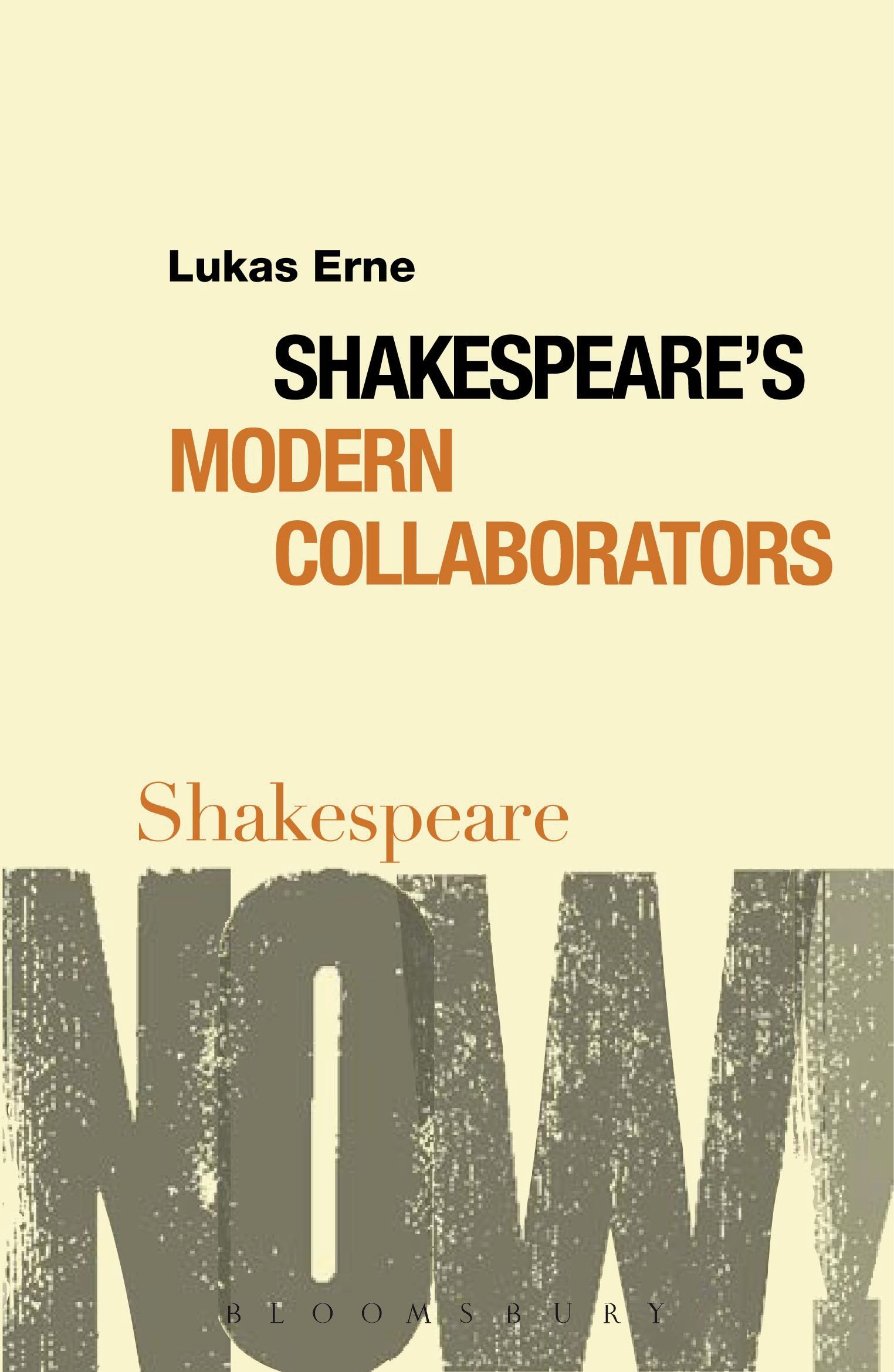
Recent work in Shakespeare studies has brought to the forefront a variety of ways in which the collaborative nature of Shakespearean drama can be investigated: collaborative performance (Shakespeare and his fellow actors); collaborative writing (Shakespeare and his co-authors); collaborative textual production (Shakespeare and his transcribers and printers). What this leaves unaccounted for is the form of collaboration that affects more than any other our modern reading experience of Shakespeare's plays: what we read as Shakespeare now always comes to us in the form of a collaborative enterprise - and is decisively shaped by the nature of the collaboration - between Shakespeare and his modern editors.
Contrary to much recent criticism, this book suggests that modern textual mediators have a positive rather than negative role: they are not simply 'pimps of discourse' or cultural tyrants whose oppressive interventions we need to 'unedit' but collaborators who can decisively shape and enable our response to Shakespeare's plays. Erne argues that any reader of Shakespeare, scholar, student, or general reader, approaches Shakespeare through modern editions that have an endlessly complicated and fascinating relationship to what Shakespeare may actually have intended and written, that modern editors determine what that relationship is, and that it is generally a very good thing that they do so.
Contrary to much recent criticism, this book suggests that modern textual mediators have a positive rather than negative role: they are not simply 'pimps of discourse' or cultural tyrants whose oppressive interventions we need to 'unedit' but collaborators who can decisively shape and enable our response to Shakespeare's plays. Erne argues that any reader of Shakespeare, scholar, student, or general reader, approaches Shakespeare through modern editions that have an endlessly complicated and fascinating relationship to what Shakespeare may actually have intended and written, that modern editors determine what that relationship is, and that it is generally a very good thing that they do so.
Zahle einfach mit Karte, Klarna, Apple Pay oder Google Pay. Nicht zufrieden? Du hast immer ein 14-tägiges Widerrufsrecht. Lies mehr in unseren AGB. Hast du Fragen, schreib uns eine E-Mail an hello@memmo.org.
Memmo macht das Lernen einfacher – wo auch immer du bist. Bei uns findest du deine Kursbücher und smarte Lerntools an einem Ort: Zusammenfassungen, Quizzes, Podcasts und Lernkarten. Und Ted, dein Lernbuddy, beantwortet alles, was du wissen möchtest. Über 50.000 Studierende lernen bereits hier – gemacht, damit du schneller lernst und weniger Stress hast.