
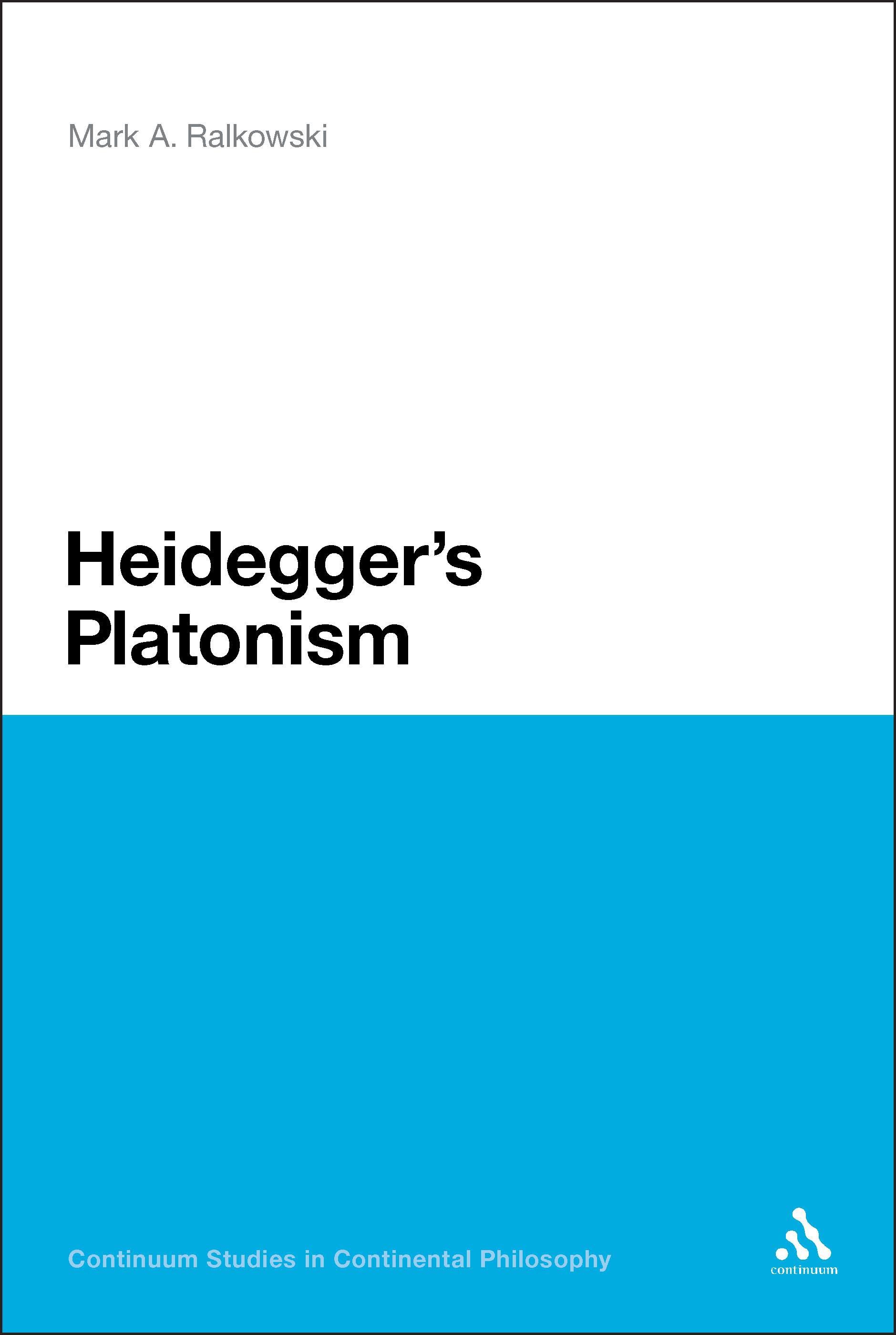
Heidegger's Platonism challenges Heidegger's 1940 interpretation of Plato as the philosopher who initiated the West's ontological decline into contemporary nihilism. Mark A. Ralkowski argues that, in his earlier lecture course, On the Essence of Truth, in which he appropriates Plato in a positive light, Heidegger discovered the two most important concepts of his later thought, namely the difference between the Being of beings and Being as such, and the 'belonging together' of Being and man in what he eventually calls Ereignis, the 'event of appropriation'.
Ralkowski shows that, far from being the grand villain of metaphysics, Plato was in fact the gateway to Heidegger's later period. Because Heidegger discovers the seeds of his later thought in his positive appropriation of Plato, this book argues that Heidegger's later thought is a return to and phenomenological transformation of Platonism, which is ironic not least because Heidegger thought of himself as the West's first truly post-Platonic philosopher.
Ralkowski shows that, far from being the grand villain of metaphysics, Plato was in fact the gateway to Heidegger's later period. Because Heidegger discovers the seeds of his later thought in his positive appropriation of Plato, this book argues that Heidegger's later thought is a return to and phenomenological transformation of Platonism, which is ironic not least because Heidegger thought of himself as the West's first truly post-Platonic philosopher.
Zahle einfach mit Karte, Klarna, Apple Pay oder Google Pay. Nicht zufrieden? Du hast immer ein 14-tägiges Widerrufsrecht. Lies mehr in unseren AGB. Hast du Fragen, schreib uns eine E-Mail an hello@memmo.org.
Memmo macht das Lernen einfacher – wo auch immer du bist. Bei uns findest du deine Kursbücher und smarte Lerntools an einem Ort: Zusammenfassungen, Quizzes, Podcasts und Lernkarten. Und Ted, dein Lernbuddy, beantwortet alles, was du wissen möchtest. Über 50.000 Studierende lernen bereits hier – gemacht, damit du schneller lernst und weniger Stress hast.