
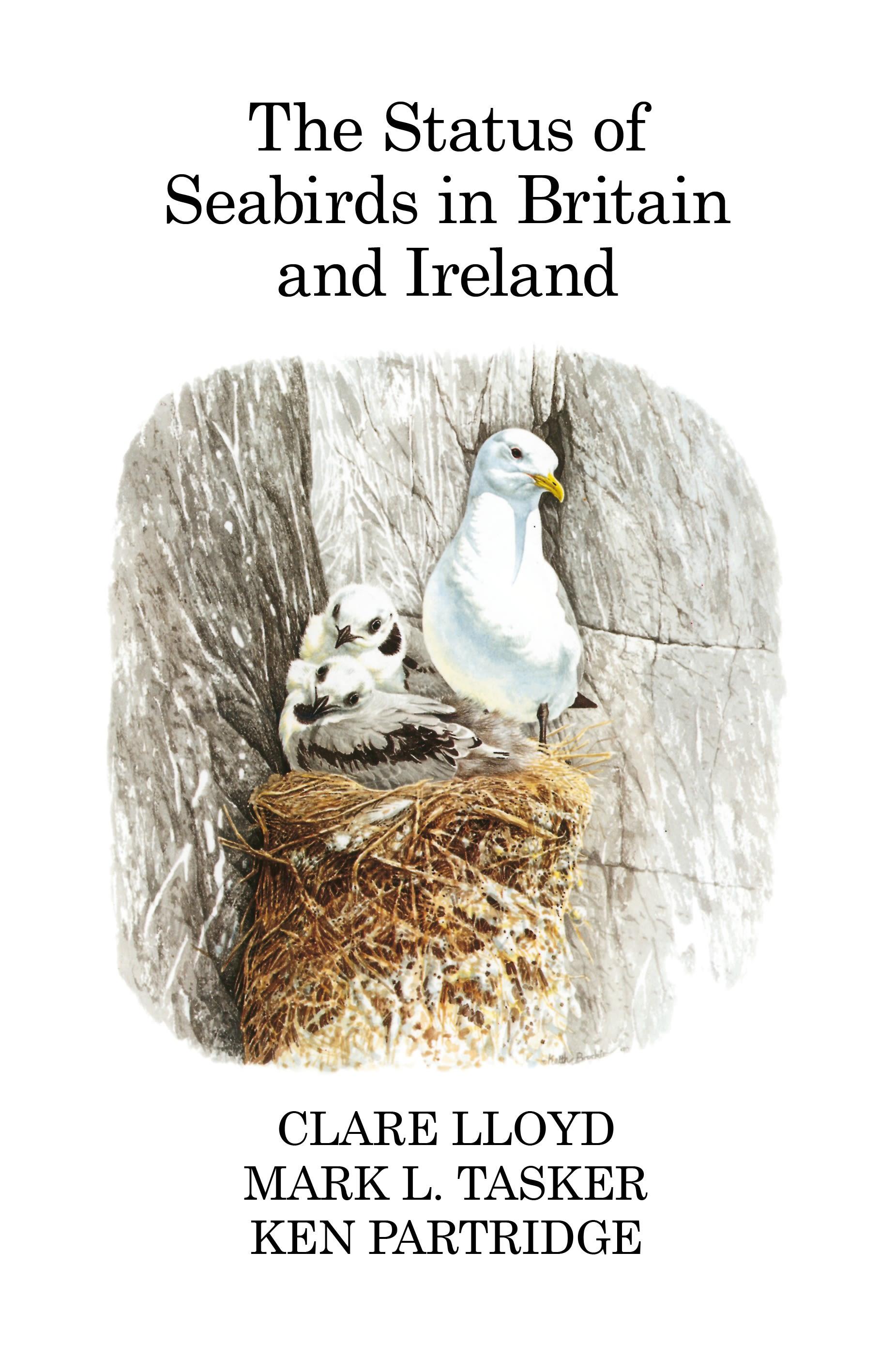
The Status of Seabirds in Britain and Ireland book presents the most up-to-date information available on these seabird populations, their numbers and distribution, and their changing fortunes in recent years.
The oceanographic and coastal features of the British Isles provide a wealth of ideal habitats for breeding seabirds and it is no surprise that the British and Irish seabird populations are of international importance, both in sheer numbers and in species diversity. Indeed, for some species British waters are host to the greater part of the world's population.
The Operation Seafarer survey, carried out in 1969-70, provided a baseline for future work that led to the establishment of the Seabird Colony Register by the Seabird Group and the Nature Conservancy Council. The results and analysis of their counts during 1985-87 form the basis for this book. Improved census methodology and a new computerised database has set the standards for seabird monitoring in future decades.
In Part 1 the general biology and population trends of British seabirds are described to set the scene for Part 2, in which the results and analysis for each of the 24 breeding species are given in detail. Full descriptions of the counting methods and the estimating factors used provide guidelines for future surveys not only in Britain, but wherever seabirds are of interest and importance.
No-one with an interest in seabirds or conservation can afford to be without this authoritative book, nor but be grateful to the small army of professionals and amateurs who have so ably explored our coastal habitats.
Illustrated by Keith Brockie.
The oceanographic and coastal features of the British Isles provide a wealth of ideal habitats for breeding seabirds and it is no surprise that the British and Irish seabird populations are of international importance, both in sheer numbers and in species diversity. Indeed, for some species British waters are host to the greater part of the world's population.
The Operation Seafarer survey, carried out in 1969-70, provided a baseline for future work that led to the establishment of the Seabird Colony Register by the Seabird Group and the Nature Conservancy Council. The results and analysis of their counts during 1985-87 form the basis for this book. Improved census methodology and a new computerised database has set the standards for seabird monitoring in future decades.
In Part 1 the general biology and population trends of British seabirds are described to set the scene for Part 2, in which the results and analysis for each of the 24 breeding species are given in detail. Full descriptions of the counting methods and the estimating factors used provide guidelines for future surveys not only in Britain, but wherever seabirds are of interest and importance.
No-one with an interest in seabirds or conservation can afford to be without this authoritative book, nor but be grateful to the small army of professionals and amateurs who have so ably explored our coastal habitats.
Illustrated by Keith Brockie.
Zahle einfach mit Karte, Klarna, Apple Pay oder Google Pay. Nicht zufrieden? Du hast immer ein 14-tägiges Widerrufsrecht. Lies mehr in unseren AGB. Hast du Fragen, schreib uns eine E-Mail an hello@memmo.org.
Memmo macht das Lernen einfacher – wo auch immer du bist. Bei uns findest du deine Kursbücher und smarte Lerntools an einem Ort: Zusammenfassungen, Quizzes, Podcasts und Lernkarten. Und Ted, dein Lernbuddy, beantwortet alles, was du wissen möchtest. Über 50.000 Studierende lernen bereits hier – gemacht, damit du schneller lernst und weniger Stress hast.