
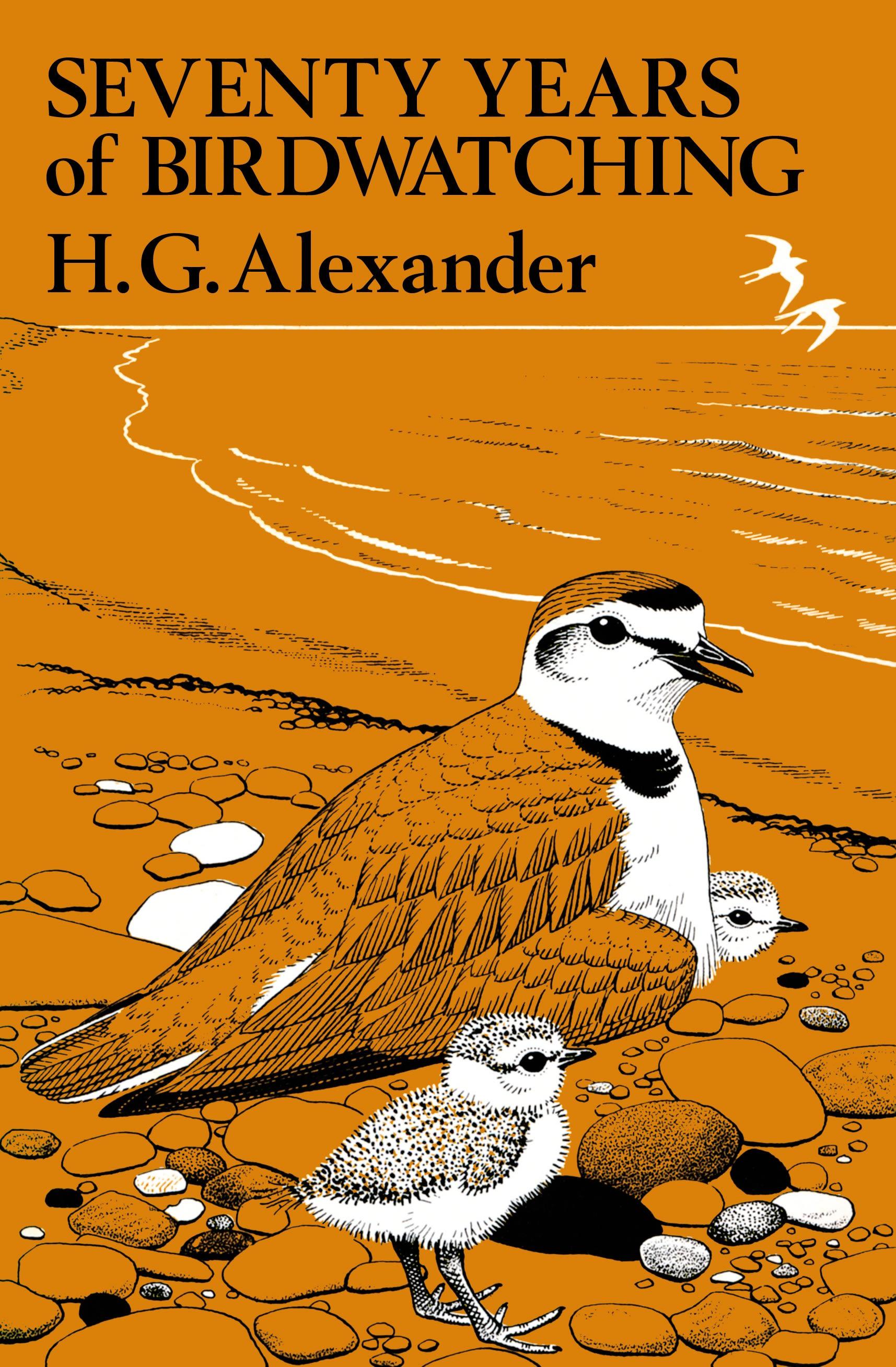
This is a book about birdwatching, birdwatchers and, above all, birds. It is, in some measure, also a history of the development of modern ornithology in Britain - although the author's birdwatching extended over parts of three continents, Europe, India and North America.
Seventy Years of Birdwatching is not truly an autobiography, there is too little about the author in it, though the personality of this exceptional, shy and gentle man comes through. H. G. Alexander began birdwatching in earnest in 1898 and has never stopped. He has met or corresponded with most of the leading ornithologists of this century; his first article in British Birds appeared in 1909, and it may surprise many to discover how much of practical ornithology that is deliberated today was debated and practised so many years ago.
During more than seventy years the author has witnessed important changes in resident and migrant bird populations in Britain. Dungeness, for example, was almost as uninhabited as the moon when he first knew it and Kentish Plovers bred there by the score, but Carrion Crows were a rarity. Over the years he saw the gradual decline of the Red-backed Shrike, Corncrake and Wryneckbut he was instrumental in bringing one bird to Britain, the hitherto 'undiscovered' Willow Tit which he, with others, helped to identify.
Fifty years ago H. G. Alexander had already covered scores of six-inch Ordnance Survey maps with his mapping records and these, together with his notebooks and correspondence with contemporaries, supply an absorbing glimpse of a birdwatching era that was fascinatingly like and yet unlike our own. Perhaps this is why today's birdwatcher has only to turn the pages to be enthralled.
Seventy Years of Birdwatching is not truly an autobiography, there is too little about the author in it, though the personality of this exceptional, shy and gentle man comes through. H. G. Alexander began birdwatching in earnest in 1898 and has never stopped. He has met or corresponded with most of the leading ornithologists of this century; his first article in British Birds appeared in 1909, and it may surprise many to discover how much of practical ornithology that is deliberated today was debated and practised so many years ago.
During more than seventy years the author has witnessed important changes in resident and migrant bird populations in Britain. Dungeness, for example, was almost as uninhabited as the moon when he first knew it and Kentish Plovers bred there by the score, but Carrion Crows were a rarity. Over the years he saw the gradual decline of the Red-backed Shrike, Corncrake and Wryneckbut he was instrumental in bringing one bird to Britain, the hitherto 'undiscovered' Willow Tit which he, with others, helped to identify.
Fifty years ago H. G. Alexander had already covered scores of six-inch Ordnance Survey maps with his mapping records and these, together with his notebooks and correspondence with contemporaries, supply an absorbing glimpse of a birdwatching era that was fascinatingly like and yet unlike our own. Perhaps this is why today's birdwatcher has only to turn the pages to be enthralled.
Zahle einfach mit Karte, Klarna, Apple Pay oder Google Pay. Nicht zufrieden? Du hast immer ein 14-tägiges Widerrufsrecht. Lies mehr in unseren AGB. Hast du Fragen, schreib uns eine E-Mail an hello@memmo.org.
Memmo macht das Lernen einfacher – wo auch immer du bist. Bei uns findest du deine Kursbücher und smarte Lerntools an einem Ort: Zusammenfassungen, Quizzes, Podcasts und Lernkarten. Und Ted, dein Lernbuddy, beantwortet alles, was du wissen möchtest. Über 50.000 Studierende lernen bereits hier – gemacht, damit du schneller lernst und weniger Stress hast.