
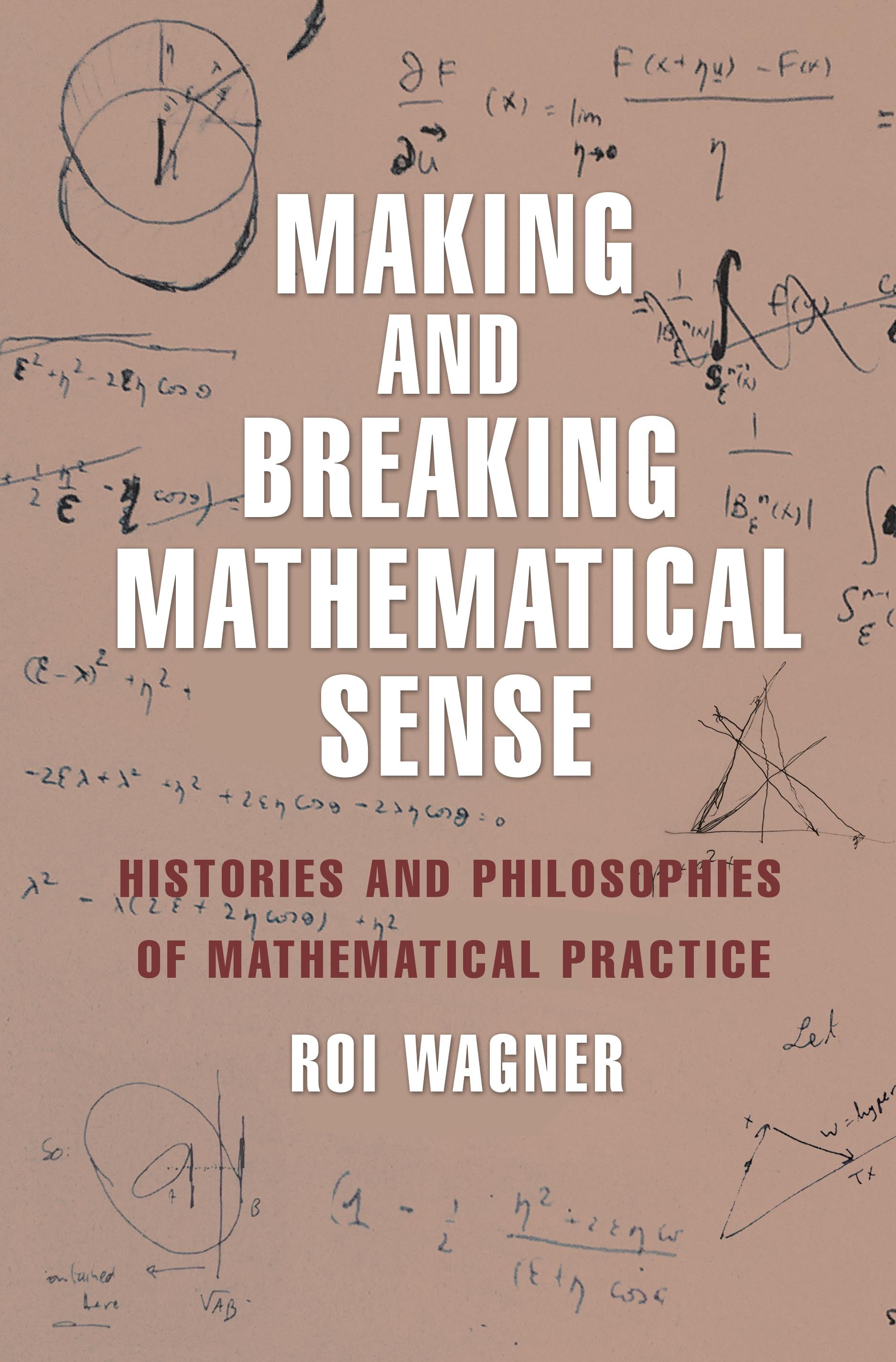
In line with the emerging field of philosophy of mathematical practice, this book pushes the philosophy of mathematics away from questions about the reality and truth of mathematical entities and statements and toward a focus on what mathematicians actually do—and how that evolves and changes over time. How do new mathematical entities come to be? What internal, natural, cognitive, and social constraints shape mathematical cultures? How do mathematical signs form and reform their meanings? How can we model the cognitive processes at play in mathematical evolution? And how does mathematics tie together ideas, reality, and applications?
Roi Wagner uniquely combines philosophical, historical, and cognitive studies to paint a fully rounded image of mathematics not as an absolute ideal but as a human endeavor that takes shape in specific social and institutional contexts. The book builds on ancient, medieval, and modern case studies to confront philosophical reconstructions and cutting-edge cognitive theories. It focuses on the contingent semiotic and interpretive dimensions of mathematical practice, rather than on mathematics' claim to universal or fundamental truths, in order to explore not only what mathematics is, but also what it could be. Along the way, Wagner challenges conventional views that mathematical signs represent fixed, ideal entities; that mathematical cognition is a rigid transfer of inferences between formal domains; and that mathematics’ exceptional consensus is due to the subject’s underlying reality.
The result is a revisionist account of mathematical philosophy that will interest mathematicians, philosophers, and historians of science alike.
Zahle einfach mit Karte, Klarna, Apple Pay oder Google Pay. Nicht zufrieden? Du hast immer ein 14-tägiges Widerrufsrecht. Lies mehr in unseren AGB. Hast du Fragen, schreib uns eine E-Mail an hello@memmo.org.
Memmo macht das Lernen einfacher – wo auch immer du bist. Bei uns findest du deine Kursbücher und smarte Lerntools an einem Ort: Zusammenfassungen, Quizzes, Podcasts und Lernkarten. Und Ted, dein Lernbuddy, beantwortet alles, was du wissen möchtest. Über 50.000 Studierende lernen bereits hier – gemacht, damit du schneller lernst und weniger Stress hast.