
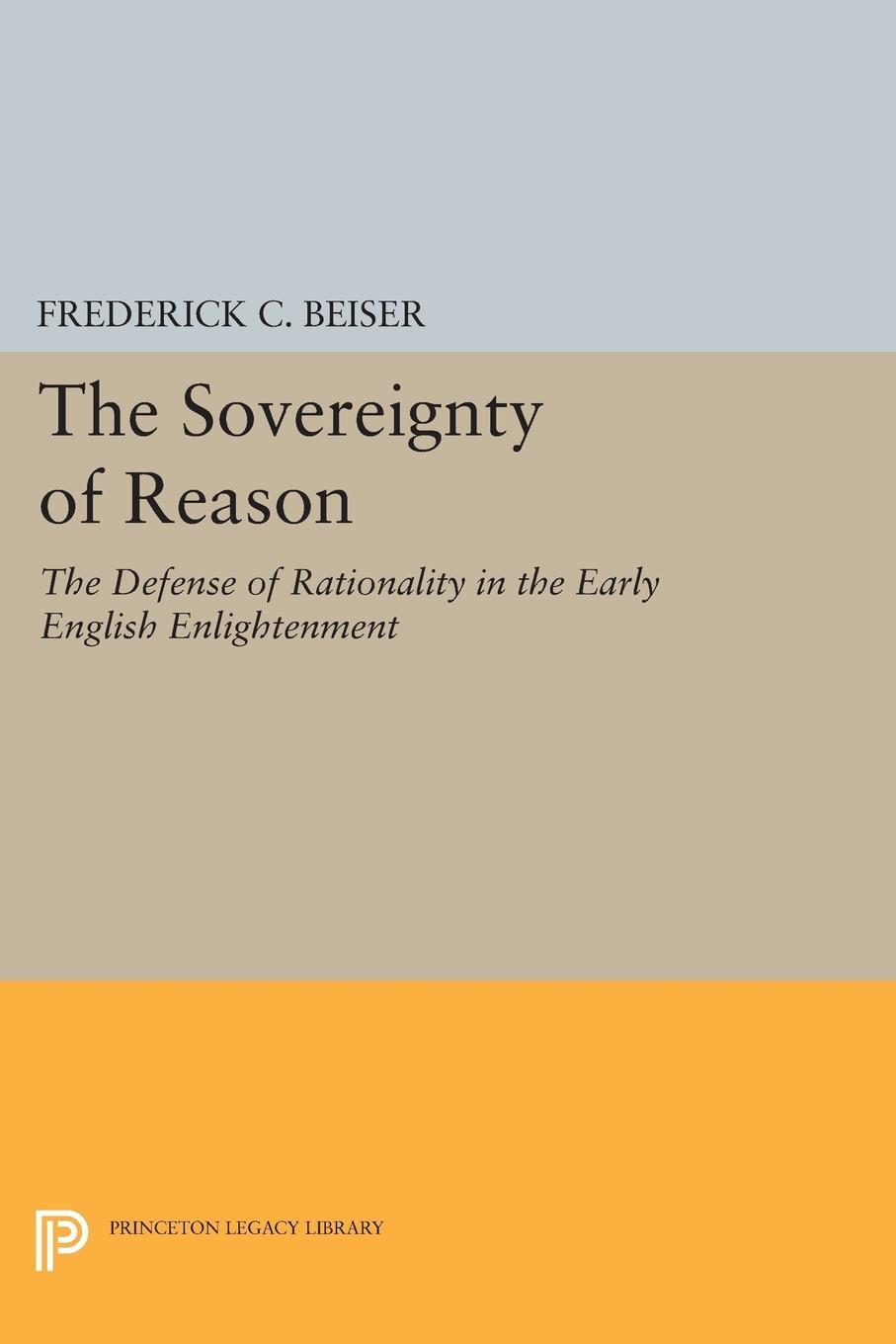
The Sovereignty of Reason is a survey of the rule of faith controversy in seventeenth-century England. It examines the arguments by which reason eventually became the sovereign standard of truth in religion and politics, and how it triumphed over its rivals: Scripture, inspiration, and apostolic tradition. Frederick Beiser argues that the main threat to the authority of reason in seventeenth-century England came not only from dissident groups but chiefly from the Protestant theology of the Church of England. The triumph of reason was the result of a new theology rather than the development of natural philosophy, which upheld the orthodox Protestant dualism between the heavenly and earthly. Rationalism arose from a break with the traditional Protestant answers to problems of salvation, ecclesiastical polity, and the true faith. Although the early English rationalists were not able to defend all their claims on behalf of reason, they developed a moral and pragmatic defense of reason that is still of interest today.
Beiser's book is a detailed examination of some neglected figures of early modern philosophy, who were crucial in the development of modern rationalism. There are chapters devoted to Richard Hooker, the Great Tew Circle, the Cambridge Platonists, the early ethical rationalists, and the free-thinkers John Toland and Anthony Collins.
Originally published in 1996.
The Princeton Legacy Library uses the latest print-on-demand technology to again make available previously out-of-print books from the distinguished backlist of Princeton University Press. These editions preserve the original texts of these important books while presenting them in durable paperback and hardcover editions. The goal of the Princeton Legacy Library is to vastly increase access to the rich scholarly heritage found in the thousands of books published by Princeton University Press since its founding in 1905.
Zahle einfach mit Karte, Klarna, Apple Pay oder Google Pay. Nicht zufrieden? Du hast immer ein 14-tägiges Widerrufsrecht. Lies mehr in unseren AGB. Hast du Fragen, schreib uns eine E-Mail an hello@memmo.org.
Memmo macht das Lernen einfacher – wo auch immer du bist. Bei uns findest du deine Kursbücher und smarte Lerntools an einem Ort: Zusammenfassungen, Quizzes, Podcasts und Lernkarten. Und Ted, dein Lernbuddy, beantwortet alles, was du wissen möchtest. Über 50.000 Studierende lernen bereits hier – gemacht, damit du schneller lernst und weniger Stress hast.