
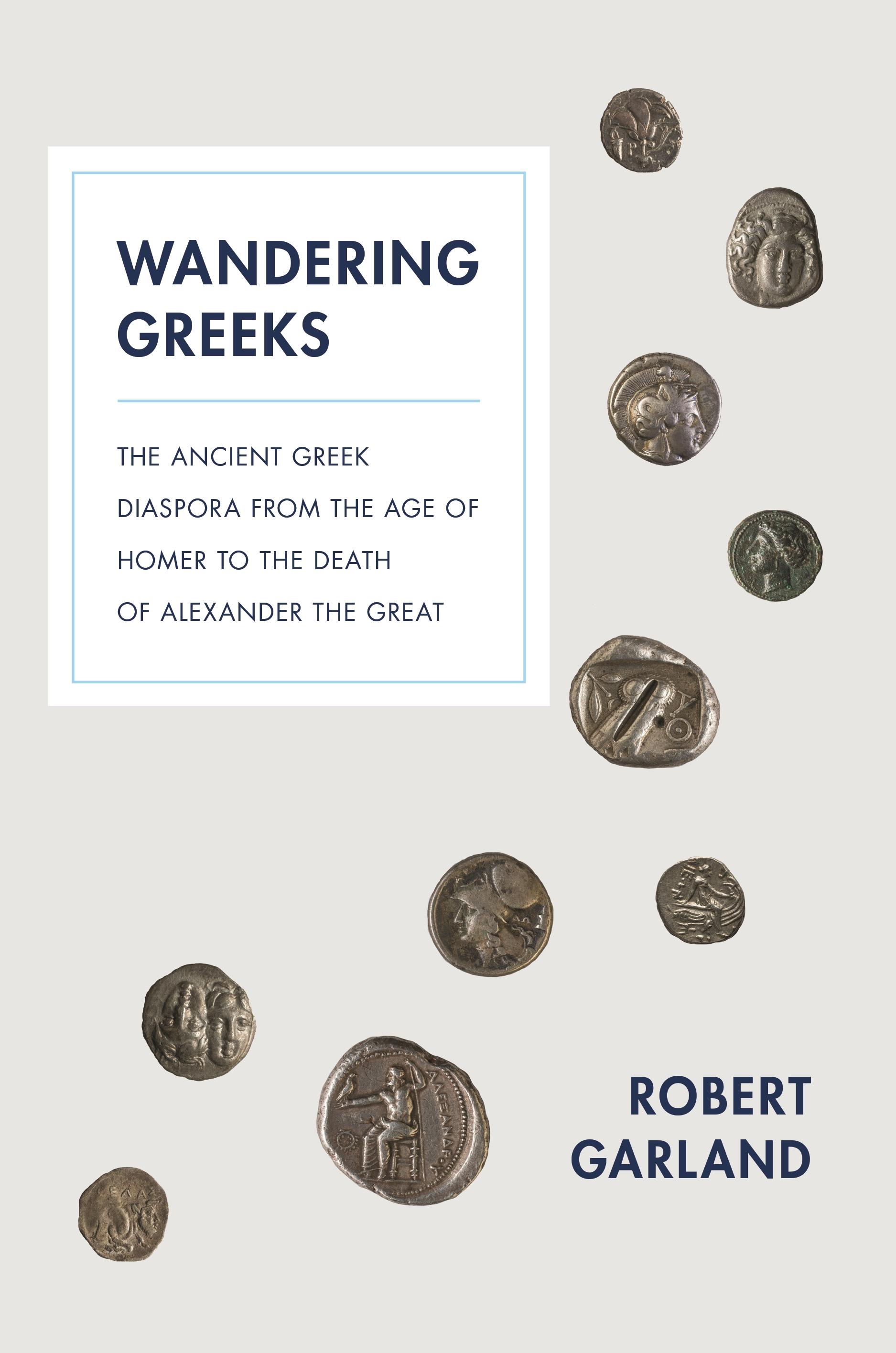
Most classical authors and modern historians depict the ancient Greek world as essentially stable and even static, once the so-called colonization movement came to an end. But Robert Garland argues that the Greeks were highly mobile, that their movement was essential to the survival, success, and sheer sustainability of their society, and that this wandering became a defining characteristic of their culture. Addressing a neglected but essential subject, Wandering Greeks focuses on the diaspora of tens of thousands of people between about 700 and 325 BCE, demonstrating the degree to which Greeks were liable to be forced to leave their homes due to political upheaval, oppression, poverty, warfare, or simply a desire to better themselves.
Attempting to enter into the mind-set of these wanderers, the book provides an insightful and sympathetic account of what it meant for ancient Greeks to part from everyone and everything they held dear, to start a new life elsewhere—or even to become homeless, living on the open road or on the high seas with no end to their journey in sight. Each chapter identifies a specific kind of "wanderer," including the overseas settler, the deportee, the evacuee, the asylum-seeker, the fugitive, the economic migrant, and the itinerant, and the book also addresses repatriation and the idea of the "portable polis." The result is a vivid and unique portrait of ancient Greece as a culture of displaced persons.
Zahle einfach mit Karte, Klarna, Apple Pay oder Google Pay. Nicht zufrieden? Du hast immer ein 14-tägiges Widerrufsrecht. Lies mehr in unseren AGB. Hast du Fragen, schreib uns eine E-Mail an hello@memmo.org.
Memmo macht das Lernen einfacher – wo auch immer du bist. Bei uns findest du deine Kursbücher und smarte Lerntools an einem Ort: Zusammenfassungen, Quizzes, Podcasts und Lernkarten. Und Ted, dein Lernbuddy, beantwortet alles, was du wissen möchtest. Über 50.000 Studierende lernen bereits hier – gemacht, damit du schneller lernst und weniger Stress hast.