
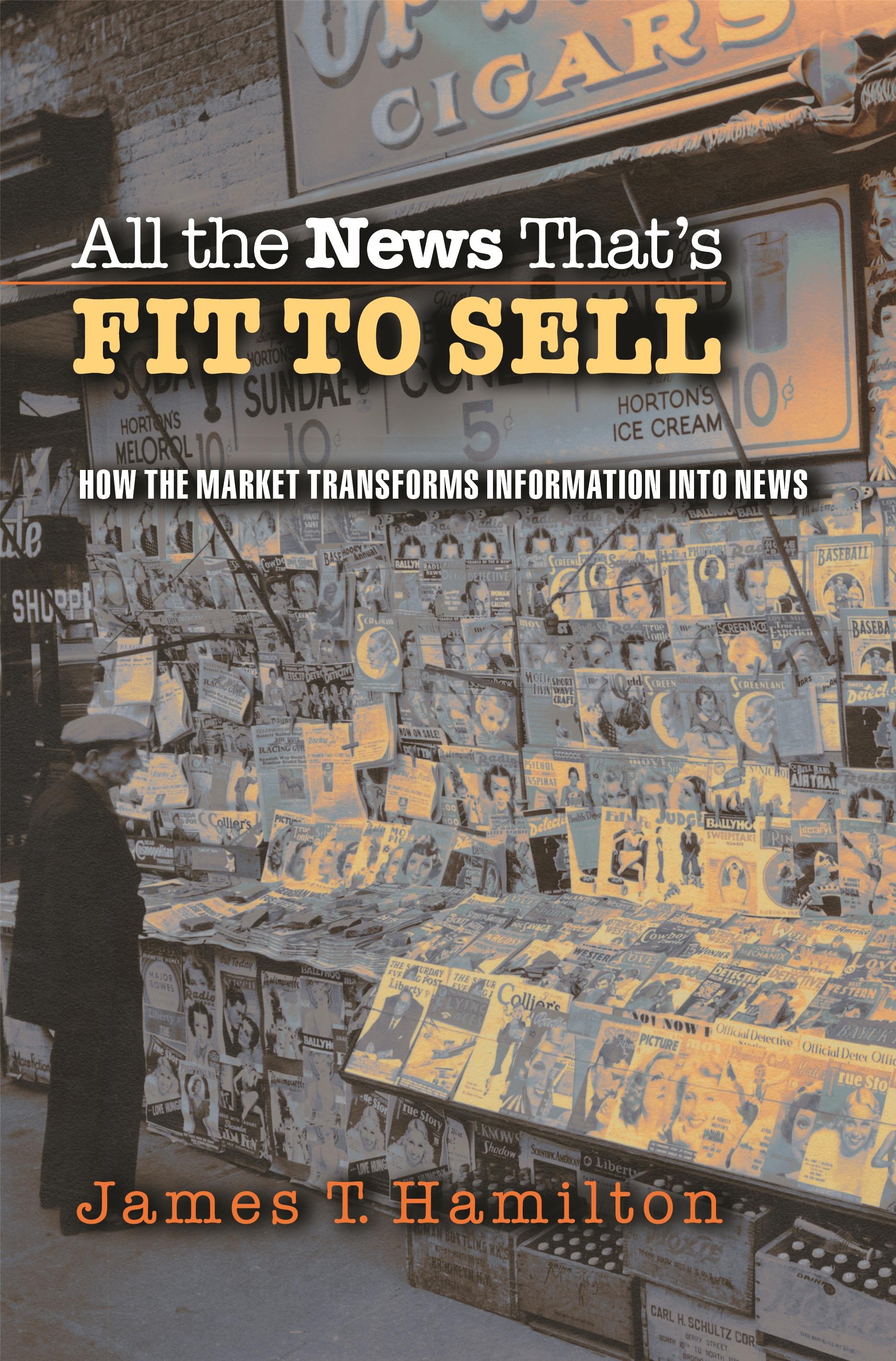
That market forces drive the news is not news. Whether a story appears in print, on television, or on the Internet depends on who is interested, its value to advertisers, the costs of assembling the details, and competitors' products. But in All the News That's Fit to Sell, economist James Hamilton shows just how this happens. Furthermore, many complaints about journalism--media bias, soft news, and pundits as celebrities--arise from the impact of this economic logic on news judgments.
This is the first book to develop an economic theory of news, analyze evidence across a wide range of media markets on how incentives affect news content, and offer policy conclusions. Media bias, for instance, was long a staple of the news. Hamilton's analysis of newspapers from 1870 to 1900 reveals how nonpartisan reporting became the norm. A hundred years later, some partisan elements reemerged as, for example, evening news broadcasts tried to retain young female viewers with stories aimed at their (Democratic) political interests. Examination of story selection on the network evening news programs from 1969 to 1998 shows how cable competition, deregulation, and ownership changes encouraged a shift from hard news about politics toward more soft news about entertainers.
Hamilton concludes by calling for lower costs of access to government information, a greater role for nonprofits in funding journalism, the development of norms that stress hard news reporting, and the defining of digital and Internet property rights to encourage the flow of news. Ultimately, this book shows that by more fully understanding the economics behind the news, we will be better positioned to ensure that the news serves the public good.
Zahle einfach mit Karte, Klarna, Apple Pay oder Google Pay. Nicht zufrieden? Du hast immer ein 14-tägiges Widerrufsrecht. Lies mehr in unseren AGB. Hast du Fragen, schreib uns eine E-Mail an hello@memmo.org.
Memmo macht das Lernen einfacher – wo auch immer du bist. Bei uns findest du deine Kursbücher und smarte Lerntools an einem Ort: Zusammenfassungen, Quizzes, Podcasts und Lernkarten. Und Ted, dein Lernbuddy, beantwortet alles, was du wissen möchtest. Über 50.000 Studierende lernen bereits hier – gemacht, damit du schneller lernst und weniger Stress hast.