
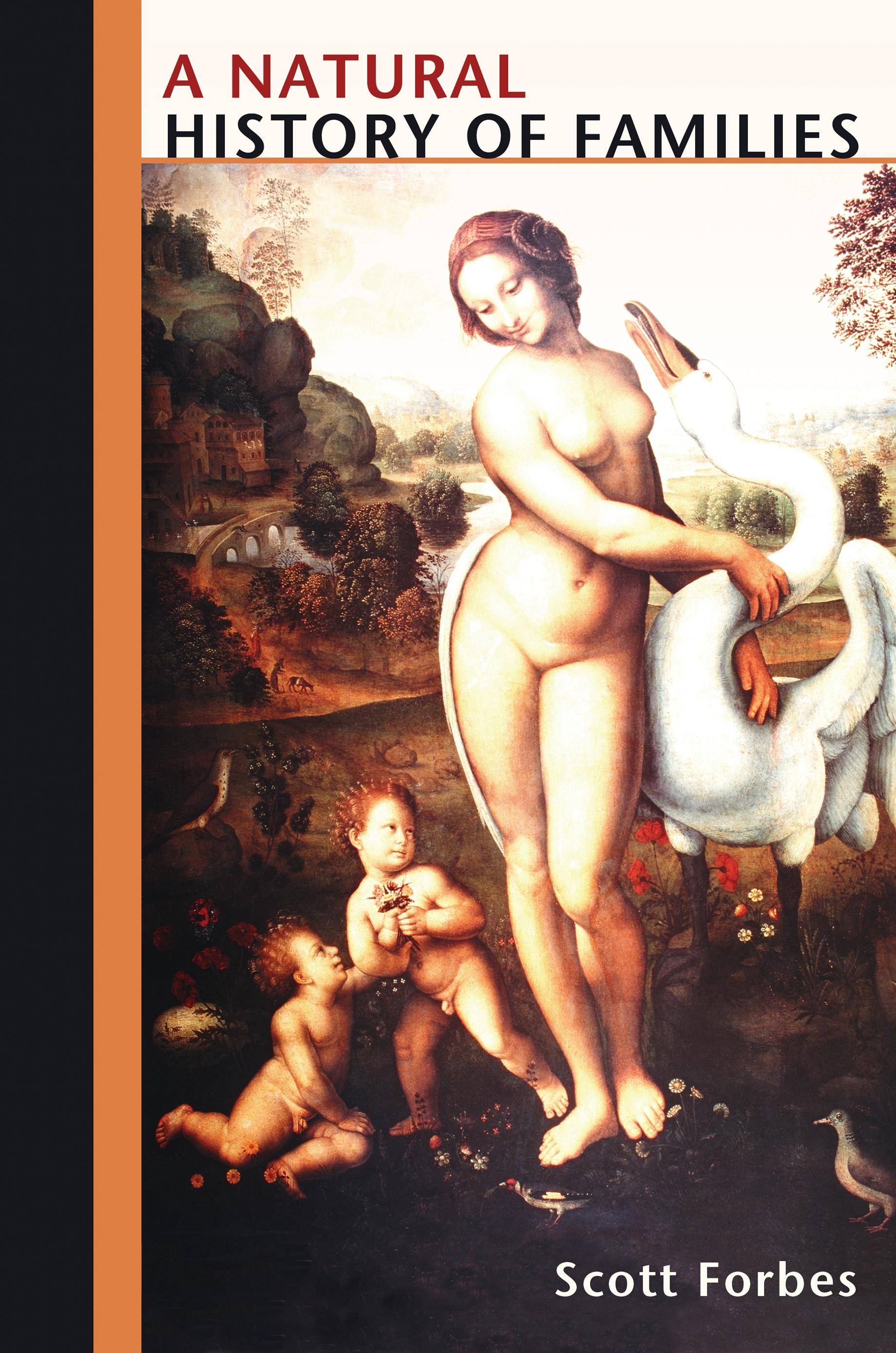
Why do baby sharks, hyenas, and pelicans kill their siblings? Why do beetles and mice commit infanticide? Why are twins and birth defects more common in older human mothers? A Natural History of Families concisely examines what behavioral ecologists have discovered about family dynamics and what these insights might tell us about human biology and behavior. Scott Forbes's engaging account describes an uneasy union among family members in which rivalry for resources often has dramatic and even fatal consequences.
In nature, parents invest resources and control the allocation of resources among their offspring to perpetuate their genetic lineage. Those families sometimes function as cooperative units, the nepotistic and loving havens we choose to identify with. In the natural world, however, dysfunctional familial behavior is disarmingly commonplace.
While explaining why infanticide, fratricide, and other seemingly antisocial behaviors are necessary, Forbes also uncovers several surprising applications to humans. Here the conflict begins in the moments following conception as embryos struggle to wrest control of pregnancy from the mother, and to wring more nourishment from her than she can spare, thus triggering morning sickness, diabetes, and high blood pressure. Mothers, in return, often spontaneously abort embryos with severe genetic defects, allowing for prenatal quality control of offspring.
Using a broad sweep of entertaining examples culled from the world of animals and humans, A Natural History of Families is a lively introduction to the behavioral ecology of the family.
Zahle einfach mit Karte, Klarna, Apple Pay oder Google Pay. Nicht zufrieden? Du hast immer ein 14-tägiges Widerrufsrecht. Lies mehr in unseren AGB. Hast du Fragen, schreib uns eine E-Mail an hello@memmo.org.
Memmo macht das Lernen einfacher – wo auch immer du bist. Bei uns findest du deine Kursbücher und smarte Lerntools an einem Ort: Zusammenfassungen, Quizzes, Podcasts und Lernkarten. Und Ted, dein Lernbuddy, beantwortet alles, was du wissen möchtest. Über 50.000 Studierende lernen bereits hier – gemacht, damit du schneller lernst und weniger Stress hast.