
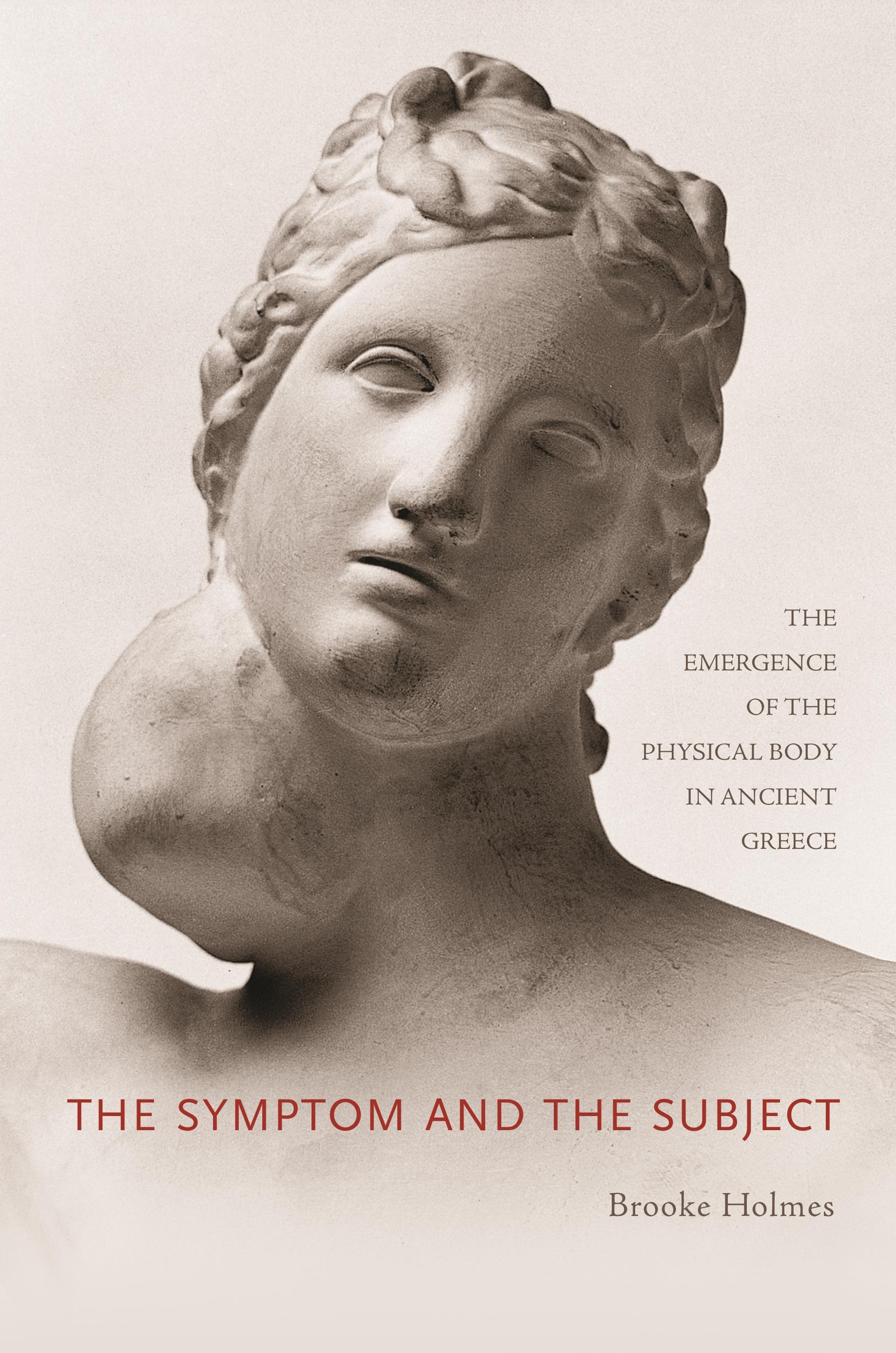
The Symptom and the Subject takes an in-depth look at how the physical body first emerged in the West as both an object of knowledge and a mysterious part of the self. Beginning with Homer, moving through classical-era medical treatises, and closing with studies of early ethical philosophy and Euripidean tragedy, this book rewrites the traditional story of the rise of body-soul dualism in ancient Greece. Brooke Holmes demonstrates that as the body (sôma) became a subject of physical inquiry, it decisively changed ancient Greek ideas about the meaning of suffering, the soul, and human nature.
By undertaking a new examination of biological and medical evidence from the sixth through fourth centuries BCE, Holmes argues that it was in large part through changing interpretations of symptoms that people began to perceive the physical body with the senses and the mind. Once attributed primarily to social agents like gods and daemons, symptoms began to be explained by physicians in terms of the physical substances hidden inside the person. Imagining a daemonic space inside the person but largely below the threshold of feeling, these physicians helped to radically transform what it meant for human beings to be vulnerable, and ushered in a new ethics centered on the responsibility of taking care of the self.
The Symptom and the Subject highlights with fresh importance how classical Greek discoveries made possible new and deeply influential ways of thinking about the human subject.
Zahle einfach mit Karte, Klarna, Apple Pay oder Google Pay. Nicht zufrieden? Du hast immer ein 14-tägiges Widerrufsrecht. Lies mehr in unseren AGB. Hast du Fragen, schreib uns eine E-Mail an hello@memmo.org.
Memmo macht das Lernen einfacher – wo auch immer du bist. Bei uns findest du deine Kursbücher und smarte Lerntools an einem Ort: Zusammenfassungen, Quizzes, Podcasts und Lernkarten. Und Ted, dein Lernbuddy, beantwortet alles, was du wissen möchtest. Über 50.000 Studierende lernen bereits hier – gemacht, damit du schneller lernst und weniger Stress hast.