
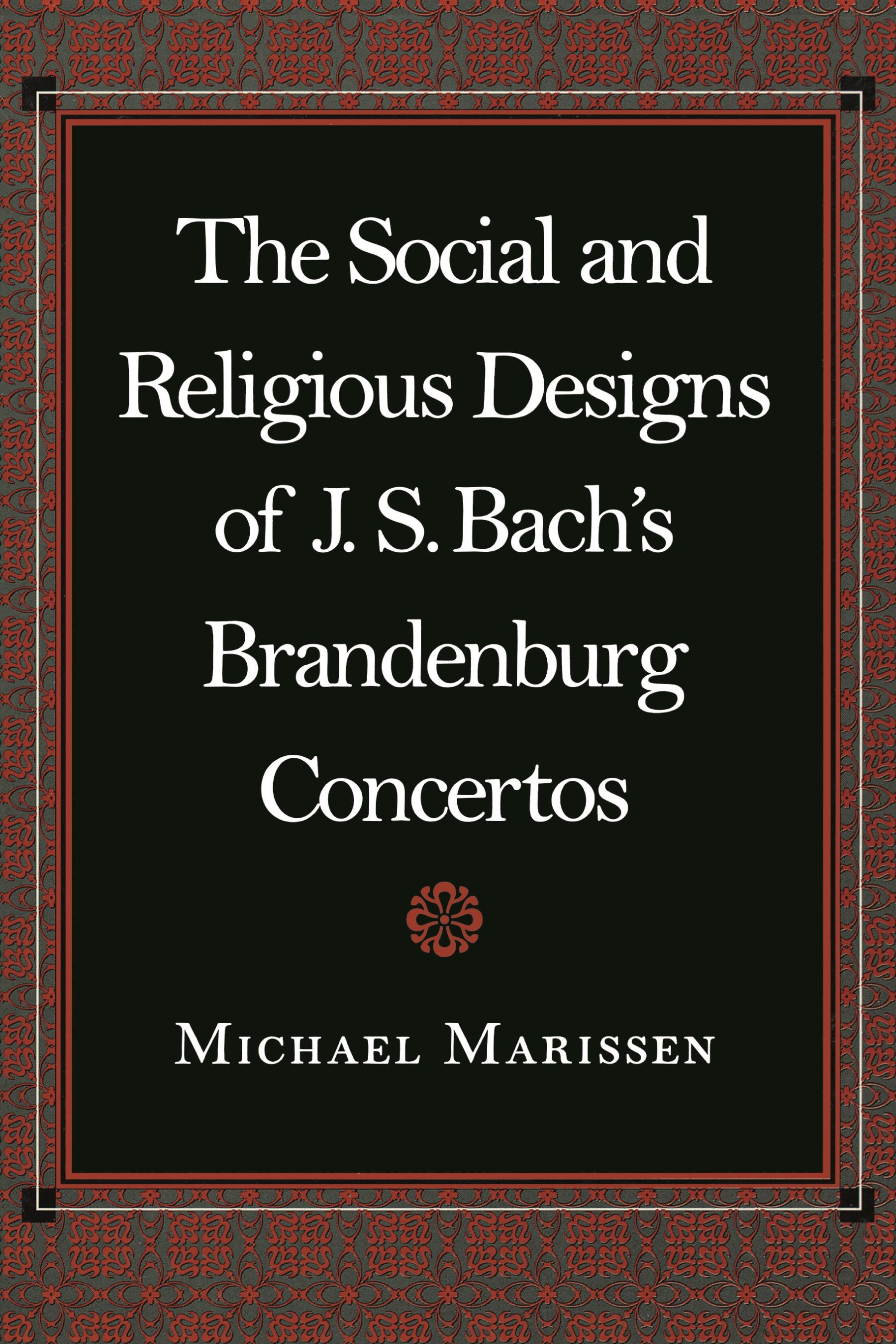
This new investigation of the Brandenburg Concertos explores musical, social, and religious implications of Bach's treatment of eighteenth-century musical hierarchies. By reference to contemporary music theory, to alternate notions of the meaning of "concerto," and to various eighteenth-century conventions of form and instrumentation, the book argues that the Brandenburg Concertos are better understood not as an arbitrary collection of unrelated examples of "pure" instrumental music, but rather as a carefully compiled and meaningfully organized set. It shows how Bach's concertos challenge (as opposed to reflect) existing musical and social hierarchies.
Careful consideration of Lutheran theology and Bach's documented understanding of it reveals, however, that his music should not be understood to call for progressive political action. One important message of Lutheranism, and, in this interpretation, of Bach's concertos, is that in the next world, the heavenly one, the hierarchies of the present world will no longer be necessary. Bach's music more likely instructs its listeners how to think about and spiritually cope with contemporary hierarchies than how to act upon them. In this sense, contrary to currently accepted views, Bach's concertos share with his extensive output of vocal music for the Lutheran liturgy an essentially religious character.
Zahle einfach mit Karte, Klarna, Apple Pay oder Google Pay. Nicht zufrieden? Du hast immer ein 14-tägiges Widerrufsrecht. Lies mehr in unseren AGB. Hast du Fragen, schreib uns eine E-Mail an hello@memmo.org.
Memmo macht das Lernen einfacher – wo auch immer du bist. Bei uns findest du deine Kursbücher und smarte Lerntools an einem Ort: Zusammenfassungen, Quizzes, Podcasts und Lernkarten. Und Ted, dein Lernbuddy, beantwortet alles, was du wissen möchtest. Über 50.000 Studierende lernen bereits hier – gemacht, damit du schneller lernst und weniger Stress hast.