
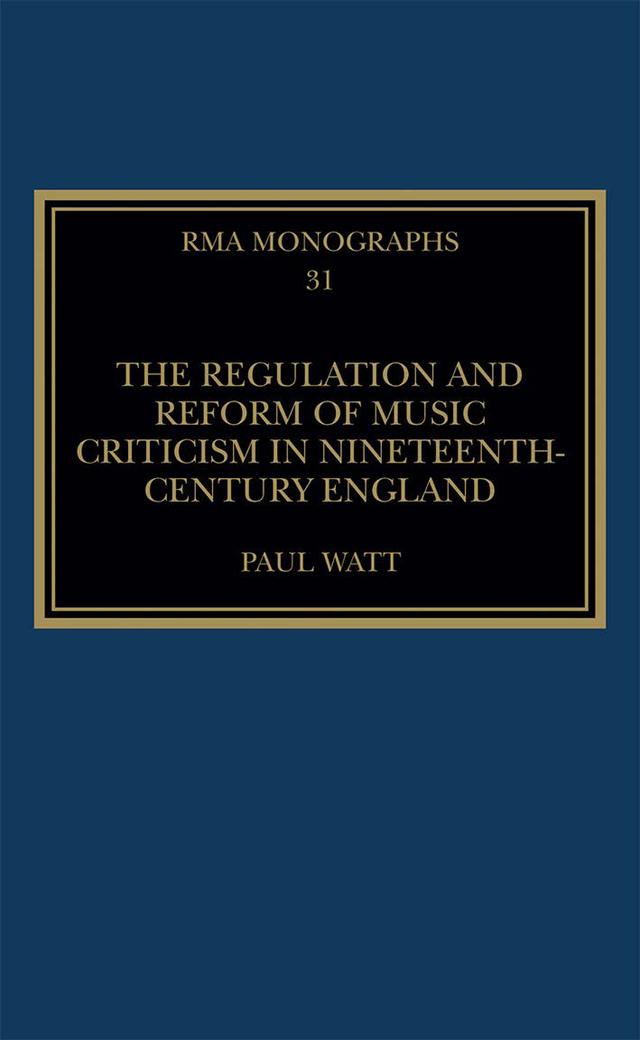
Music criticism in England underwent profound change from the 1880s to the 1920s. It gave rise to ‘New criticism’ that aimed to be rational, impartial and intellectually authoritative. It was a break from the criticism of old: the work of the opinionated journalist who wrote descriptive concert reviews with invective, cliché, bias and bombast. Critics such as Ernest Newman (1868–1959), John F. Runciman (1866–1916) and Michel D. Calvocoressi (1877–1944) fostered this new school and wrote extensively of their aspirations for musical criticism in their own times and for the future. This book charts the genesis of this new wave of musical criticism that sought to regulate and reform the profession of music critic. Alongside the establishment of principles, training manuals and schools for critics, hundreds of journal articles and dozens of books were written that encouraged new criticism, which also had a bearing on scholarly writing in biography, aesthetics and history. The Regulation and Reform of Music Criticism in Nineteenth-Century England considers the influence and advocacy of individual critics and the role that institutions, such as the Musical Association and the Musical Times, played in this period of change. The book also explores the impact that French and German writers had on their English counterparts, demonstrating the internationalization of critical thought of the period.
Zahle einfach mit Karte, Klarna, Apple Pay oder Google Pay. Nicht zufrieden? Du hast immer ein 14-tägiges Widerrufsrecht. Lies mehr in unseren AGB. Hast du Fragen, schreib uns eine E-Mail an hello@memmo.org.
Memmo macht das Lernen einfacher – wo auch immer du bist. Bei uns findest du deine Kursbücher und smarte Lerntools an einem Ort: Zusammenfassungen, Quizzes, Podcasts und Lernkarten. Und Ted, dein Lernbuddy, beantwortet alles, was du wissen möchtest. Über 50.000 Studierende lernen bereits hier – gemacht, damit du schneller lernst und weniger Stress hast.