
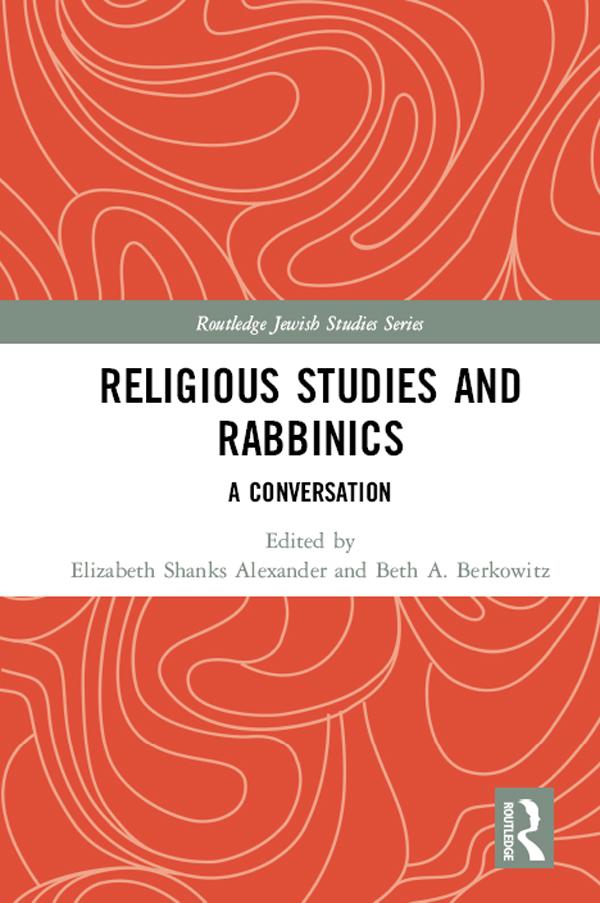
Religious Studies and Rabbinics have overlapping yet distinct interests, subject matter, and methods. Religious Studies is committed to the study of religion writ large. It develops theories and methods intended to apply across religious traditions. Rabbinics, by contrast, is dedicated to a defined set of texts produced by the rabbinic movement of late antiquity.
Religious Studies and Rabbinics represents the first sustained effort to create a conversation between these two academic fields. In one trajectory of argument, the book shows what is gained when each field sees how the other engages the same questions: When did the concept of "religion" arise? How should a scholar’s normative commitments interact with their scholarship? The book argues that if scholars from Religious Studies and Rabbinics do not realize they are addressing the same problems, they will not benefit from each other’s solutions. A second line of argument brings research methods, theoretical claims, and data associated with one field into contact with those of the other. When Religious Studies categories such as "ritual" or "the sacred" are applied to data from Rabbinics and, conversely, when text-reading strategies distinctive to Rabbinics are employed for texts from other traditions, both Religious Studies and Rabbinics enlarge their scope. The chapters range across such themes as ritual failure; rabbinic conceptions of scripture, ethics, food, time, and everyday life; problems of definition and normativity in the study of religion; J.Z. Smith’s writings; and the preaching of the African-American Christian evangelical social justice activist John Perkins.
With chapters written by world-class theorists of Religious Studies and prominent text scholars of Rabbinics, the book provides a unique opportunity to expand the conceptual reach and scholarly audience of both Religious Studies and Jewish Studies.
Zahle einfach mit Karte, Klarna, Apple Pay oder Google Pay. Nicht zufrieden? Du hast immer ein 14-tägiges Widerrufsrecht. Lies mehr in unseren AGB. Hast du Fragen, schreib uns eine E-Mail an hello@memmo.org.
Memmo macht das Lernen einfacher – wo auch immer du bist. Bei uns findest du deine Kursbücher und smarte Lerntools an einem Ort: Zusammenfassungen, Quizzes, Podcasts und Lernkarten. Und Ted, dein Lernbuddy, beantwortet alles, was du wissen möchtest. Über 50.000 Studierende lernen bereits hier – gemacht, damit du schneller lernst und weniger Stress hast.