
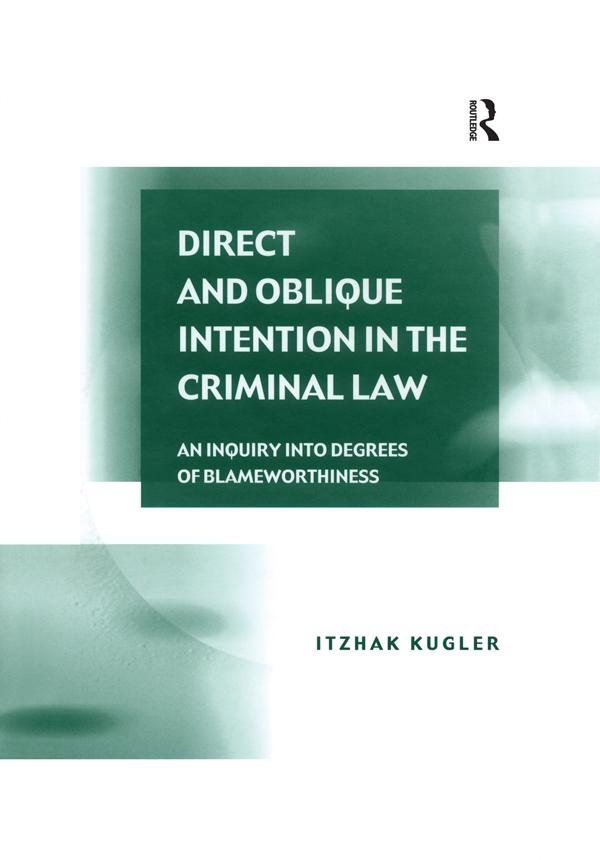
The subject of intention in the criminal law is currently causing many debates among criminal lawyers. This compelling and probing volume addresses two key questions: should the criminal law distinguish between direct intention and recklessness, and what should the law be concerning cases of oblique intention - i.e. cases in which the actor does not act in order to cause the proscribed result, but is nevertheless practically certain that his, or her, action will cause it? The discussion is divided into two parts with the first being devoted to the question of whether it is justified to grade offences based on the distinction between intention and recklessness. The second part deals with offences in which intention is required as a condition for the criminalisation of the conduct and in the context of which reckless actors are not exposed to criminal liability. The book explores the issue of intention from the viewpoint of degrees of moral culpability and it discusses, inter alia, the doctrine of double effect, the possibility that the law in cases of oblique intention should not be the same for all crimes of intention, and the possibility of using a moral formula in the definition of certain offences. The discussion also addresses many other criminal law issues, including the philosophy of punishment, the role of motives in determining degrees of blameworthiness, sentencing, stigma, and criminal attempts.
Zahle einfach mit Karte, Klarna, Apple Pay oder Google Pay. Nicht zufrieden? Du hast immer ein 14-tägiges Widerrufsrecht. Lies mehr in unseren AGB. Hast du Fragen, schreib uns eine E-Mail an hello@memmo.org.
Memmo macht das Lernen einfacher – wo auch immer du bist. Bei uns findest du deine Kursbücher und smarte Lerntools an einem Ort: Zusammenfassungen, Quizzes, Podcasts und Lernkarten. Und Ted, dein Lernbuddy, beantwortet alles, was du wissen möchtest. Über 50.000 Studierende lernen bereits hier – gemacht, damit du schneller lernst und weniger Stress hast.
Das könnte dir auch gefallen
Buch kaufen0