
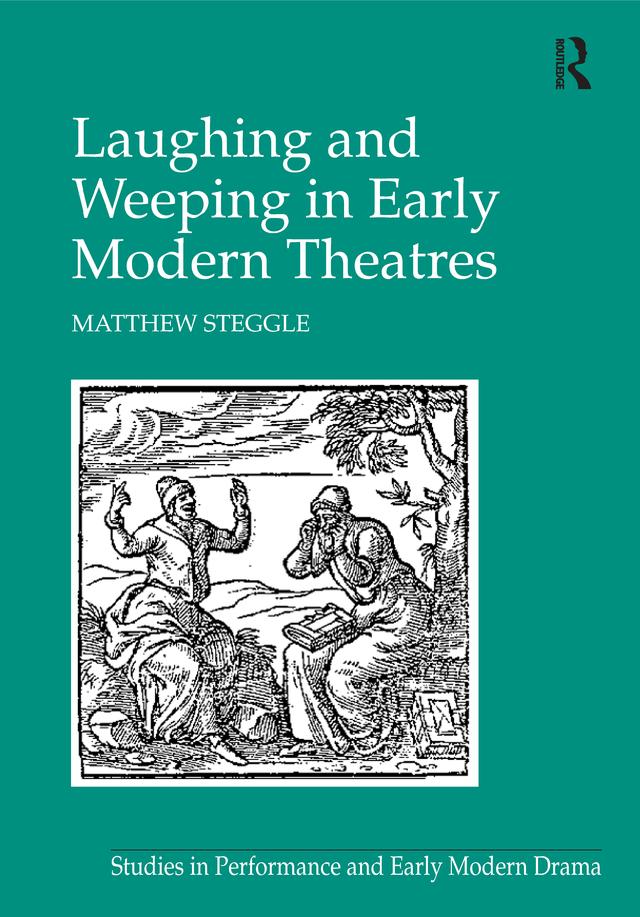
Did Shakespeare's original audiences weep? Equally, while it seems obvious that they must have laughed at plays performed in early modern theatres, can we say anything about what their laughter sounded like, about when it occurred, and about how, culturally, it was interpreted? Related to both of these problems of audience behaviour is that of the stage representation of laughing, and weeping, both actions performed with astonishing frequency in early modern drama. Each action is associated with a complex set of non-verbal noises, gestures, and cultural overtones, and each is linked to audience behaviour through one of the axioms of Renaissance dramatic theory: that weeping and laughter on stage cause, respectively, weeping and laughter in the audience. This book is a study of laughter and weeping in English theatres, broadly defined, from around 1550 until their closure in 1642. It is concerned both with the representation of these actions on the stage, and with what can be reconstructed about the laughter and weeping of theatrical audiences themselves, arguing that both actions have a peculiar importance in defining the early modern theatrical experience.
Zahle einfach mit Karte, Klarna, Apple Pay oder Google Pay. Nicht zufrieden? Du hast immer ein 14-tägiges Widerrufsrecht. Lies mehr in unseren AGB. Hast du Fragen, schreib uns eine E-Mail an hello@memmo.org.
Memmo macht das Lernen einfacher – wo auch immer du bist. Bei uns findest du deine Kursbücher und smarte Lerntools an einem Ort: Zusammenfassungen, Quizzes, Podcasts und Lernkarten. Und Ted, dein Lernbuddy, beantwortet alles, was du wissen möchtest. Über 50.000 Studierende lernen bereits hier – gemacht, damit du schneller lernst und weniger Stress hast.
Das könnte dir auch gefallen
Buch kaufen0