
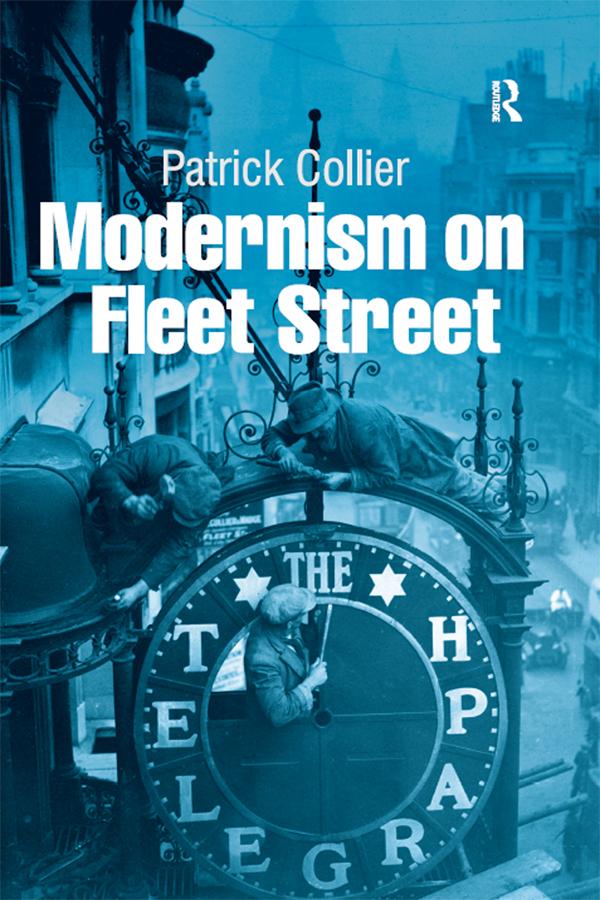
British modernism came of age at a time of great cultural anxiety about the state of journalism. The new newspapers, with their brief, flashy articles, striking visuals, hyperbolic headlines, and sensational news, stood at the center of debates about reading in the period, seeming to threaten the viability of representative democracy, the health and vitality of the language, and the very future of literature itself. Patrick Collier's study brings an impressive array of archival research to his exploration of modernism's relationship to the newspaper press. People who sought to make their way as writers could neither remain neutral on this issue nor abandon journalism, which offered an irreplaceable source of income and self-advertisement. Collier discusses five modern writers-T. S. Eliot, James Joyce, Virginia Woolf, Rebecca West, and Rose Macaulay-showing how their work takes part in contemporary debates about journalism and examining the role journalism played in establishing their careers. In doing so, he uncovers tensions and contradictions inherent in the identity of the 'serious artist' who relied on the ephemeral forms of journalism for money and reputation.
Zahle einfach mit Karte, Klarna, Apple Pay oder Google Pay. Nicht zufrieden? Du hast immer ein 14-tägiges Widerrufsrecht. Lies mehr in unseren AGB. Hast du Fragen, schreib uns eine E-Mail an hello@memmo.org.
Memmo macht das Lernen einfacher – wo auch immer du bist. Bei uns findest du deine Kursbücher und smarte Lerntools an einem Ort: Zusammenfassungen, Quizzes, Podcasts und Lernkarten. Und Ted, dein Lernbuddy, beantwortet alles, was du wissen möchtest. Über 50.000 Studierende lernen bereits hier – gemacht, damit du schneller lernst und weniger Stress hast.
Das könnte dir auch gefallen
Buch kaufen0