
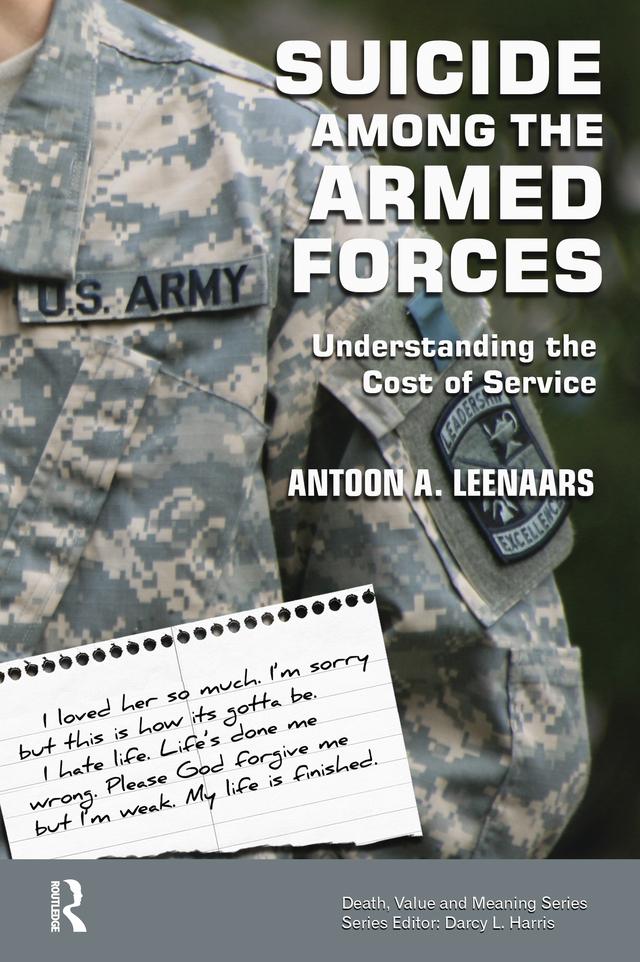
Not since the great military suicide epidemic of the American Civil War have we seen so many of our heroes, our soldiers and veterans, die by suicide. Why? War is violence. There is intent to cause death, or serious injury, or threat to the physical and psychological integrity of others. War stress is unforgiving. Suicide is an all too frequent response. Today, one member of the military dies by suicide every day. This is a new epidemic. This book addresses some tough questions: What do we know about suicides in the military? Are rates high? Or low? Is military suicide the same or different in the United States and Canada? Is military culture relevant? Do we know the causes, patterns, and associations? Is suicide among the armed forces similar to or different from suicide among civilians? Can it be altruistic? Through individual case studies and general/population approaches, we attempt to understand the cost of military service. It is especially through the personal stories of the great Civil War hero General Emory Upton, Admiral of the Navy Mike Boorda, and Hospital Corpsman Chris Purcell that we find answers. We learn there is a relative lack of understanding about military suicides, mainly due to the very complexity of suicide. The nature of suicide is not monolithic--it is multi-determined. Military service, we find, is a risk factor for suicide and suicidal behavior. Military veterans are twice as likely as civilians to die by suicide. Posttraumatic stress disorder (PTSD) and traumatic brain Injury (TBI) are especially noted to be huge risk factors, but so are other physical and psychological injuries. Sadly, the aftershocks of war include not only suicides but also incarceration, motor vehicle accidents, homicides, homicide(s)-suicides, and many more faces of violence. And there are many more, uncounted, wounded and dead. The families of traumatized soldiers and veterans, too, are indirect victims of their traumatic experience and, for some, their suicides; there is secondary traumatization. Yet, as this book shows, we must not forget that despite the unbearable pain of war, soldiers, veterans, and their military families, including children, are typically resilient. They can survive! Without question, our vulnerable heroes and veterans are at risk for suicide. But there is secrecy surrounding this, which may well be the biggest barrier. The government, the Department of Defense, the military, veterans groups, survivors, health providers, and other stakeholders need to develop and support more research, more programs, and more care for suicidal and disabled armed services personnel, veterans, and survivors. This war stress needs to stop.
Zahle einfach mit Karte, Klarna, Apple Pay oder Google Pay. Nicht zufrieden? Du hast immer ein 14-tägiges Widerrufsrecht. Lies mehr in unseren AGB. Hast du Fragen, schreib uns eine E-Mail an hello@memmo.org.
Memmo macht das Lernen einfacher – wo auch immer du bist. Bei uns findest du deine Kursbücher und smarte Lerntools an einem Ort: Zusammenfassungen, Quizzes, Podcasts und Lernkarten. Und Ted, dein Lernbuddy, beantwortet alles, was du wissen möchtest. Über 50.000 Studierende lernen bereits hier – gemacht, damit du schneller lernst und weniger Stress hast.