
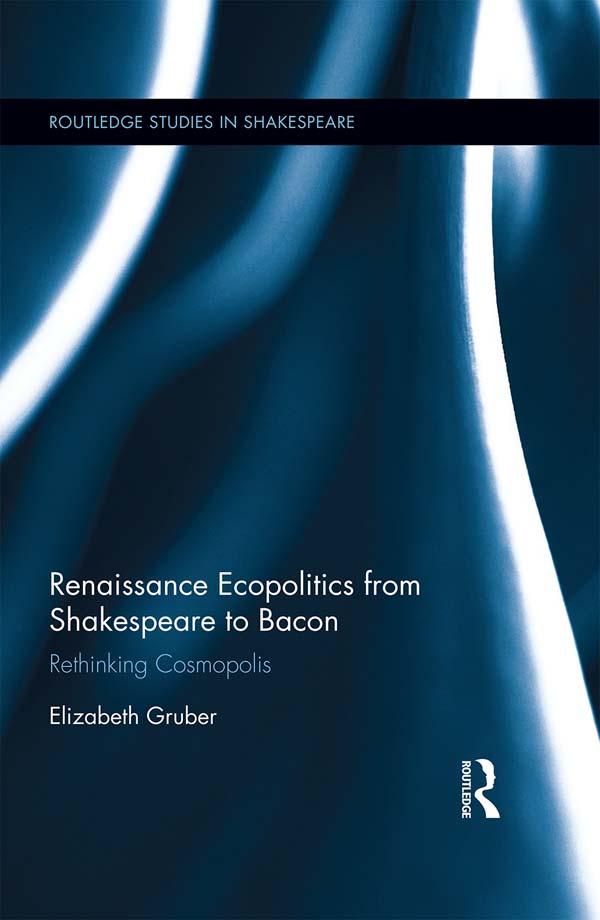
The work of Shakespeare and his contemporaries has often been the testing-ground for innovations in literary studies, but this has not been true of ecocriticism. This is partly because, until recently, most ecologically minded writers have located the origins of ecological crisis in the Enlightenment, with the legacies of the Cartesian cogito singled out as a particular cause of our current woes. Traditionally, Renaissance writers were tacitly (or, occasionally, overtly) presumed to be oblivious of environmental degradation and unaware that the episteme—the conceptual edifice of their historical moment—was beginning to crack. This perception is beginning to change, and Dr. Guber's work is poised to illuminate the burgeoning number of ecocritical studies devoted to this period, in particular, by showing how the classical concept of the cosmopolis, which posited the harmonious integration of the Order of Nature (cosmos) with the Order of Society (polis), was at once revived and also systematically dismantled in the Renaissance. Renaissance Ecopolitics from Shakespeare to Bacon: Rethinking Cosmopolis demonstrates that the Renaissance is the hinge, the crucial turning point in the human-nature relationship and examines the persisting ecological consequences of the nature-state’s demise.
Zahle einfach mit Karte, Klarna, Apple Pay oder Google Pay. Nicht zufrieden? Du hast immer ein 14-tägiges Widerrufsrecht. Lies mehr in unseren AGB. Hast du Fragen, schreib uns eine E-Mail an hello@memmo.org.
Memmo macht das Lernen einfacher – wo auch immer du bist. Bei uns findest du deine Kursbücher und smarte Lerntools an einem Ort: Zusammenfassungen, Quizzes, Podcasts und Lernkarten. Und Ted, dein Lernbuddy, beantwortet alles, was du wissen möchtest. Über 50.000 Studierende lernen bereits hier – gemacht, damit du schneller lernst und weniger Stress hast.