
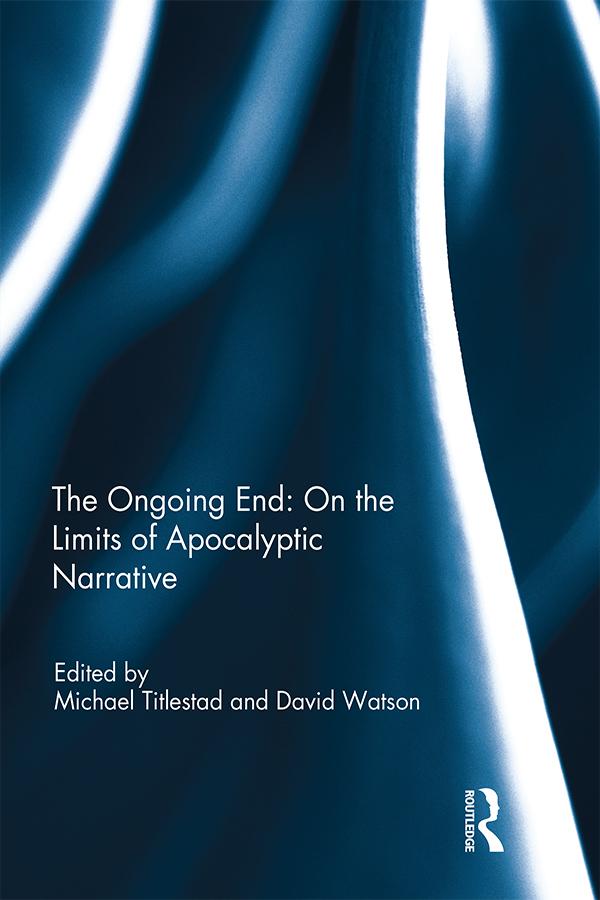
The world keeps turning to apocalypticism. Time is imagined as proceeding ineluctably to a catastrophic, perhaps revelatory conclusion. Even when evacuated of distinctly religious content, a broadly ecclesial structure persists in conceptions of our precarious life and our collective journey to an inevitable fate—the extinction of the human species. It is commonly believed that we are propelled along this course by human turpitude, myopia, hubris or ignorance, and by the irreparable damage we have wrought to the world we inhabit. Yet, this apprehension is insidious. Such teleological convictions and crises-laden narratives lead us to undervalue contingent, hesitant and provisional forms of experience and knowledge.
The essays comprising this volume concern a range of writers’ engagements with apocalyptic reasoning. Extending from a reading of Percy Bysshe Shelley’s ‘Triumph of Life’ to critiques of contemporary American novels, they examine the ways in which ‘end times’ reasoning can inhibit imaginative reflection, blunt political advocacy or – more positively – provide a repertoire for the critique of complacency. By gathering essays concerning a wide range of periods and literary dispositions, this volume makes an important contribution to thinking about apocalypticism in literature but also as a social and political discourse. This book was originally published as a special issue of Studia Neophilologica.
Zahle einfach mit Karte, Klarna, Apple Pay oder Google Pay. Nicht zufrieden? Du hast immer ein 14-tägiges Widerrufsrecht. Lies mehr in unseren AGB. Hast du Fragen, schreib uns eine E-Mail an hello@memmo.org.
Memmo macht das Lernen einfacher – wo auch immer du bist. Bei uns findest du deine Kursbücher und smarte Lerntools an einem Ort: Zusammenfassungen, Quizzes, Podcasts und Lernkarten. Und Ted, dein Lernbuddy, beantwortet alles, was du wissen möchtest. Über 50.000 Studierende lernen bereits hier – gemacht, damit du schneller lernst und weniger Stress hast.