
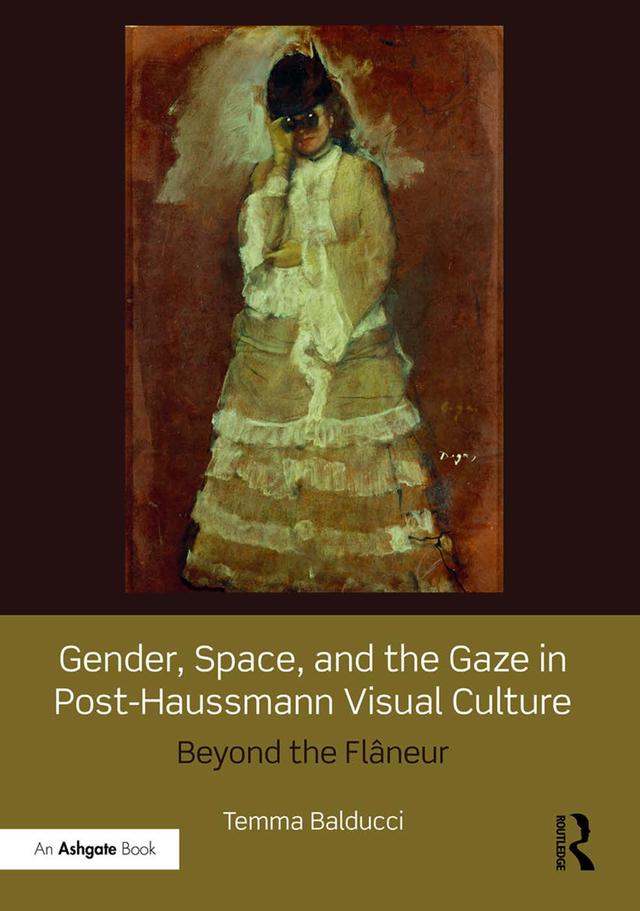
Charles Baudelaire’s flâneur, as described in his 1863 essay "The Painter of Modern Life," remains central to understandings of gender, space, and the gaze in late nineteenth-century Paris, despite misgivings by some scholars. Baudelaire’s privileged and leisurely figure, at home on the boulevards, underlies theorizations of bourgeois masculinity and, by implication, bourgeois femininity, whereby men gaze and roam urban spaces unreservedly while women, lacking the freedom to either gaze or roam, are wedded to domesticity.
In challenging this tired paradigm and offering fresh ways to consider how gender, space, and the gaze were constructed, this book attends to several neglected elements of visual and written culture: the ubiquitous male beggar as the true denizen of the boulevard, the abundant depictions of well-to-do women looking (sometimes at men), the popularity of windows and balconies as viewing perches, and the overwhelming emphasis given by both male and female artists to domestic scenes. The book’s premise that gender, space, and the gaze have been too narrowly conceived by a scholarly embrace of Baudelaire’s flâneur is supported across the cultural spectrum by period sources that include art criticism, high and low visual culture, newspapers, novels, prescriptive and travel literature, architectural practices, interior design trends, and fashion journals.
Zahle einfach mit Karte, Klarna, Apple Pay oder Google Pay. Nicht zufrieden? Du hast immer ein 14-tägiges Widerrufsrecht. Lies mehr in unseren AGB. Hast du Fragen, schreib uns eine E-Mail an hello@memmo.org.
Memmo macht das Lernen einfacher – wo auch immer du bist. Bei uns findest du deine Kursbücher und smarte Lerntools an einem Ort: Zusammenfassungen, Quizzes, Podcasts und Lernkarten. Und Ted, dein Lernbuddy, beantwortet alles, was du wissen möchtest. Über 50.000 Studierende lernen bereits hier – gemacht, damit du schneller lernst und weniger Stress hast.