
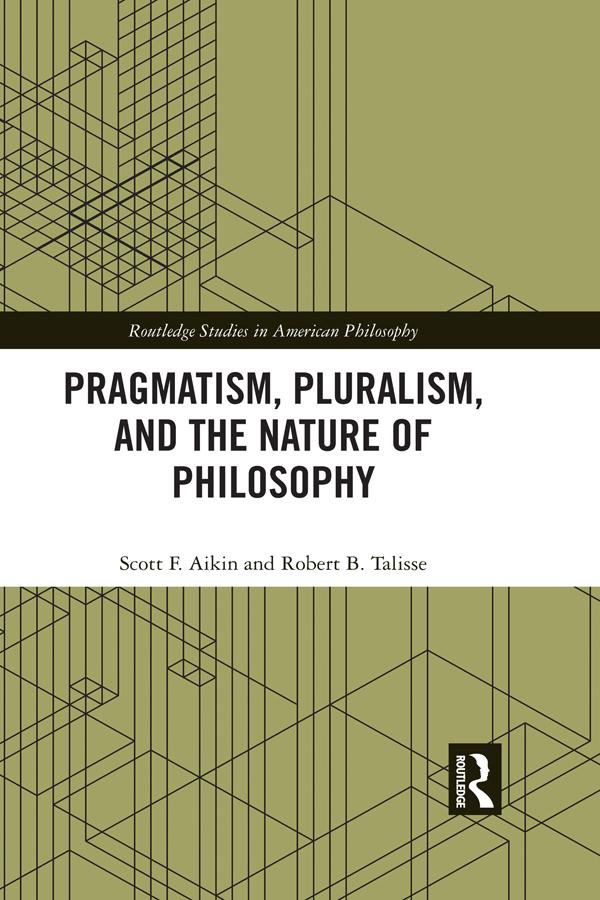
For the past fifteen years, Aikin and Talisse have been working collaboratively on a new vision of American pragmatism, one which sees pragmatism as a living and developing philosophical idiom that originates in the work of the "classical" pragmatisms of Charles Peirce, William James, and John Dewey, uninterruptedly develops through the later 20th Century pragmatists (C. I. Lewis, Wilfrid Sellars, Nelson Goodman, W. V. O. Quine), and continues through the present day. According to Aikin and Talisse, pragmatism is fundamentally a metaphilosophical proposal – a methodological suggestion for carrying inquiry forward amidst ongoing deep disagreement over the aims, limitations, and possibilities of philosophy. This conception of pragmatism not only runs contrary to the dominant self-understanding among cotemporary philosophers who identify with the classical pragmatists, it also holds important implications for pragmatist philosophy. In particular, Aikin and Talisse show that their version of pragmatism involves distinctive claims about epistemic justification, moral disagreement, democratic citizenship, and the conduct of inquiry. The chapters combine detailed engagements with the history and development of pragmatism with original argumentation aimed at a philosophical audience beyond pragmatism.
Zahle einfach mit Karte, Klarna, Apple Pay oder Google Pay. Nicht zufrieden? Du hast immer ein 14-tägiges Widerrufsrecht. Lies mehr in unseren AGB. Hast du Fragen, schreib uns eine E-Mail an hello@memmo.org.
Memmo macht das Lernen einfacher – wo auch immer du bist. Bei uns findest du deine Kursbücher und smarte Lerntools an einem Ort: Zusammenfassungen, Quizzes, Podcasts und Lernkarten. Und Ted, dein Lernbuddy, beantwortet alles, was du wissen möchtest. Über 50.000 Studierende lernen bereits hier – gemacht, damit du schneller lernst und weniger Stress hast.