
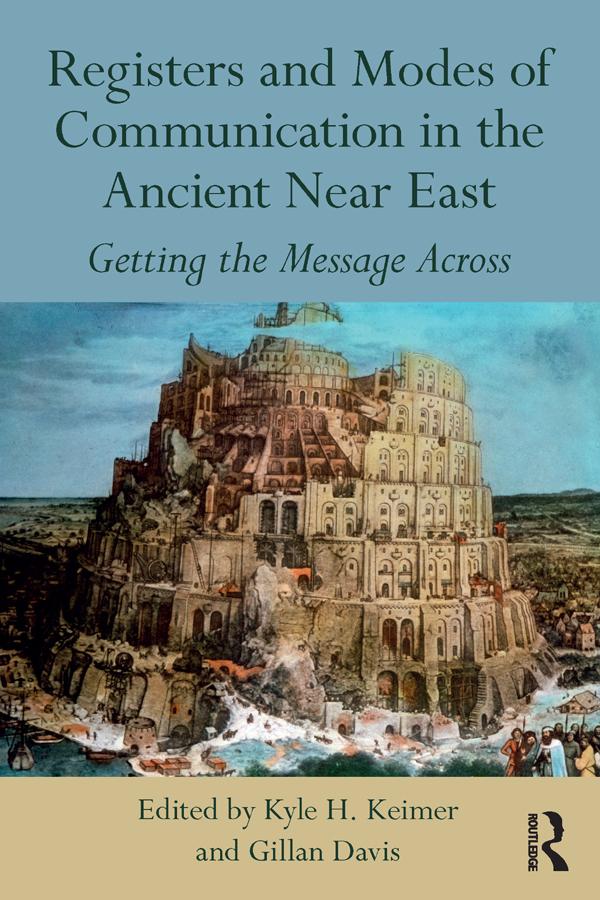
It is the quintessential nature of humans to communicate with each other. Good communications, bad communications, miscommunications, or no communications at all have driven everything from world events to the most mundane of interactions. At the broadest level, communication entails many registers and modes: verbal, iconographic, symbolic, oral, written, and performed. Relationships and identities – real and fictive – arise from communication, but how and why were they effected and how should they be understood? The chapters in this volume address some of the registers and modes of communication in the ancient Near East. Particular focuses are imperial and court communications between rulers and ruled, communications intended for a given community, and those between families and individuals. Topics cover a broad chronological period (3rd millennium BC to 1st millennium AD), and geographic range (Egypt to Israel and Mesopotamia) encapsulating the extraordinarily diverse plurality of human experience. This volume is deliberately interdisciplinary and cross-cultural, and its broad scope provides wide insights and a holistic understanding of communication applicable today. It is intended for both the scholar and readers with interests in ancient Near Eastern history and Biblical studies, communications (especially communications theory), and sociolinguistics.
Zahle einfach mit Karte, Klarna, Apple Pay oder Google Pay. Nicht zufrieden? Du hast immer ein 14-tägiges Widerrufsrecht. Lies mehr in unseren AGB. Hast du Fragen, schreib uns eine E-Mail an hello@memmo.org.
Memmo macht das Lernen einfacher – wo auch immer du bist. Bei uns findest du deine Kursbücher und smarte Lerntools an einem Ort: Zusammenfassungen, Quizzes, Podcasts und Lernkarten. Und Ted, dein Lernbuddy, beantwortet alles, was du wissen möchtest. Über 50.000 Studierende lernen bereits hier – gemacht, damit du schneller lernst und weniger Stress hast.