
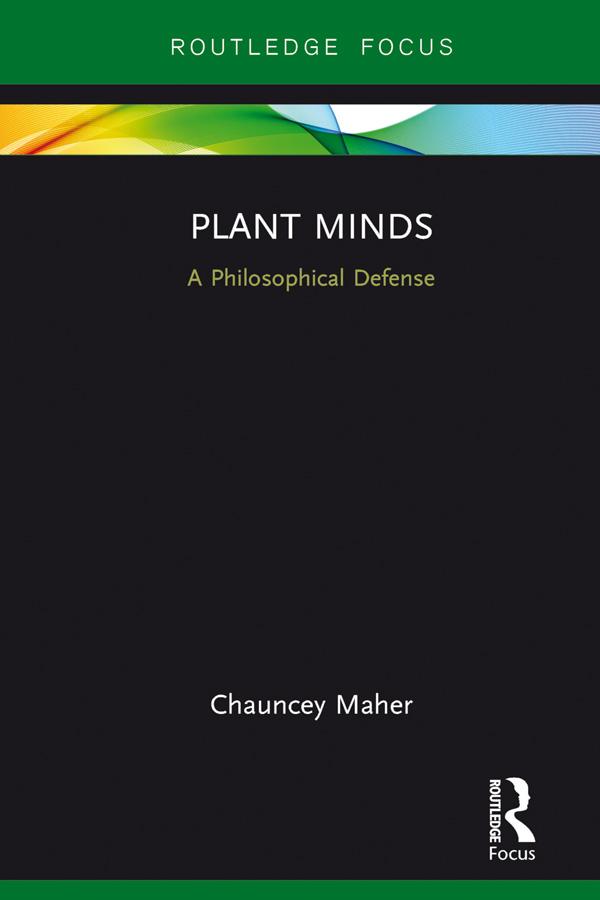
The idea that plants have minds can sound improbable, but some widely respected contemporary scientists and philosophers find it plausible. It turns out to be rather tricky to vindicate the presumption that plants do not have minds, for doing so requires getting clear about what plants can do and what exactly a mind is.
By connecting the most compelling empirical work on plant behavior with philosophical reflection on the concept of minds, Plant Minds aims to help non-experts begin to think clearly about whether plants have minds. Relying on current consensus ideas about minds and plants, Chauncey Maher first presents the best case for thinking that plants do not have minds. Along the way, however, he unearths an idea at the root of that case, the idea that having a mind requires the capacity to represent the world. In the last chapter, he defends a relatively new and insightful theory of mind that rejects that assumption, making room for the possibility that plants do have minds, primarily because they are alive.
Zahle einfach mit Karte, Klarna, Apple Pay oder Google Pay. Nicht zufrieden? Du hast immer ein 14-tägiges Widerrufsrecht. Lies mehr in unseren AGB. Hast du Fragen, schreib uns eine E-Mail an hello@memmo.org.
Memmo macht das Lernen einfacher – wo auch immer du bist. Bei uns findest du deine Kursbücher und smarte Lerntools an einem Ort: Zusammenfassungen, Quizzes, Podcasts und Lernkarten. Und Ted, dein Lernbuddy, beantwortet alles, was du wissen möchtest. Über 50.000 Studierende lernen bereits hier – gemacht, damit du schneller lernst und weniger Stress hast.