
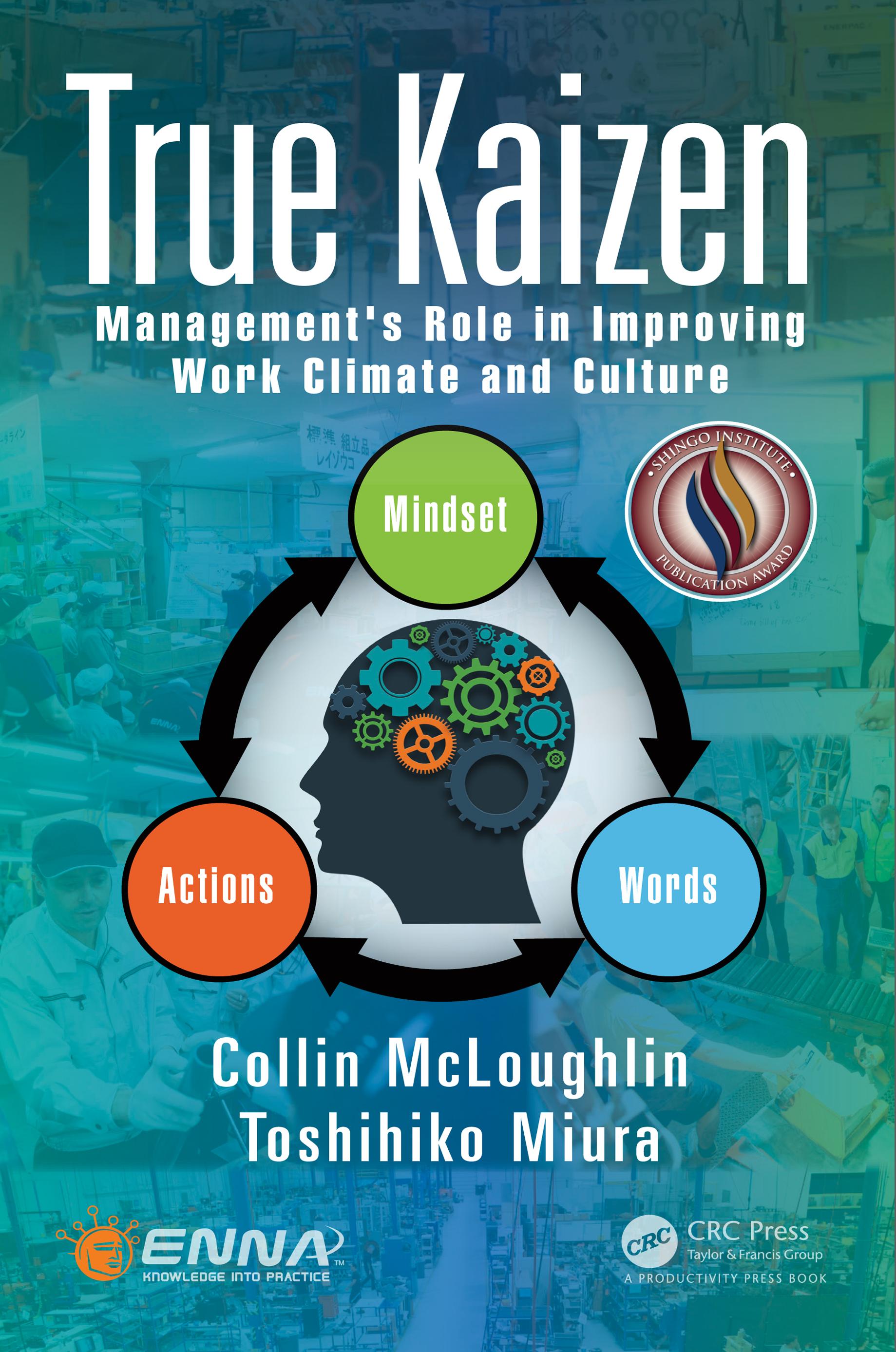
What does it take to manage an organization to success? No matter what industry you are in, an organization is primarily a group of people. This book focuses on that ever-important human element. In the rush to get 'lean', many organizations focus solely on tools for increasing productivity, but where do these tools come from? In this book, Collin McLoughlin and Toshihiko Miura look back on their decades of international consulting experience to examine how organizations around the world have transformed on a cultural level by respecting the people who work within them and leveraging their creativity to solve problems.
As our workforce becomes more knowledgeable, skillful, and more perceptive of their needs and wants as employees, the ability to reach the true potential of an organization becomes more and more difficult. Managers must look at each individual element of an equation like this in order to fully understand how to achieve an answer. They must begin to answer more focused questions, such as:
1. How productive is the existing work climate and culture?
2. How do employees, as individuals, navigate the existing work climate? (How do they deal with day-today issues with each other?)
3. Where and how are individuals and their work processes assessed?
4. What obstacles do employees face every day, and are they empowered to fix these obstacles?
5. What role does leadership play at each level of the organization? (Looking at the organization in layers of management.)
To address these challenges, this book focuses on three main aspects of leadership and management:
1. Addressing and Improving the Perspective of Management -- The ideas presented in this book are not limited to a certain industry or field of work, but can be applied in any setting because they speak to a universal human element.
2. Exploring and Improving Work Climate -- Organizations are social entities, operating within their own controlled environment. This book will explore the factors that contribute to, and encourage, a positive work climate.
3. Observing and Eliminating Wasteful Work Processes -- Observing wasteful activities and work processes requires a refined perspective. The case studies presented illustrate the How and Why to help refine expertise. This will also lead to the joy and benefits
Zahle einfach mit Karte, Klarna, Apple Pay oder Google Pay. Nicht zufrieden? Du hast immer ein 14-tägiges Widerrufsrecht. Lies mehr in unseren AGB. Hast du Fragen, schreib uns eine E-Mail an hello@memmo.org.
Memmo macht das Lernen einfacher – wo auch immer du bist. Bei uns findest du deine Kursbücher und smarte Lerntools an einem Ort: Zusammenfassungen, Quizzes, Podcasts und Lernkarten. Und Ted, dein Lernbuddy, beantwortet alles, was du wissen möchtest. Über 50.000 Studierende lernen bereits hier – gemacht, damit du schneller lernst und weniger Stress hast.