
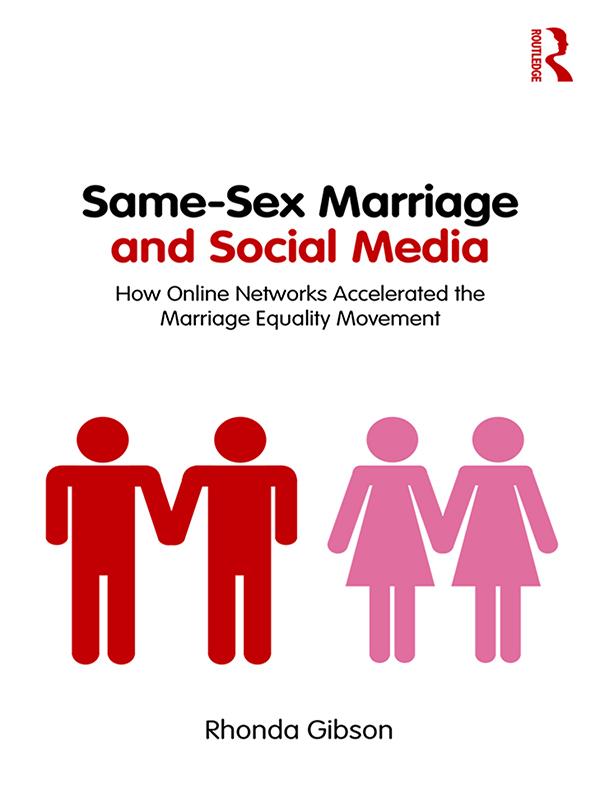
According to polls, from the early noughties to now, public support for same-sex marriage has increased dramatically. Same-Sex Marriage and Social Media asks how such a rate of attitude change came about and, more specifically, what role social media played.
Digital platforms like Facebook, Twitter and YouTube have proved to be useful outlets for political expression, and Rhonda Gibson explores how this came to benefit the marriage equality movement. Drawing on a wealth of movement-related discourse, the book looks at:
- how marriage equality was framed by news companies online and in print;
- the digital strategies deployed by LGBT+ rights organizations and their opponents to gain support;
- the corporate response to the same-sex marriage debate;
- the effect of perceived public opinion and the concept of social identity on how the debate evolved online.
This book seeks to demonstrate how the unique ability of social networks to share personal stories on a mass scale, connect like-minded individuals regardless of geography, and leverage the bandwagon effect of viral content contributed to a seismic shift in visibility and public opinion around the issue of marriage equality. Students and researchers will find this a timely and accessible introduction to the impact of online networks on LGBTQ rights.
Zahle einfach mit Karte, Klarna, Apple Pay oder Google Pay. Nicht zufrieden? Du hast immer ein 14-tägiges Widerrufsrecht. Lies mehr in unseren AGB. Hast du Fragen, schreib uns eine E-Mail an hello@memmo.org.
Memmo macht das Lernen einfacher – wo auch immer du bist. Bei uns findest du deine Kursbücher und smarte Lerntools an einem Ort: Zusammenfassungen, Quizzes, Podcasts und Lernkarten. Und Ted, dein Lernbuddy, beantwortet alles, was du wissen möchtest. Über 50.000 Studierende lernen bereits hier – gemacht, damit du schneller lernst und weniger Stress hast.