
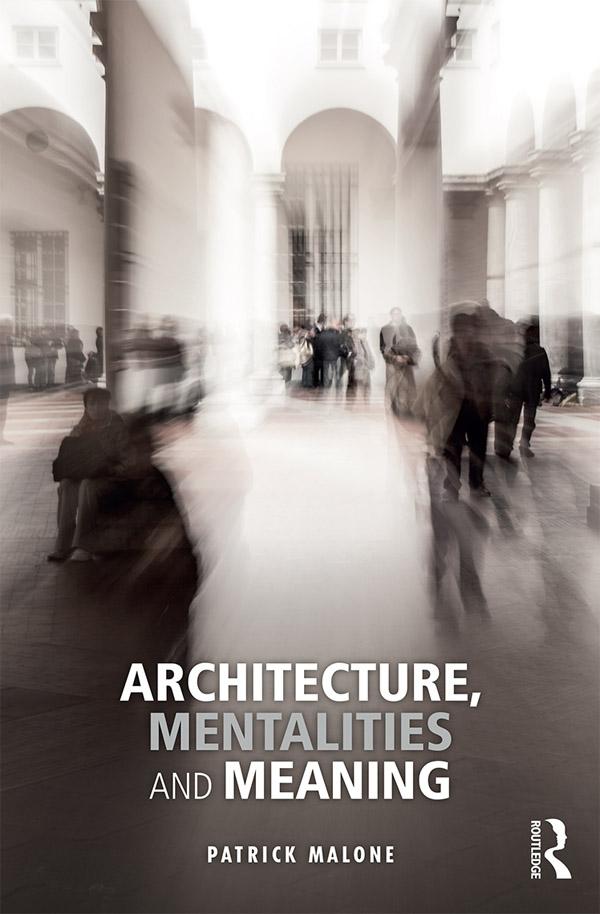
In order to function, architectural theory and practice must be shaped to suit current cultural, economic, and political forces. Thus, architecture embodies reductive logic that conditions the treatment of human and social processes – which raises the question of how to define objectivity for architectural mentalities that must conform to a set of immediate conditions.
This book focuses on meaning, and on the physical and mental processes that define life in built environments. The potential to draw knowledge from aesthetics, psychology, political economy, philosophy, geography, and sociology is offset by the fact that architectural logic is inevitably reductive, cultural, socio-economic, and political. However, despite the duty to conform, it is argued that the treatment of human processes, and the understanding of architectural mentalities, can benefit from interdisciplinary linkages, small freedoms, and cracks in a system of imperatives that can yield the means of greater objectivity.
This is valuable reading for students and researchers interested in architectural theory as a working reality, and in the relationships between architecture and other fields.
Zahle einfach mit Karte, Klarna, Apple Pay oder Google Pay. Nicht zufrieden? Du hast immer ein 14-tägiges Widerrufsrecht. Lies mehr in unseren AGB. Hast du Fragen, schreib uns eine E-Mail an hello@memmo.org.
Memmo macht das Lernen einfacher – wo auch immer du bist. Bei uns findest du deine Kursbücher und smarte Lerntools an einem Ort: Zusammenfassungen, Quizzes, Podcasts und Lernkarten. Und Ted, dein Lernbuddy, beantwortet alles, was du wissen möchtest. Über 50.000 Studierende lernen bereits hier – gemacht, damit du schneller lernst und weniger Stress hast.