
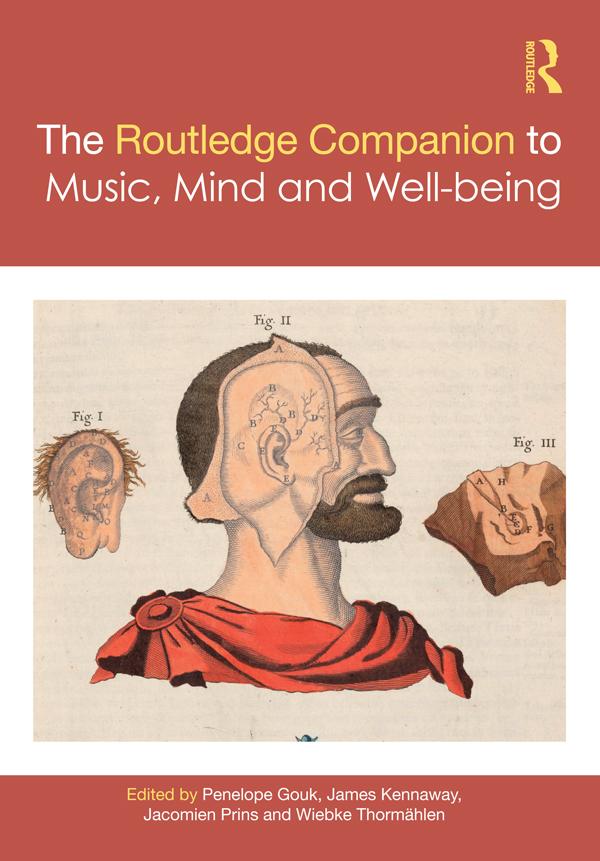
In recent decades, the relationship between music, emotions, health and well-being has become a hot topic. Scientific research and new neuro-imaging technologies have provided extraordinary new insights into how music affects our brains and bodies, and researchers in fields ranging from psychology and music therapy to history and sociology have turned their attention to the question of how music relates to mind, body, feelings and health, generating a wealth of insights as well as new challenges. Yet this work is often divided by discipline and methodology, resulting in parallel, yet separate discourses.
In this context, The Routledge Companion to Music, Mind and Well-being seeks to foster truly interdisciplinary approaches to key questions about the nature of musical experience and to demonstrate the importance of the conceptual and ideological frameworks underlying research in this field. Incorporating perspectives from musicology, history, psychology, neuroscience, music education, philosophy, sociology, linguistics and music therapy, this volume opens the way for a generative dialogue across both scientific and humanistic scholarship.
The Companion is divided into two sections. The chapters in the first, historical section consider the varied ways in which music, the emotions, well-being and their interactions have been understood in the past, from Antiquity to the twentieth century, shedding light on the intellectual origins of debates that continue today. The chapters in the second, contemporary section offer a variety of current scientific perspectives on these topics and engage wider philosophical problems. The Companion ends with chapters that explore the practical application of music in healthcare, education and welfare, drawing on work on music as a social and ecological phenomenon.
Contextualising contemporary scientific research on music within the history of ideas, this volume provides a unique overview of what it means to study music in relation to the mind and well-being.
Zahle einfach mit Karte, Klarna, Apple Pay oder Google Pay. Nicht zufrieden? Du hast immer ein 14-tägiges Widerrufsrecht. Lies mehr in unseren AGB. Hast du Fragen, schreib uns eine E-Mail an hello@memmo.org.
Memmo macht das Lernen einfacher – wo auch immer du bist. Bei uns findest du deine Kursbücher und smarte Lerntools an einem Ort: Zusammenfassungen, Quizzes, Podcasts und Lernkarten. Und Ted, dein Lernbuddy, beantwortet alles, was du wissen möchtest. Über 50.000 Studierende lernen bereits hier – gemacht, damit du schneller lernst und weniger Stress hast.