
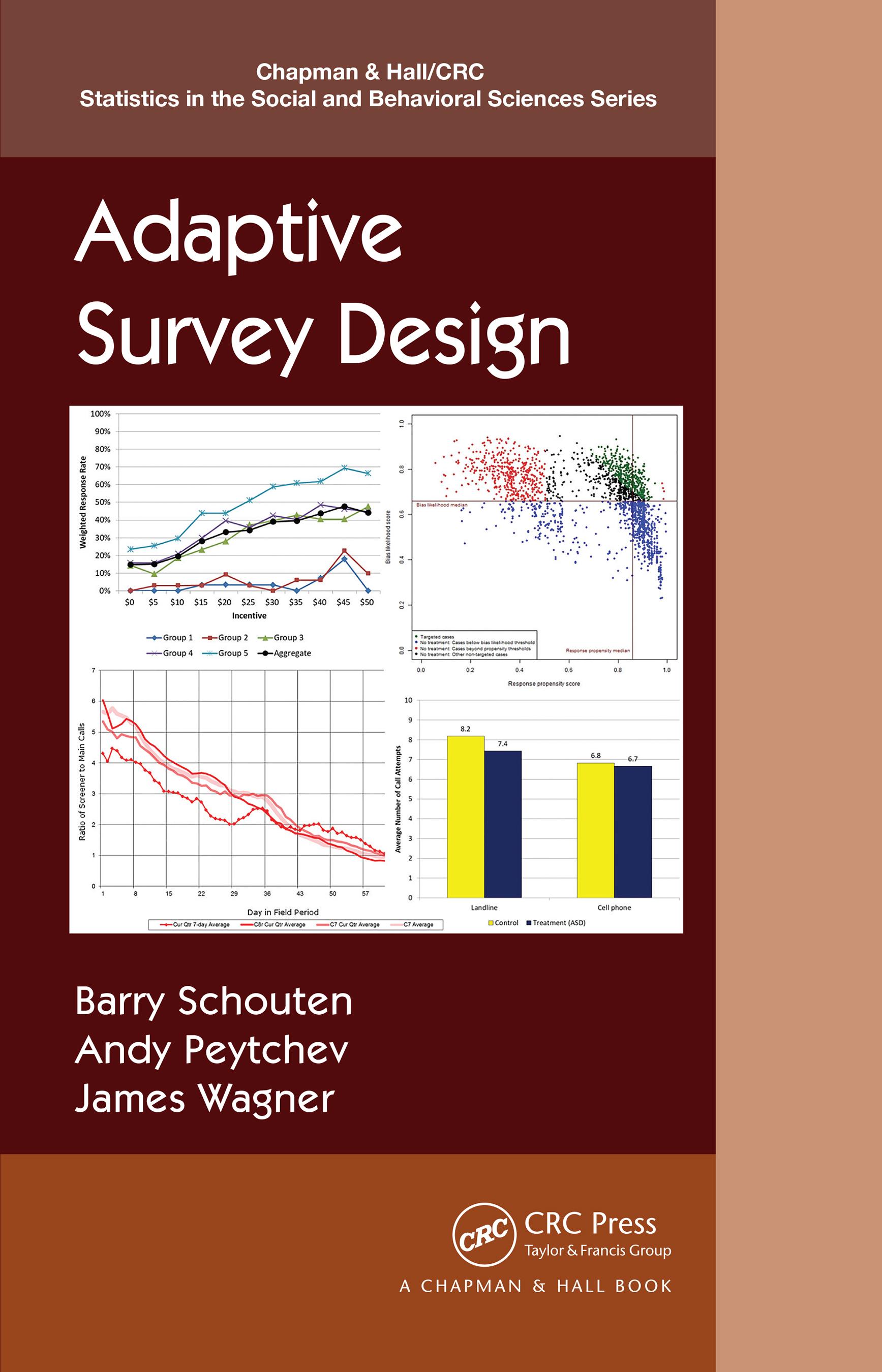
Adaptive survey designs (ASDs) provide a framework for data-driven tailoring of data collection procedures to different sample members, often for cost and bias reduction. People vary in how likely they are to respond and in how they respond. This variation leads to opportunities to selectively deploy design features in order to control both nonresponse and measurement errors. ASD aims at the optimal matching of design features and the characteristics of respondents given the survey budget. Such a goal is sensible, but ASD requires investment in more advanced technical systems and management infrastructure and asks for the collection of relevant auxiliary data. So what are current best practices in ASD? And is ASD worthwhile when the same auxiliary data are employed in the estimation afterwards? In this book, the authors provide answers to these questions, and much more.
Zahle einfach mit Karte, Klarna, Apple Pay oder Google Pay. Nicht zufrieden? Du hast immer ein 14-tägiges Widerrufsrecht. Lies mehr in unseren AGB. Hast du Fragen, schreib uns eine E-Mail an hello@memmo.org.
Memmo macht das Lernen einfacher – wo auch immer du bist. Bei uns findest du deine Kursbücher und smarte Lerntools an einem Ort: Zusammenfassungen, Quizzes, Podcasts und Lernkarten. Und Ted, dein Lernbuddy, beantwortet alles, was du wissen möchtest. Über 50.000 Studierende lernen bereits hier – gemacht, damit du schneller lernst und weniger Stress hast.