
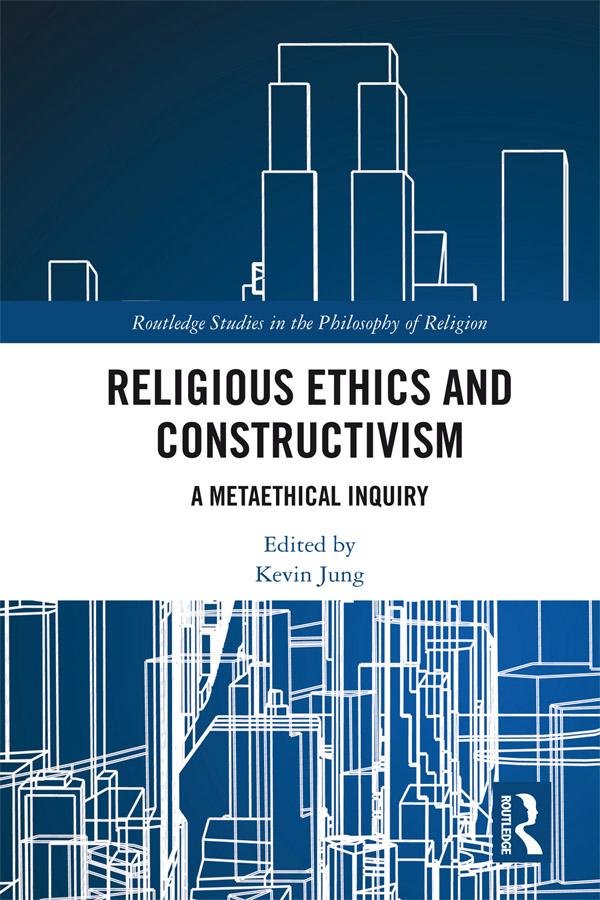
In metaethics, there is a divide between those who believe that there exist moral facts independently of human interests and attitudes (i.e., moral realists) and those who don’t (i.e., antirealists). In the last half century, the field of religious ethics has been inundated with various antirealist schools of moral thought. Though there is a wide spectrum of different positons within antirealism, a majority of antirealist religious ethicists tend to see moral belief as an historically dependent social construction. This has created an environment where doing religious ethics in any metaphysically substantial sense is often seen not only as out of fashion but also as philosophically implausible.
However, there is a lack of clarity as to what antirealists exactly mean by "construction" and what arguments they would use to support their views. Religious Ethics and Constructivism brings together a diverse group of scholars who represent different philosophical and theological outlooks to discuss the merits of constructivism vis-à-vis religious ethics. The essays explore four different kinds of constructivism in metaethics: social (or Hegelian) constructivism, Kantian constructivism, Humean constructivism, and theological constructivism. The overall aim of these essays is to foster dialogue between religious ethicists and moral philosophers, and to open the field religious ethics to the insights that can be provided by contemporary metaethics.
Zahle einfach mit Karte, Klarna, Apple Pay oder Google Pay. Nicht zufrieden? Du hast immer ein 14-tägiges Widerrufsrecht. Lies mehr in unseren AGB. Hast du Fragen, schreib uns eine E-Mail an hello@memmo.org.
Memmo macht das Lernen einfacher – wo auch immer du bist. Bei uns findest du deine Kursbücher und smarte Lerntools an einem Ort: Zusammenfassungen, Quizzes, Podcasts und Lernkarten. Und Ted, dein Lernbuddy, beantwortet alles, was du wissen möchtest. Über 50.000 Studierende lernen bereits hier – gemacht, damit du schneller lernst und weniger Stress hast.