
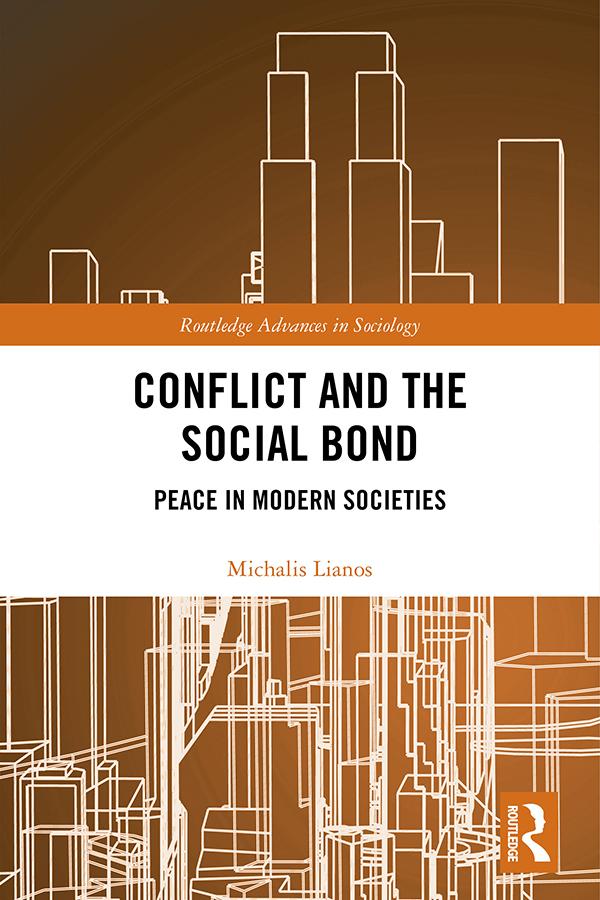
Is violent conflict inevitable? What is it in our social nature that makes us conduct wars, genocides and persecutions? The answer lies in how we are programmed to bond and form communities that demand loyalty in order to let us belong. The analysis in this book cuts through the social sciences in order to show the fundamentals of violent conflict.
The book investigates conflict at the level of sociality. It reorganises existing theories of conflict under that perspective and brings them to bear upon the link between violence and togetherness. It introduces the key concept of closure to describe the conditions under which human groups start to perceive their position as similar and their reality as polarised. This is how normality starts breaking down and fault lines appear. Violent conflict is then analysed as a reaction that seeks change more rapidly than conditions seem to allow.
Global comparative data from numerous studies – including M. Mousseau's works – are used to disentangle the factors that contribute to "democratic peace", that is, the fact that democratic societies do not go to war with each other. This inquiry reveals the new dimension of sociodiversity, which allows societies where individuality is strong to constantly produce alternatives and avoid closure. The book concludes with a coda on peace and sociodiversity which explains how contemporary societies can ensure durable peace and adequate social justice at the same time.
Written in a clear and direct style, this volume will appeal to students, researchers and scholars with an interest in political sociology, anthropology, international relations, war studies, as well as conflict and peace studies.
Zahle einfach mit Karte, Klarna, Apple Pay oder Google Pay. Nicht zufrieden? Du hast immer ein 14-tägiges Widerrufsrecht. Lies mehr in unseren AGB. Hast du Fragen, schreib uns eine E-Mail an hello@memmo.org.
Memmo macht das Lernen einfacher – wo auch immer du bist. Bei uns findest du deine Kursbücher und smarte Lerntools an einem Ort: Zusammenfassungen, Quizzes, Podcasts und Lernkarten. Und Ted, dein Lernbuddy, beantwortet alles, was du wissen möchtest. Über 50.000 Studierende lernen bereits hier – gemacht, damit du schneller lernst und weniger Stress hast.