
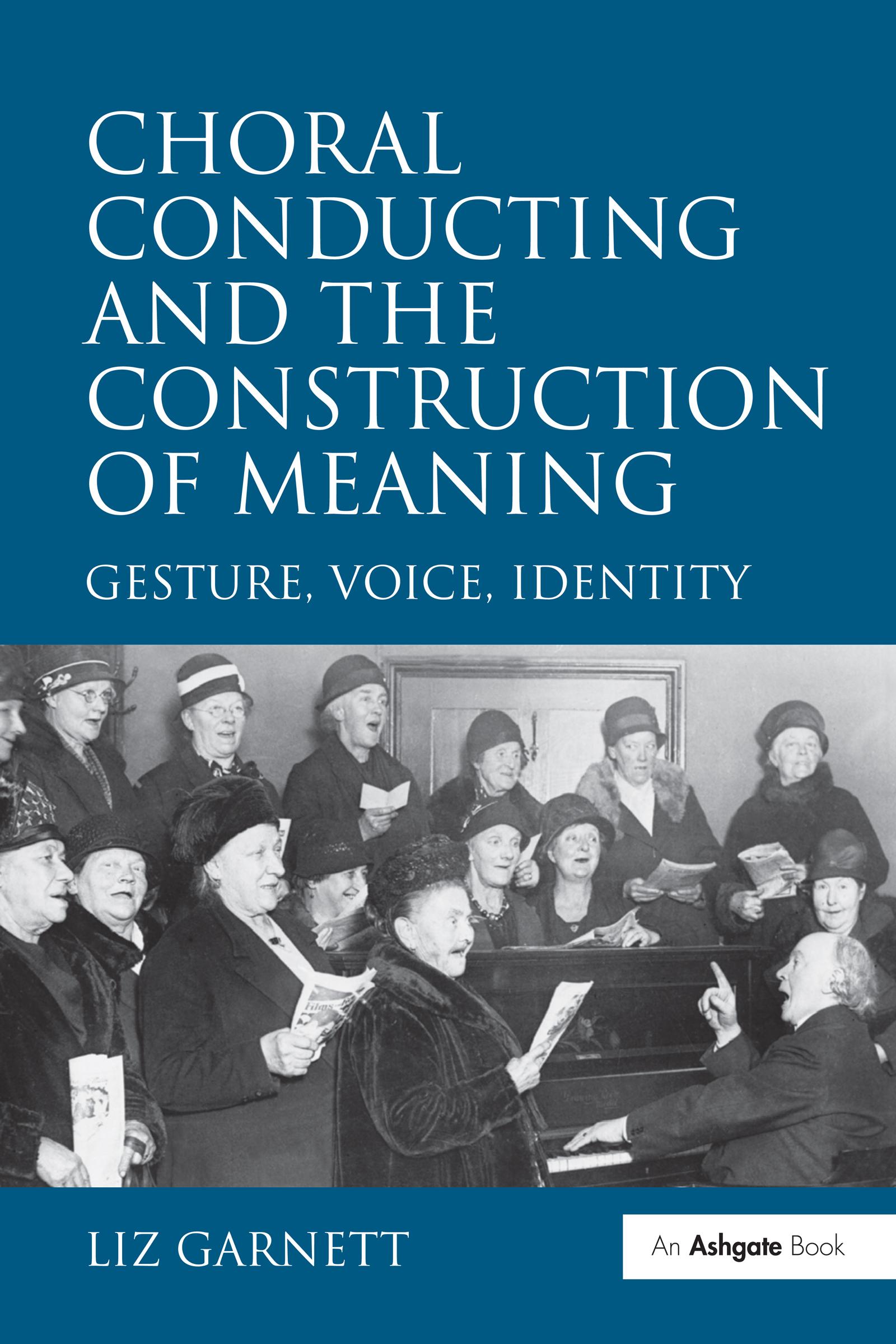
It is a truism in teaching choral conducting that the director should look like s/he wishes the choir to sound. The conductor's physical demeanour has a direct effect on how the choir sings, at a level that is largely unconscious and involuntary. It is also a matter of simple observation that different choral traditions exhibit not only different styles of vocal production and delivery, but also different gestural vocabularies which are shared not only between conductors within that tradition, but also with the singers. It is as possible to distinguish a gospel choir from a barbershop chorus or a cathedral choir by visual cues alone as it is simply by listening. But how can these forms of physical communication be explained? Do they belong to a pre-cultural realm of primate social bonding, or do they rely on the context and conventions of a particular choral culture? Is body language an inherent part of musical performance styles, or does it come afterwards, in response to music? At a practical level, to what extent can a practitioner from one tradition mandate an approach as 'good practice', and to what extent can another refuse it on the grounds that 'we don't do it that way'? This book explores these questions at both theoretical and practical levels. It examines textual and ethnographic sources, and draws on theories from critical musicology and nonverbal communication studies to analyse them. By comparing a variety of choral traditions, it investigates the extent to which the connections between conductor demeanour and choral sound operate at a general level, and in what ways they are constructed within a specific idiom. Its findings will be of interest both to those engaged in the study of music as a cultural practice, and to practitioners involved in a choral conducting context that increasingly demands fluency in a variety of styles.
Zahle einfach mit Karte, Klarna, Apple Pay oder Google Pay. Nicht zufrieden? Du hast immer ein 14-tägiges Widerrufsrecht. Lies mehr in unseren AGB. Hast du Fragen, schreib uns eine E-Mail an hello@memmo.org.
Memmo macht das Lernen einfacher – wo auch immer du bist. Bei uns findest du deine Kursbücher und smarte Lerntools an einem Ort: Zusammenfassungen, Quizzes, Podcasts und Lernkarten. Und Ted, dein Lernbuddy, beantwortet alles, was du wissen möchtest. Über 50.000 Studierende lernen bereits hier – gemacht, damit du schneller lernst und weniger Stress hast.
Das könnte dir auch gefallen
Buch kaufen0