
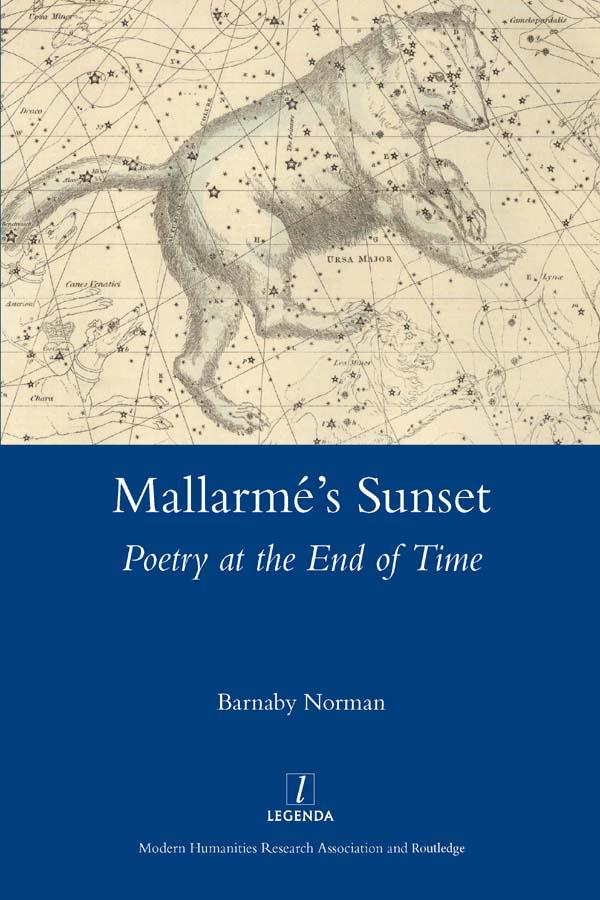
The writings of the great Symbolist poet Stephane Mallarme (1842-1898) were to become uniquely influential in twentieth century literary criticism. For critics and philosophers such as Maurice Blanchot and Jacques Derrida, Mallarme's name came to represent a rupture in literary history, and an opening of literature onto a radically new kind of writing. Through close readings of key works, Norman retraces Mallarme's trajectory as a poet, showing in particular how he positioned his work in relation to Hegel's Aesthetics. Analysing the motif of the sunset Norman argues that Mallarme situated his work at the conclusion of the history of art, in Hegelian terms, and it is this that made him so interesting for Blanchot and Derrida. Their readings, born of their wish to subvert Hegel's totalizing impulse, give rise to an entirely new view of works now almost universally seen as masterpieces.
Zahle einfach mit Karte, Klarna, Apple Pay oder Google Pay. Nicht zufrieden? Du hast immer ein 14-tägiges Widerrufsrecht. Lies mehr in unseren AGB. Hast du Fragen, schreib uns eine E-Mail an hello@memmo.org.
Memmo macht das Lernen einfacher – wo auch immer du bist. Bei uns findest du deine Kursbücher und smarte Lerntools an einem Ort: Zusammenfassungen, Quizzes, Podcasts und Lernkarten. Und Ted, dein Lernbuddy, beantwortet alles, was du wissen möchtest. Über 50.000 Studierende lernen bereits hier – gemacht, damit du schneller lernst und weniger Stress hast.
Das könnte dir auch gefallen
Buch kaufen0