
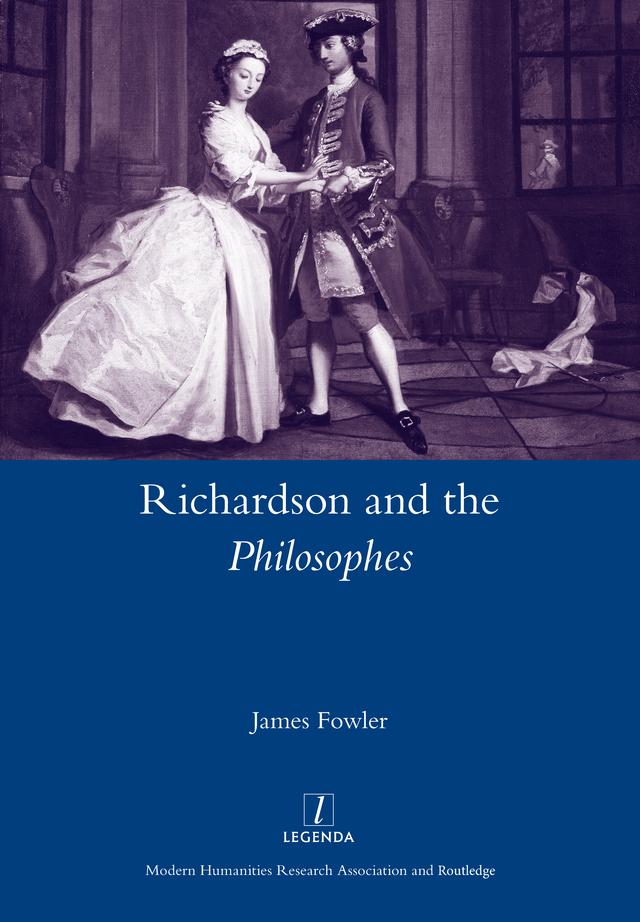
In mid-eighteenth-century Europe, a taste for sentiment accompanied the 'rise of the novel', and the success of Samuel Richardson (1689-1761) played a vital role in this. James Fowler's new study is the first to compare the response of the most famous philosophes to the Richardson phenomenon. Voltaire, who claims to despise the novel, writes four 'Richardsonian' fictions; Diderot's fascination with the English author is expressed in La Religieuse, Rousseau's in Julie - the century's bestseller. Yet the philosophes' response remains ambivalent. On the one hand they admire Richardson's ability to make the reader weep. On the other, they champion a range of Enlightenment beliefs which he, an enthusiast of Milton, vehemently opposed. In death as in life, the English author exacerbates the philosophes' rivalry. The eulogy which Diderot writes in 1761 implicitly asks: who can write a new Clarissa? But also: whose social, philosophical or political ideas will triumph as a result?
Seiten: 185
Kategorie: Litteraturvetenskap & Teori
e-ISBN: 9781351550802
Versandgewicht: 1.2 kg
Versand in: 1-2 Tage
Zahle einfach mit Karte, Klarna, Apple Pay oder Google Pay. Nicht zufrieden? Du hast immer ein 14-tägiges Widerrufsrecht. Lies mehr in unseren AGB. Hast du Fragen, schreib uns eine E-Mail an hello@memmo.org.
Memmo macht das Lernen einfacher – wo auch immer du bist. Bei uns findest du deine Kursbücher und smarte Lerntools an einem Ort: Zusammenfassungen, Quizzes, Podcasts und Lernkarten. Und Ted, dein Lernbuddy, beantwortet alles, was du wissen möchtest. Über 50.000 Studierende lernen bereits hier – gemacht, damit du schneller lernst und weniger Stress hast.
Das könnte dir auch gefallen
Buch kaufen0