
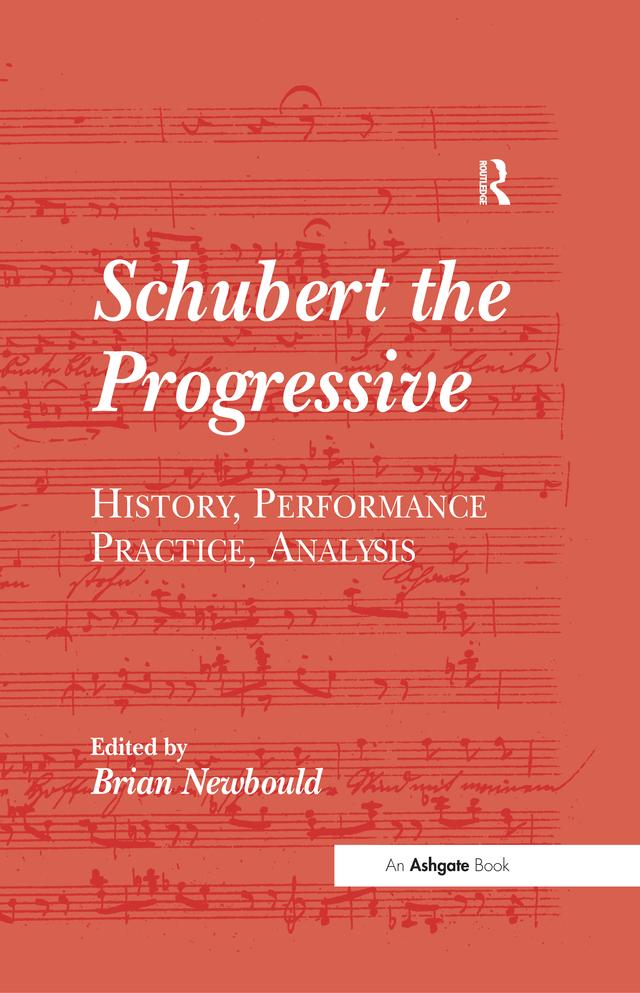
The eleven essays that comprise this volume represent some of the most significant strands of current Schubert research. Arising from an international conference organized by the Schubert Institute (UK) and the University of Leeds in 2000, the emphasis of the papers is on issues of performance practice, analysis and hermeneutics. In the opening essay of the book, Charles Rosen illuminates some of Schubert's compositional practices and their implications for performers. Further performance problems are explored by Walther D rr who highlights the paradox between Schubert's precise notation of pitches and rhythm and his imprecision in relation to dynamics and articulation. As Roy Howat makes clear in his essay, the performer needs to read between the lines of even the best Schubert editions.Aspects of Schubert's style are explored in other essays. Clive McClelland discusses the composer's use of ombra style, while Brian Newbould examines Schubert's techniques of compression and expansion as illustrated in his dances and in sonata movements. Robert Hatten explores the G major Piano Sonata as pastoral, and James Sobaskie and Nicholas Rast provide complementary analyses of the A minor Quartet.The organization of musical time in Schubert and his relationship in this regard to later composers is the subject of Susanne Kogler's essay, while Walburga Litschauer discusses Schubert's early piano sonatas and previously unknown versions of them. Various enigmas surrounding Schubert's life and music are discussed by Roger Neighbour.With contributions from both internationally acclaimed and younger scholars, this volume represents a further step in the multifaceted direction that Schubert research is taking.
Zahle einfach mit Karte, Klarna, Apple Pay oder Google Pay. Nicht zufrieden? Du hast immer ein 14-tägiges Widerrufsrecht. Lies mehr in unseren AGB. Hast du Fragen, schreib uns eine E-Mail an hello@memmo.org.
Memmo macht das Lernen einfacher – wo auch immer du bist. Bei uns findest du deine Kursbücher und smarte Lerntools an einem Ort: Zusammenfassungen, Quizzes, Podcasts und Lernkarten. Und Ted, dein Lernbuddy, beantwortet alles, was du wissen möchtest. Über 50.000 Studierende lernen bereits hier – gemacht, damit du schneller lernst und weniger Stress hast.
Das könnte dir auch gefallen
Buch kaufen0