
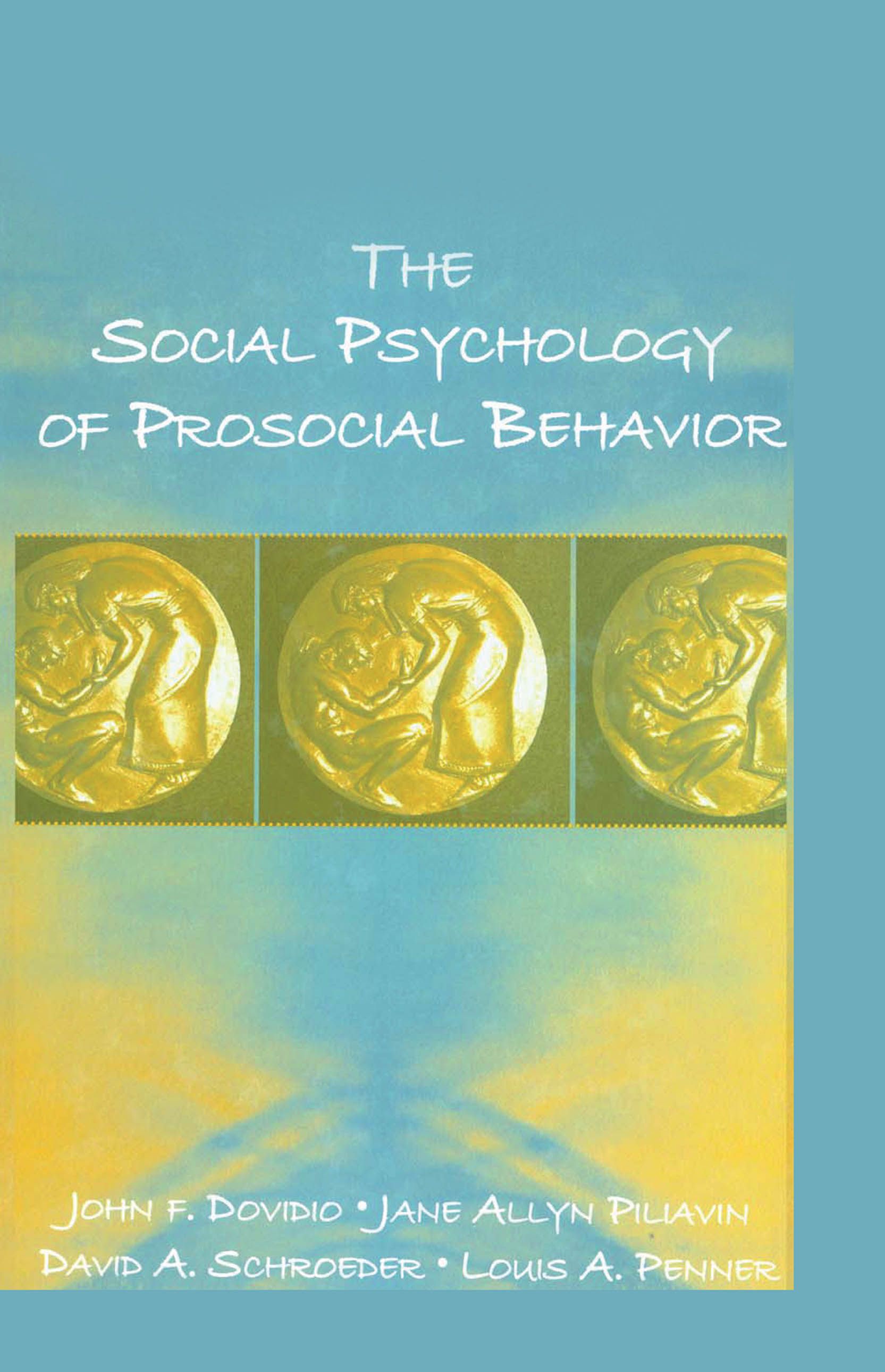
Written by four leading researchers in the study of prosocial behavior, this book introduces a new perspective on prosocial behavior for the 21st century. Building on the bystander intervention work that has defined this area since the 1960s, The Social Psychology of Prosocial Behavior examines prosocial behavior from a multilevel perspective that explores the diverse influences that promote actions for the benefit of others and the myriad ways that prosocial actions can be manifested. The authors expand the breadth of the field, incorporating analyses of biological and genetic factors that predispose individuals to be concerned for the well being of others, as well as planned helping such as volunteering and organizational citizenship behavior and cooperative behavior within and between groups. They identify both the common and the unique processes that underlie the broad spectrum of prosocial behavior.
Each chapter begins with a question about prosocial behavior and ends with a summary that answers the question. The final chapter summarizes the questions and the answers that research provides. Conceptual models that elaborate on and extend the multilevel approach to prosocial behavior are used to tie these findings together. The book concludes with suggestions for future research. The Social Psychology of Prosocial Behavior addressesthe following:
*the evolution of altruistic tendencies and other biological explanations of why humans are predisposed to be prosocial;
*how the situation and motives that are elicited by these situations affect when and how people help;
*the causes and maintenance of long-term helping, such as volunteering;
*how prosocial behavior changes over time and the developmental processes responsible for these changes;
*the consequences of helping for both the people who provide it and those who receive it;
*helping and cooperation within and between groups and the implications of these actions.
This accessible text is ideal for advanced courses on helping and altruism or prosocial behavior, taught in psychology, sociology, management, political science, and communication, or for anyone interested in learning more about prosocial behavior in general.
Zahle einfach mit Karte, Klarna, Apple Pay oder Google Pay. Nicht zufrieden? Du hast immer ein 14-tägiges Widerrufsrecht. Lies mehr in unseren AGB. Hast du Fragen, schreib uns eine E-Mail an hello@memmo.org.
Memmo macht das Lernen einfacher – wo auch immer du bist. Bei uns findest du deine Kursbücher und smarte Lerntools an einem Ort: Zusammenfassungen, Quizzes, Podcasts und Lernkarten. Und Ted, dein Lernbuddy, beantwortet alles, was du wissen möchtest. Über 50.000 Studierende lernen bereits hier – gemacht, damit du schneller lernst und weniger Stress hast.