
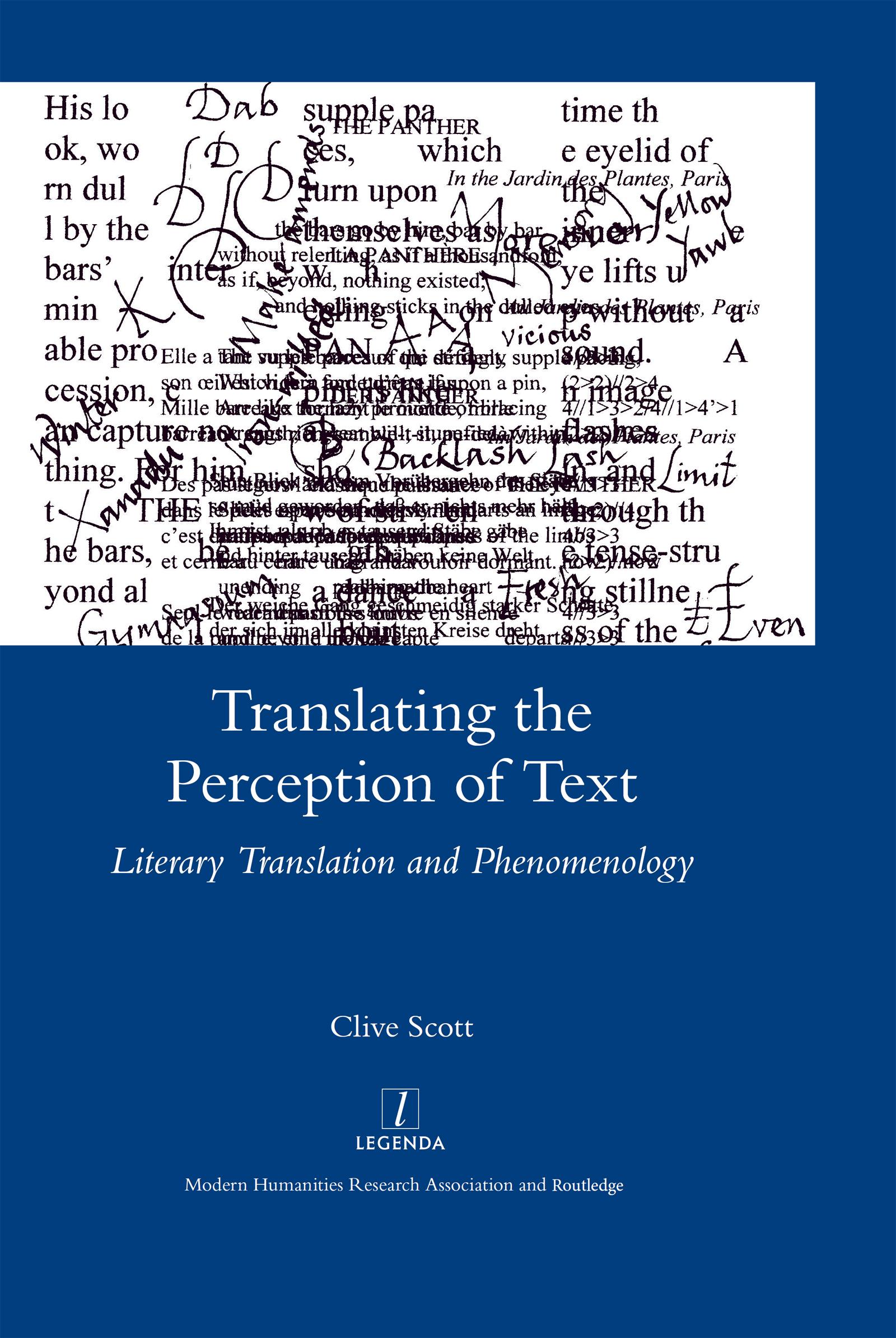
Translation often proceeds as if languages already existed, as if the task of the translator were to make an appropriate selection from available resources. Clive Scott challenges this tacit assumption. If the translator is to do justice to himself/herself as a reader, if the translator is to become the creative writer of his/her reading, then the language of translation must be equal to the translators perceptual experience of, and bodily responses to, source texts. Each renewal of perceptual and physiological contact with a text involves a renewal of the ways we think language and use our expressive faculties (listening, speaking, writing). Phenomenology and particularly the phenomenology of Merleau-Ponty underpins this new approach to translation. The task of the translator is tirelessly to develop new translational languages, ever to move beyond the bilingual into the multilingual, and always to remember that language is as much an active instrument of perception as an object of perception. Clive Scott is Professor Emeritus of European Literature at the University of East Anglia, and a Fellow of the British Academy.
Zahle einfach mit Karte, Klarna, Apple Pay oder Google Pay. Nicht zufrieden? Du hast immer ein 14-tägiges Widerrufsrecht. Lies mehr in unseren AGB. Hast du Fragen, schreib uns eine E-Mail an hello@memmo.org.
Memmo macht das Lernen einfacher – wo auch immer du bist. Bei uns findest du deine Kursbücher und smarte Lerntools an einem Ort: Zusammenfassungen, Quizzes, Podcasts und Lernkarten. Und Ted, dein Lernbuddy, beantwortet alles, was du wissen möchtest. Über 50.000 Studierende lernen bereits hier – gemacht, damit du schneller lernst und weniger Stress hast.
Das könnte dir auch gefallen
Buch kaufen0