
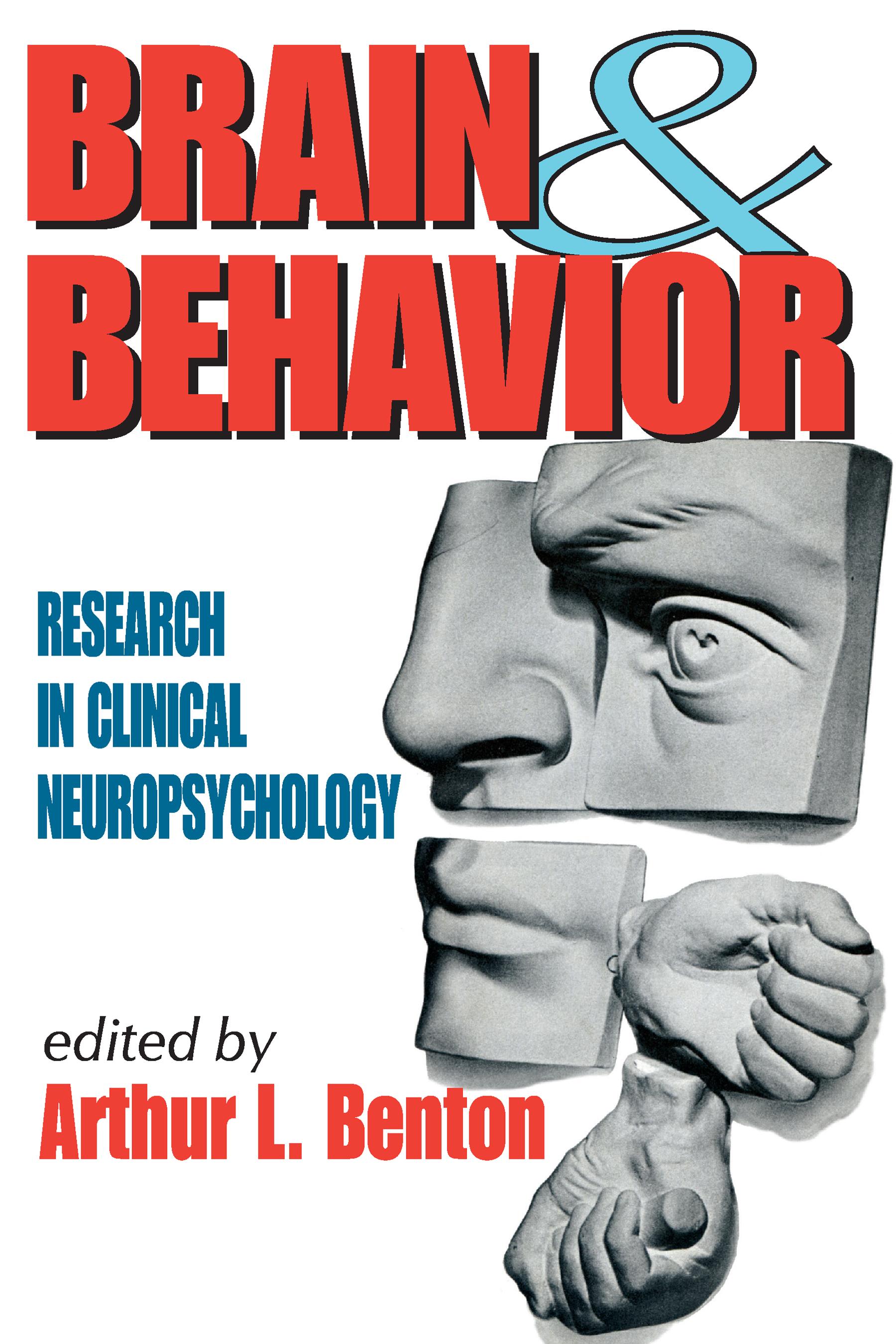
Research in the field of clinical neuropsychology has greatly advanced understanding of the complex relationships between brain functions and human behavior. This edited collection, originally published in the early days of this dynamic field, draws from the findings of clinical study, animal experimentation, and developmental observation to clarify the relationships between brain and behavior. The result is a report on the state of knowledge at that time, and a barometer of how far the field has come.
The book's contributors include some of the leading figures in the field of human and developmental neuropsychology. They present comprehensive reviews of salient topics on which they themselves have done important investigative work. An introduction by Klaus Poeck describes the historical evolution of clinical neuropsychology and discusses the status of the field from both substantive and methodological standpoints. George Ettlinger and Colin Blakemore describe understanding of inter-hemispheric relations as demonstrated by studies in animals and man. Sidney Weinstein discusses the phenomenon of the "phantom" in patients with amputated body parts and its implications for the concept of body image.
Norman Geschwind, who was instrumental in reviving interest in the anatomical approach to aphasia, focuses on some unsolved anatomical problems and suggests needed clinical and experimental study. Arthur L. Benton outlines questions concerning constructional apraxia. Josephine Semmes offers a brilliant reformulation on whether there are discrete basic types of somatosensory function. Luigi Vignolo presents a masterful analysis of the concept of auditory agnosia and describes his own research in this area. Concentrating on a few important problem areas, each of which is intensively probed, this book offers valuable insight into how research advances understanding of the neuroanatomical bases of behavior.
Zahle einfach mit Karte, Klarna, Apple Pay oder Google Pay. Nicht zufrieden? Du hast immer ein 14-tägiges Widerrufsrecht. Lies mehr in unseren AGB. Hast du Fragen, schreib uns eine E-Mail an hello@memmo.org.
Memmo macht das Lernen einfacher – wo auch immer du bist. Bei uns findest du deine Kursbücher und smarte Lerntools an einem Ort: Zusammenfassungen, Quizzes, Podcasts und Lernkarten. Und Ted, dein Lernbuddy, beantwortet alles, was du wissen möchtest. Über 50.000 Studierende lernen bereits hier – gemacht, damit du schneller lernst und weniger Stress hast.